Wednesday, 6 April 2022

An unprecedented political avalanche:

 SPECIAL REPORT : Part 414
Published


Calamity for the once record-breaking and promising SLPP !

By Shamindra Ferdinando

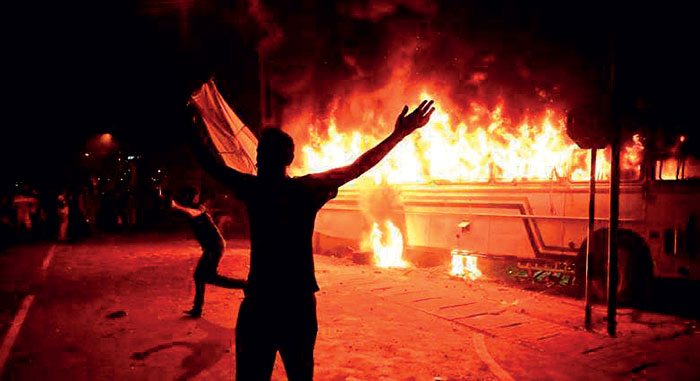
A massive public riot, at the approach to President Gotabaya Rajapaksa’s private residence at Pangiriwatte Road, Mirihana, could have been avoided if the top ruling SLPP (Sri Lanka Podujana Peramuna) leadership swiftly responded to the growing public disenchantment with the government, though it was by then almost an impossibility due to the bankrupt situation the country was facing, foreign exchange wise. Last Thursday’s (March 31) protest and subsequent clashes therein sent shock waves through the government ranks as the genuinely exasperated public, and well organised rabble rousers taking advantage of the situation, targeted the Rajapaksa family, with the police having to use tear gas and water cannon on Monday (04) to prevent storming of the Rajapaksa family home, ‘Carlton,’ in Tangalle.

The police had to save Chamal Rajapaksa’s home in the Deep South as angry crowds on the same day targeted Kandy residence of Health Minister Kelehiya Rambukwella, the Piliyandala home of Energy Minister Gamini Lokuge, and State Minister Roshan Ranasinghe’s Polonnaruwa residence. The police had to use tear gas at Kandy, Piliyandala and Polonnaruwa.

The police lacked sufficient water cannons for countrywide deployment. The law enforcement authorities are finding it difficult to contain multiple situations, where organised gangs, operating among protesters, caused mayhem.
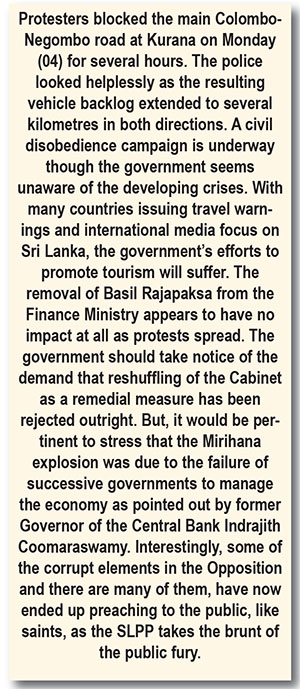
Within a few days after the Mirihana protest, the situation has deteriorated to such an extent none of the ministers/former ministers are in a position to visit their homes. The government has learnt a bitter lesson for turning a blind eye to the suffering of the people due to the growing worldwide economic fallout, amidst massive waste, corruption, irregularities and mismanagement that have weakened the national economy.

The government steadfastly refused to recognize the rapidly changing situation. Obviously, the SLPP, to their peril, arrogantly felt invincible, both in and outside the Parliament. Having bagged the lion’s share of the Local Government Polls at the Feb 2018 polls, Office of the President and the Parliament at 2019 and 2020, the SLPP responded haughtily even to their erstwhile comrades who spared no pains to bring them into power. The overnight changing of the political environment has dealt a devastating blow to the SLPP. It’ll never be the same for the SLPP. Sri Lanka’s strongest political party has been debilitated. The plight of the SLPP should be examined taking into consideration how the once powerful UNP has been reduced to just one National List seat in the 225-member Parliament. What can be said to both is the old adage that pride goes before a fall. Of course some Western elements could be behind the present crisis, stage managing everything with the help of their fellow travellers and some in the UN, as happened without anyone’s knowledge in the 2015 regime change here and elsewhere as was publicly boasted about later on by then American Secretary of State John Kerry.

State Minister’s warning ignored

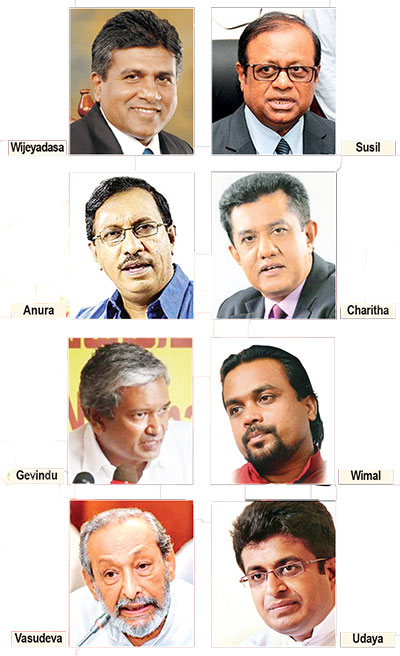
One of those who had quite clearly asked for far reaching changes was unceremoniously stripped of his State Ministry portfolio in the first week of January, this year. President Gotabaya Rajapaksa sacked Education Reforms, Open Universities and Distance Learning Promotion State Minister Susil Premjayanth in the wake of his public criticism of the government. Premjayanth flayed the government during his regular visit to the Delkanda public market.

The SLPP never bothered to ask for an explanation from the lawmaker. Attorney-at-Law Premjayanth was stripped of his portfolio for warning the government of dire consequences unless remedial measures were promptly taken. The former Bank of Ceylon employee, Premjayanth had been especially harsh on the government’s ill-fated agriculture and trade policy implemented rather hastily, though good in principle.

Premjayanth faulted the decision-making process at the highest levels. Basically, he targeted President Gotabaya Rajapaksa and Mahindananda Aluthgamage over the disastrous decision to do away with fertiliser and agro chemicals, overnight, and Bandula Gunawardena over trade matters.

It would be pertinent to mention that Premajyanath received the portfolio, originally offered to Dr. Wijeyadasa Rajapakse, PC. One-time President of the Bar Association of Sri Lanka (BASL), lawmaker Rajapakse, who had served the Cabinet of Ministers of Maithripala Sirisena (2015-2019) refused to accept the offered State Ministry. Instead, the controversial lawmaker wanted a place in the 30-member Cabinet.

The SLPP disregarded Wijeyadasa Rajapakse’s concerns. Dr. Rajapakse has refrained from joining any faction. Instead, Wijeyadasa Rajapakse carried out a solo campaign, targeting President Gotabaya Rajapaksa and the SLPP. His latest salvo was directed at the President. Of course, the writer is referring to the former Justice Minister’s proposal to introduce the 21st Amendment to the Constitution.

The lawmaker has called for the transferring of executive powers of the President to the Cabinet of Ministers by way of an urgent constitutional reform to make the President answerable to Parliament and the people. The SLPP MP appealed to party leaders, Ministers, State Ministers and members of Parliament to back his proposal to introduce the 21st Amendment to the Constitution.

Wijeyadasa Rajapakse, in his capacity as a lawmaker, audaciously wrote to Chinese President Xi Jinping, through the Chinese Ambassador here, that the current dispensation would be overthrown in a democratic manner in the first chance the people get. The MP made what can be called an unprecedented intervention in the first week of January this year. Dr. Wijeyadasa Rajapakse informed the Chinese that all the agreements that were reached with foreign countries in the last 15 years would be scrutinised once again and all the agreements that are found to be corrupt and finalised through fraudulent means will be abolished.

Yugadanavi divides govt.

In fact, a couple of months before lawmaker Premjayanth’s outburst, three Cabinet Ministers, namely Vasudeva Nanayakkara, Wimal Weerawansa and Udaya Gammanpila, delivered a stark warning over the controversial arrangement with the US-based New Fortress Energy as regards the Yugadanavi power plant and other connected deals without any transparent procedures. The deal that had been finalised, at midnight on Sept 17, 2021, ripped apart the powerful SLPP parliamentary group. Alleging that the Yugadanavi agreement, worked out in secrecy by Finance Minister Basil Rajapaksa, was nothing but a sellout, the trio took an unprecedented step. They threw their weight behind those who had moved the Supreme Court against the Yugadanavi arrangement. On behalf of the government, Attorney General Sanjay Rajaratnam, PC, advised the dissidents to quit the Cabinet of Ministers if they were unable to follow Cabinet decisions. The government dismissed the dissidents’ concerns.
Though the Supreme Court mysteriously dismissed the fundamental rights petitions, filed against the Yugadanavi deal, without giving reasons, it in a way intensified the internal crisis and the deterioration of the SLPP administration.

The dissidents’ campaign expanded further when they presented an action plan on March 02, this year at an event ironically attended by the much-tarnished former President and the leader of the SLFP, Maithripala Sirisena. The rebel group presented an alternative plan. Instead of initiating a dialogue, the SLPP again rejected the dissidents’ concerns. The rebel group comprises Democratic Left Front, the Lanka Sama Samaja Party, the Communist Party of Sri Lanka, the National Freedom Front, the National Congress, the Pivithuru Hela Urumaya the Sri Lanka Mahajana Pakshaya, the Vijaya Dharani Jathika Sabhawa, the Eksath Mahajana Pakshaya and the Yuthukama civil society organisation.

Instead of offering to thrash out the differences, Weerawansa and Gammanpila were kicked out of the Cabinet though Nanayakkara was allowed to continue, probably because the grand old man had always been somewhat of a firebrand throughout his leftist political career that has won him respect all-round. The SLPP also failed to take into consideration the fact that the dissident group comprised 30 lawmakers.

As usual, Chief Government Whip Johnston Fernando declared that the government could engineer a sufficient number of crossovers from the Opposition. The Kurunegala District lawmaker, who has been a staunch defender of the government, said that the SLPP could comfortably retain its 2/3 majority with the backing of Opposition lawmakers. Not to be outdone but not knowing the brewing storm, less than a week before the Mirihana violent eruption, Agriculture Minister Mahindananda Aluthgamage claimed in Parliament that several Samagi Jana Balavegaya (SJB) members were on the verge of switching sides.

Big-mouthed Aluthgamage foolishly went to the extent of revealing the first letters of the names of a selected group of SJB members scheduled to switch sides. Both Fernando and Aluthgamage have ended up with egg on their face.

Weerawansa’s proposal upsets SLPP

The top SLPP leadership cannot absolve itself of responsibility for the situation. Several months before the clash over the Yugadanavi deal, Weerawansa earned the wrath of the SLPP for suggesting President Gotabaya Rajapaksa should be given a top party slot. Weerawansa was blunt in his assessment that the President couldn’t succeed in his tasks unless he was suitably accommodated in the SLPP hierarchy. In spite of fielding wartime Defence Secretary as its candidate at the 2019 presidential election, the SLPP never accommodated him in the party. The status quo remains. A section of the SLPP parliamentary group demanded that Weerawansa quit the government.

Some pointed the finger at the SLPP founder for repeated attacks on Weerawansa over his call for President Gotabaya Rajapaksa to be given political authority. Basil Rajapaksa’s re-entry into Parliament in July last year in terms of the 20th Amendment to the Constitution enacted in Oct 2020 led to the breaking up of the Cabinet a year later over the Yugadanavi deal.

Basil Rajapaksa succeeded Mahinda Rajapaksa as the Finance Minister in July last year amidst scurrilous SLPP attacks on the then Energy Minister Udaya Gammanpila for announcing a fuel price hike in the second week of June 2021. The then State Minister Nimal Lanza declared had Basil Rajapaksa been in Colombo, the SLPP founder wouldn’t have allowed the increase in fuel prices. Gampaha District lawmaker Lanza recently gave up his State Ministry. Gammanpila was mercilessly flayed possibly with the instigation of interested parties. The SLPP conveniently ignored the fact that the decision to increase fuel prices had been taken at a meeting chaired by President Gotabaya Rajapaksa. Among those present at the meeting of the Cost of Living Committee had been Premier Mahinda Rajapaksa and the then Sports Minister Namal Rajapaksa. But, the SLPP hadn’t been in a mode to engage in a sensible dialogue. Interestingly, those who had joined hands to oppose the Yugadanavi deal after having initially taken a common stand as regards the government move to transfer shares of the East Container Terminal (ECT) at the Colombo harbour.

Actually, a section of the government parliamentary group revolted against a Cabinet decision as regards ECT. That had been the first serious issue within the ruling coalition in early last year. Thereafter, that group gradually consolidated its position within the government parliamentary group. The Yugadanavi sellout and the subsequent developments, particularly the unprecedented legal challenge, gave a tremendous boost to the dissidents now dubbed the 11-party rebel alliance. The developing crisis has given the grouping an opportunity to advance its course of action. Saturday’s meeting Nanayakkara, Weerawansa, Gammanpila along with SLPP National List MP Tiran Alles had with President Gotabaya Rajapaksa underscored the eroding of the ruling party’s power. Weerawansa is on record as having said that they received an invitation to re-join the government.

Repeated warnings ignored

Gevindu Cumaratunga and Prof. Charitha Herath, both National List members of the SLPP, should earn the respect of the public for speaking the truth. They had the backbone to take a stand on contentious issues. One-time Media Secretary and civil society activist Herath in his capacity as the Chairman of the Committee on Public Enterprises (COPE) spearheaded a high profile campaign against waste, corruption, irregularities and mismanagement. In fact, all members of the COPE as well as the Committee on Public Accounts, chaired by Prof Tissa Vitharana and the Committee on Public Finance (COPF), too, should earn the appreciation of the public for revealing the ugly truth.

The COPE revealed a spate of shocking decisions by those at the helm of many state owned enterprises. Perhaps one of the most controversial disclosures was the Litro Gas hiring President’s Counsels Romesh de Silva and Sanjeeva Jayawardena to block the Auditor General from examining the accounts of the state enterprise. Prof. Herath dealt with this issue both in and out of Parliament. The COPE Chief questioned the circumstances under which Litro, owned by SLIC (Sri Lanka Insurance Corporation), sought to evade state auditing and how over Rs 20 mn of company funds was spent on law firms to defend their highhanded act.

Litro was just one case among many that shocked the country but the government was determined not to act. COPF Chief Anura Priyadarshana Yapa, perhaps made a far more shocking accusation pertaining to the Finance Ministry. COPF declared the public didn’t benefit at all as a result of the Finance Ministry move to reduce the commodity levy of Rs 50 to 25 cents on Oct 13, 2020 on the import of sugar. It was a very serious indictment of the government against the backdrop of revelation the Treasury suffered revenue losses running into billions of rupees.

Unfortunately, the Parliament, the government and the Opposition conveniently turned a blind eye to revelations made by parliamentary watchdog committees. They did nothing. They continue to do so. Lawmaker Cumaratunga angered the Rajapaksas for taking a stand on a number of contentious issues, including the appointment of Ven. Galadodaatte Gnanasara as the Chairman of the Presidential Task Force on ‘One Country, One Law’ concept. The leader of the Yuthukama civil society organisation also took a courageous stand on the failure on the part of the government to present the Draft Constitution by the second week of Nov, 2021 as promised, within two years after the last presidential election. MP Cumaratunga warned of dire consequences as the government continued to move on a wrong path contrary to the assurances given to the people. Perhaps, no other government MP took an interest in promised constitution as Cumaratunga who continuously pushed for a new Constitution that reflected Sri Lanka’s triumph over separatist Tamil terrorism in May 2009.

Unlike those UNP lawmakers who shielded colleagues accused of Treasury bond scams perpetrated in Feb 2015 and March 2016, some SLPP members took a courageous stand. Vasudeva Nanayakkara, Wimal Weerawansa and Udaya Gammanpila gave an unprecedented example by spearheading the campaign against the highly controversial Yugadanavi deal. Their actions proved the Cabinet of Ministers can be challenged in court though the rejection of the fundamental rights petition against the Yugadanavi deal should be examined with the Supreme Court directive in respect of former President Maithripala Sirisena given the Paget Road/Mahagamasekera Mawatha residence he occupied during his troubled presidency (2015-2019).

The Supreme Court on March 29 issued an interim order suspending the controversial Cabinet decision taken with Sirisena chairing it in October 2019 to allow him to continue using the official residence even after retiring from the presidency. Having accused the Rajapaksas of planning to assassinate him, Sirisena ended up as an SLPP MP!

The apex court also said that another interim order would be issued to the respondents not to comply with the said Cabinet decision.

The Supreme Court stated that the restraining order will come into effect four weeks from today and will remain in effect until the conclusion of the hearing of the petition filed against that Cabinet decision. The Centre for Policy Alternatives (CPA) moved the SC against the decision taken by the yahapalana administration.

Wednesday, 30 March 2022

Economic crisis, political turmoil present a fresh opportunity for US-backed TNA

 SPECIAL REPORT : Part 413

Published

  
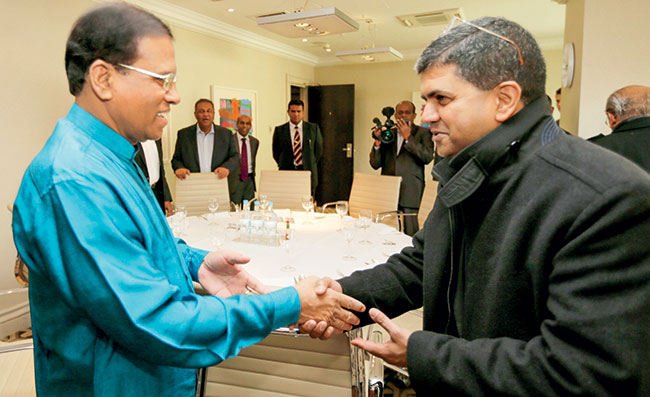
March 2015: President Maithripala Sirisena shaking hands with GTF spokesperson Suren Surendiran in London. The late Foreign Minister Mangala Samaraweera looks on. The meeting took place during Sirisena’s first overseas visit after the presidential election in Jan. 2015. Last year, a joint TNA-GTF delegation made representations to the US administration regarding the latest developments, with the focus on the post-2019 presidential election situation(pic courtesy GTF)

By Shamindra Ferdinando

Sri Lanka is under pressure to back the US-EU stand on the war in Ukraine. The cash-strapped government, struggling to cope up with the deepening political crisis within the ruling coalition, stepped-up opposition protests, and the growing economic turmoil, is also under pressure to reach a consensus with one-time Liberation Tigers of Tamil Eelam (LTTE) loyal ally/mouthpiece, the Tamil National Alliance (TNA) as part of the overall response to the current difficulties.

President Gotabaya Rajapaksa received the top TNA delegation, at the Presidential Secretariat, last Friday (25). The US swiftly welcomed the twice-postponed talks. The US response indicated that negotiations between the two parties had the Biden administration’s blessings and is in line with their overall strategy. Interestingly, those countries calling the incumbent dispensation to condemn Russia, over the continuing war in Ukraine, while they continued to persecute Sri Lanka, without shame, on apparent trumped up war crimes charges, emanating from the Vanni offensive, in 2009, when the country was fighting the LTTE, “the world’s most ruthless terrorist outfit”(FBI assessment). Except Japan, all other countries, including South Korea, voted for resolutions at the Geneva-based United Nations Human Rights Council (UNHRC) against Sri Lanka on those Western-led charges. Japan abstained.

Instead of working together, to address the issues at hand, the government and the Opposition are pulling in different directions. The All-Party Conference (APC), initiated by President Gotabaya Rajapaksa, at the request of SLFP leader Maithripala Sirisena, MP, is unlikely to facilitate a consensus among the warring political parties.

The failure on the part of political parties, represented in Parliament, to reach a consensus on how to face the daunting economic challenge, is obvious. Although the APC is very much unlikely to achieve consensus on ways and means to overcome the economic crisis and is nothing but a political sham, the talks between President Rajapaksa and the TNA are of crucial importance, if they can hammer out a real deal, unlike the usual failed APC circuses of the past. The TNA that once recognized the LTTE as the sole representative of the Tamil speaking people (2001) and backed the then General Sarath Fonseka at presidential election (2010) after having accused him and his Army of committing war crimes, is obviously taking advantage of the current developments to pursue its agenda. The TNA had no qualms in backing Maithripala Sirisena, who served as the Acting Defence Minister the day the Army killed Velupillai Prabhakaran, at the 2015 presidential election. Therefore, negotiating with President Gotabaya Rajapaksa, who had been the wartime Defence Secretary, shouldn’t overwhelm anyone.

The UK headquartered Global Tamil Forum (GTF), the widely influential Tamil Diaspora outfit, backs the TNA’s efforts to reach a consensus with the government. In fact, the TNA and the GTF have been working together for over a decade and gradually enhanced collaboration. The TNA-GTF dealt with President Sirisena’s administration (2015-2019) after having backed the presidential polls campaign. The late Minister Mangala Samaraweera played quite an important role in building that relationship. Perhaps the highpoint in that relationship was President Sirisena meeting the GTF representatives, Rev Father Emmanuel and Suren Surendiran, in London, in March 2015.

Following the first meeting between President Rajapaksa and the TNA, since the last presidential election, in Nov 2019, top TNA spokesperson President’s Counsel M.A. Sumanthiran announced consensus on four issues, namely (i) setting up of a ‘North-East Development Fund’ to attract investments (ii) releasing of long term LTTE detainees held under the Prevention of Terrorism Act (iii) stopping the takeover of land in the Northern and Eastern regions by successive governments (iv) probing disappearances.

Exclusive talks

The Illankai Thamil Arasu Kadchchi (ITAK), led TNA solidly stood with the LTTE until the very end. At the behest of the LTTE, the TNA relentlessly tried to convince Colombo-based Western embassies to throw a lifeline to the embattled LTTE leadership. At that time, the GTF hadn’t been at least formed and the TNA job was to speak on behalf of the LTTE, both in and outside Parliament. The TNA did its job like an ardent follower.
The TNA reiterated its commitment to Prabhakaran when the group’s Batticaloa fighting cadre switched their allegiance to the renegade battlefield commander Karuna Amman, in early 2004. At the parliamentary polls, in early April 2004, the LTTE-backed TNA (by stuffing ballot boxes as noted by EU monitors) and helped it to secure 22 seats in the Northern and Eastern Provinces, thereby emerging as the dominant political power therein. That had been the highpoint in the TNA’s parliamentary representation, since its formation in 2001.

Today, the TNA has been reduced to 10 lawmakers, whereas Gajendrakumar Ponnanmabalam (leader of the All Ceylon Tamil Congress [ACTC]) and Thamil Makkal Thesiya Kuttani [TMTK]), led by retired Supreme Court justice C.V. Wigneswaran, have emerged as formidable rivals though their combined parliamentary representation is much smaller than that of the TNA. Both Ponnambalam and Wigneswaran, who entered politics on the TNA ticket to become the Chief Minister of the Northern Province in 2013, represent the Jaffna electoral district.

In case, President Rajapaksa succeeded in finalizing an exclusive agreement with the TNA, the coalition that comprises three political parties, including two former Indian trained terrorist groups would have a clear advantage over other Tamil political parties. In addition to the TNA, ACTC, TMTK, EPDP and the SLFP are represented by Tamil lawmakers, born in the Northern and Eastern provinces.

The TNA appeared to have cleverly exploited the current situation to its advantage. The TNA would receive the backing of UNP leader Ranil Wickremesinghe, though the former deprived the latter of certain victory at the 2005 presidential election. On behalf of the LTTE, the TNA ordered the Tamil electorate to boycott the 2005 presidential election. That move allowed Mahinda Rajapaksa to win the closely contested race with a thin majority of about 190,000 votes. Annihilation of the LTTE’s conventional fighting capability, four years, later during Mahinda Rajapaksa’s first term, should be examined against the backdrop of the LTTE ensuring Rajapaksa’s triumph at the crucial election. With the demise of the LTTE, in May 2009, the TNA has gradually deteriorated. Having realized the TNA’s true status, the TULF deserted the outfit as it didn’t want to be Prabhakaran’s cat’s paw. Years later, the EPRLF abandoned the outfit. Today, the TNA comprised the dominant partner ITAK, PLOTE and a faction of the TELO. But, the grouping wielded immense power due to the continued US backing, as well as Indian support.

TNA’s real intention

What does TNA really want? In spite of repeating concerns over disappearances, those detained under the PTA, and alleged taking over of land in the Northern and Eastern Provinces, the TNA’s real interest is nothing but the formation of North-East Development Fund. Such a mechanism would enable Sri Lanka to attract unlimited foreign investment. During the 30-year war, on a number of occasions, the LTTE, some members of the international community, and the then governments, discussed the formation of special mechanisms to receive funds.

One such mechanism has been included in a tsunami aid-sharing deal between President Chandrika Bandaranaike Kumaratunga’s government and the LTTE, finalised in the middle of 2005. However, the Supreme Court blocked some sections of the clauses in the post-Tsunami Operational Management Structure (P-TOMS). Among the four clauses that had been termed illegal by the Supreme Court were the ones on locating the regional fund headquarters in Kilinochchi, the northern headquarters of the LTTE, and the operations of the regional fund. It would be pertinent to mention that the Supreme Court was moved by the JVP, the then main ally of Kumaratunga’s People’s Alliance. The 39-member JVP parliamentary group quit the government group in late Jun 2005, thereby reducing the administration to a minority.

Two years before the P-TOMS, the LTTE, through the Interim Self-Governing Authority (ISGA) offer, proposed to have the authority to borrow internally and externally, provide guarantees and indemnities, receive aid directly, and engage in or regulate internal and external trade. The LTTE issued the proposal on Oct. 31, 2003, after having quit direct negotiations with Wickremesinghe’s government. The LTTE insisted on having ISGA arrangement in place in the then temporarily merged Northern and Eastern Provinces, consisting of eight administrative districts, until a permanent can be implemented. Both the US and the EU welcomed the ISGA proposal. The ISGA proposal created an explosive situation, both in and outside Parliament. President Kumaratunga acted swiftly and decisively. On Nov 04, 2003, President Kumaratunga suspended Parliament, took over defence, interior and media ministries and ordered troops to be deployed in readiness for any eventuality before declaring a state of emergency. On Feb 07, 2004, she dissolved Parliament and called the general election on April 02, 2004. The JVP contested on the PA ticket. The JVP won 39 seats, including three National List slots. In June, the following year, the JVP walked out of the government parliamentary group over P-TOMS agreement.

The formation of North East Development Fund can quickly consolidate the government’s relationship with the TNA and the powerful Tamil Diaspora grouping. In a way, the eradication of the LTTE completely appeared to have created an environment conducive for closer cooperation between the government and the other Tamil parties.

The disagreement between the government and the TNA over the Prevention of Terrorism (Temporary Provisions) (Amendment) Bill on March 22, 2022, didn’t hinder the March 25 talks at the Presidential Secretariat. The Bill was passed in Parliament with a majority of 51 votes. The TNA is unlikely to allow any other issue undermine its ongoing effort to work out an agreement on the proposed North-East Development Fund.

Internal conflict intensifies

SLPP lawmaker Gevindu Kumaratunga, in the run-up to the presidential election, in Nov. 2019, repeatedly called for a new Constitution that reflected Sri Lanka’s triumph over separatist terrorism. Kumaratunga, who spearheaded the Yuthukama civil society group, didn’t mince his words when he addressed gatherings even before President Gotabaya Rajapaksa. Today, the embattled SLPP leadership has quite conveniently forgotten their main assurance at the presidential and parliamentary polls in 2019 and 2020, respectively, to unveil the draft constitution in Nov 2021.

Can the proposed setting up of the North-East Development Fund be compatible with the current Constitution or the one in the making? Can the proposal overcome possible legal challenges if interested parties moved the Supreme Court like in the controversial case of P-TOMS?

The dissident SLPP group is concerned about the possibility of the TNA taking advantage of the current crisis to pursue its strategy, inimical to Sri Lanka. Being part of the dissident group, Yuthukama cannot certainly keep quiet about the proposed North-East Development Fund. Can there be an exclusive mechanism for the benefit of two provinces? For MP Kumaratunga, the proposed North-East Development Fund is a daunting challenge. Having campaigned for a Constitution that reflected post-war ground realities, lawmaker Kumaratunga will now have to be contend with a high profile setup that may pose a threat to the integrated financial network.

Lawmaker Sumanthiran seems confident that there’ll be no legal challenge to their latest move. The Jaffna District lawmaker appears to have examined all possible hindrance to the proposed North-East Development Fund that may pave the way for a dialogue between the government and the LTTE.

However, the Presidential Media Division (PMD) made no reference to the proposed fund gathering mechanism in its statement issued in English. The TNA’s controversial stand, in respect of hybrid war crimes court, is evidence that regardless of the LTTE’s demise, the group remained committed to its political objectives.

In June 2016, the TNA declared it has reached a tripartite consensus in respect of foreign judges, defence attorneys, investigators, etc., in a Sri Lankan judicial mechanism to probe war crimes. The TNA quoted MP Sumanthiran as having told a ‘Congressional Caucus for Ethnic and Religious Freedom in Sri Lanka’ in Washington that the agreement had been reached following negotiations involving the government of Sri Lanka, the TNA and the US.

The declaration was made in the presence of Sri Lanka’s Ambassador in Washington, Prasad Kariyawasam. Attorney-at-law Sumanthiran stressed that a resolution was moved in Geneva, in Oct 2015, following an understanding that the participation of foreigners wouldn’t be contrary to Sri Lanka’s Constitution. Declaring that he had been personally involved in the negotiations, with the US also participating in that particular process, Sumanthiran said: “There were some doubts created, as to whether the Constitution of Sri Lanka would allow for foreign nationals to function as judges and we went into that question, clarified it, and said yes they can”.

Sumanthiran told the Congressional Caucus that the resolution, accepted at Geneva, had been negotiated and they settled for a hybrid model though they originally asked for an international inquiry. The GTF spokesperson Suren Surendiran told The Island at that time that agreement on the text of the Geneva resolution had been reached following negotiations among what he called the Core Group of members at the UNHRC, the government of Sri Lanka and representatives of Tamils. The agreement on a Sri Lankan judicial mechanism, including the special counsel’s office, of Commonwealth and other foreign judges, defence lawyers and authorized prosecutors and investigators was certainly not negotiable, Surendiran declared, in response to The Island query.

The US-backed TNA project seems to be on track. Current political turmoil amidst the worst economic crisis in the post-independence era will certainly help the former LTTE ally, adapt at pursuing its objectives.

Tuesday, 22 March 2022

Emergence of Champika’s outfit against backdrop of economic chaos

  SPECIAL REPORT : Part 412

Published

  
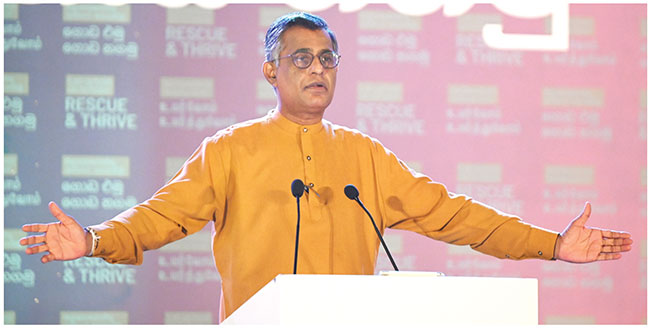
Lawmaker Ranawaka addressing the national conference of the ‘43 Brigade’ at the Monarch Imperial Auditorium, Sri Jayewardenepura, Kotte, recently

Can Rescue & Thrive project attract public attention?

By Shamindra Ferdinando

President Gotabaya Rajapaksa referred to lawmaker Patali Champika Ranawaka’s public statements, during a recent private meeting with some of his supporters. The President queried whether the former minister’s declarations shouldn’t be examined, taking into consideration his record as a minister (continuously from Feb 2007 to Nov 2019 under different Presidents).

President Rajapaksa questioned whether Samagi Jana Balavegaya (SJB) MP Ranawaka could absolve himself of the responsibility for the current crisis the country is experiencing. In other words, if the Cabinet of Ministers, headed by the President, is collectively responsible for decisions taken, can a member of that Cabinet absolve him/herself of that responsibility?

Against the backdrop of the ruling Sri Lanka Podujana Peramuna (SLPP) at the receiving end over the current crisis and the bankrupt Opposition trying to capitalize on the public misery, civil society grouping ’43 Brigade’, affiliated to lawmaker Ranawaka, has attempted to capitalise on the situation.

President Rajapaksa’s hitherto unreported comments on the former minister should be examined taking into consideration the project undertaken by the ’43 Brigade.’ MP Ranawaka emphasised at the National Convention of the ’43 Brigade’, in January, this year that whatever the current dispensation professed, the change of the system should begin in Parliament. The MP declared the country has been bankrupted due to the utterly irresponsible conduct of rulers between 2005 and 2015, conveniently forgetting his own leading roles in that regime.

The new political outfit has emerged close on the heels of ruination of traditional political parties and alliances. They have proved their policy statements are meant to deceive the people. Dr. Indrajit Coomaraswamy, one-time Governor of the Central Bank of Sri Lanka (July 2016-Dec 2019), recently blamed the current crisis on the failure on the part of successive governments to manage the expenditure since the country gained Independence. Sri Lanka had been plagued by a toxic combination of populist politics and an entrenched entitlement culture among the people, Dr. Coomaraswamy pointed out adding “Time and again, the electoral calendar has undermined fiscal discipline.”

The Election Commission (EC) organised an event at the five-star Galadari Hotel, to celebrate the national Voters’ Day with the participation of President Gotabaya Rajapaksa, on March 11, whereas the polls monitoring body, the People’s Action for Free and Fair Elections (PAFFREL) and the March 12 Movement jointly organised a public meeting at the Sri Lanka Foundation, on March 14, to mark the 90th anniversary of the country receiving universal franchise. Can celebration of such events, with a dance troupe, etc., be justified under any circumstances, at a time the country is on the verge of being declared bankrupt?

The ’43 Brigade’ has paid a glowing tribute to Dr. Coomaraswamy for the way he handled the monetary policy as Governor and head of the Monetary Board after having succeeded disgraced Arjuna Mahendran.

Former Attorney General Gamini Wijesinghe who delivered the keynote speech, at the SLF, lambasted the five-star parliamentary system for the ruination of democracy as well as the national economy. Wijesinghe quietly brashly blamed the executive, the legislature and the judiciary for the current calamitous situation. Damning declarations made by Dr. Coomaraswamy and Wijesinghe, if properly used, can possibly have quite a devastating impact on the major political parties and alliances. It would be pertinent to mention that the UNP is no longer a major political party. Instead, it has been reduced to just one National List seat filled contrary to the stipulated constitutional requirement. The electorate brought the UNP down to its knees at the last parliamentary election whereas its breakaway faction, the SJB, secured 54 seats. Lawmaker Ranawaka’s affiliation with the ‘43 Brigade’ obviously rattles the SJB.

The Opposition needs a common front against the incumbent President. At the 2010 presidential election, the Opposition accepted the then General Sarath Fonseka as the presidential candidate. In spite of being backed by the US and a coalition comprising the UNP-JVP-TNA-SLMC-ACMC as well as the civil society, Fonseka suffered a humiliating defeat.

At the 2015 presidential poll, Maithripala Sirisena quite comfortably succeeded, regardless of the then President’s personal Astrologer Sumanadasa Abeygunawardena‘s prediction in favour of Mahinda Rajapaksa. The coalition that had been unsuccessful at the 2010 presidential election achieved its objective at the 2015 election with the help of millions of dollars that the US spent on the sinister task as was revealed publicly by former American Secretary of State John Kerry.

In the run-up to the 2019 presidential election wartime Defence Secretary Gotabaya Rajapaksa emerged as the SLPP’s candidate and comfortably won the contest, primarily due to the public losing faith in traditional politicians and the 19th Amendment to the Constitution depriving Mahinda Rajapaksa another chance to contest the presidential poll.

Just two years into the Gotabaya Rajapaksa presidency, the national economy is in tatters. Although the crisis cannot be entirely blamed on the global epidemic Covid-19, the SLPP has sought to largely blame it all on Covid and the Russian invasion of Ukraine. Let us only hope Uncle Sam is not involved!

The Opposition cannot afford to pull in different directions. Opposition Leader Sajith Premadasa, who is also the leader of the SJB, seems to be confident that the current crisis can be solved by defeating Gotabaya Rajapaksa at the next presidential election. Obviously, Premadasa considers himself as their presidential candidate. Therefore, his demand made outside the Presidential Secretariat for early presidential election is nothing but rhetoric. The JVP that staged a far more aggressive protest at the same place ridiculed Premadasa. The JVP for a while forgot their protest targeted President Gotabaya Rajapaksa and instead attacked Sajith Premadasa.

Lawmaker Ranawaka joined the SJB protest along with defeated presidential candidate Sarath Fonseka. At one point, MPs Ranawaka and Fonseka flanked Sajith Premadasa as the SJB marched towards the Presidential Secretariat.

Having studied the ’43 Brigade’ proposals, along with a booklet launched by the then Minister Ranawaka, in 2019, that dealt with his performances as a minister over a period of 12 years, the writer sought an explanation from Attorney-at-Law Shiral Lakthilaka, a livewire of the project, as regards SJB MP Ranawaka’s role in the outfit.

Asked in what capacity MP Ranawaka addressed the national conference of the ‘43 Brigade’ held at the Monarch Imperial Auditorium, Sri Jayewardenepura, Kotte, and whether the outfit’s proposals could be considered as a sort of citizens’ manifesto for the next presidential and parliamentary polls? Lakthilaka said: “Not at all. It is a document that proposes policy framework and thinking to face the present crisis. MP Ranawaka addressed the gathering and endorsed the proposals as a leader of 43 Brigade.”

Lakthilaka, one-time advisor to President Maithripala Sirisena, stressed that the citizens’ initiative ‘43 Brigade’ was meant to mobilise people. Having launched ’43 Brigade’ in January 2021, the organisers released ‘Rescue & Thrive’ on January 23, 2022, amidst the current unprecedented economic crisis facing the country. There is no point in denying the fact that the ’43 Brigade’ exploits the ground situation to advance its agenda, the way ‘Viyathmaga’ did in the run-up to the last presidential election. Since the event at the Monarch Imperial Auditorium, in late January, the economy has suffered a series of shocks, with the government sharply divided over its agenda. At the time of the launch of ‘Rescue & Thrive’, the ’43 Brigade’ wouldn’t have anticipated, under any circumstances, the break-up of the SLPP with a section of the Cabinet rejecting the controversial decision on the Yugadanavi deal, sacking of ministers and the Russian invasion of Ukraine that has caused chaos everywhere. The unprecedented increase in the price of petrol and diesel has been blamed on the Ukraine war. It would be pertinent to mention that the US actions in Eastern Europe that threatened Russia’s legitimate security, political and economic interests, prompted President Putin to order the largest Russian offensive in the recent past.

Champika’s role, yahapalana policies

The 66-page publication dealt with the economic crisis and the ways and means of restoring stability. The organisers asserted their efforts influenced the electorate towards what they called a ‘social discourse aimed at a practical social vision.’

At the time, the ’43 Brigade’ publication unveiled its assessment and proposals, the situation was rather stable. However, since then the situation has taken a turn for the worse with practically every essential item in short supply with long queues for gas and petroleum products. Power cuts imposed for want of diesel required to generate power have disrupted life. Even before the disruption of essential supplies and services, the ’43 Brigade’ commented for the first time that the country is under a very real threat of going into bankruptcy.

Declaring that the ’43 Brigade’ has been warning of deterioration of the national economy, the outfit applauded its senior member lawmaker Ranawaka for warning the country in 2014 through the issuance of ‘Aalapaalu Deshapalanaya’ of the impending disaster and again addressing the issue at hand in 2016. However, the MP owed an explanation how/why he failed to explain the inordinate delay on his part to issue the warning having served President Mahinda Rajapaksa’s Cabinet since Feb 2007. Ranawaka served as the Minister of Environment and Natural Resources (Feb 01, 2007 to April 28, 2010), Power and Energy (April 29, 2010 to January 30, 2013) and Science, Technology and Scientific Research (Jan 31, 2013 to Nov 18, 2014). Then Minister Ranawaka switched his allegiance to Ranil Wickremesinghe in Nov 2014 along with Maithripala Sirisena. In the wake of the change of government, following the 2015 presidential election, Ranawaka was rewarded with Power and Energy Ministry (January 31, 2015 to Sept 07, 2015). Ranawaka received Megapolis and Western Province Development Ministry on Sept 08 and held that portfolio until the change of the government in Nov 2019. Having abandoned the UNP in early 2020, Champika, the one-time Jathika Hela Urumaya stalwart, contested the last general election on the SJB ticket. His one-time colleague in the JHU and Attorney-at-Law Udaya Gammanpila however opted for a political career with the SLPP and recently ended up with a rebellious faction within the government parliamentary group. Interestingly, the once quite influential JHU is now defunct while Gammanpila’s PHU remains a one-MP party.

The ’43 Brigade’ has placed the entire blame on Rajapaksas for the current situation on the basis of large scale borrowings during the 2005-2015 administration. The outfit says: “Careful perusal of loan installments for 2020 and 2021, excluding the Sri Lanka Development Bonds, would reveal that 70% of the installments in 2020 was of those borrowings during the 2005-2015 Rajapaksa regime. (Fought the separatist terrorists to a finish in the battle field, while the self-appointed international community led by the West kept harping that Lankan security forces were incapable of defeating the LTTE)

The debt burden increased to 77% in 2021. In contrast, installments for loans obtained during Senanayake, Bandaranaike, Jayewardene, Mrs. Kumaratunga and yahapalana eras, combined together amounts to just 23%.”

The ’43 Brigade’ defended the yahapalana administration under fire for taking massive commercial loans on the claim they were necessary to pay installments of loans obtained earlier. The outfit pointed out that out of USD 6.1 bn loans obtained in 2018, a staggering USD 5.8 bn (95% of total borrowings) were repaid as installments and interests. If not for IMF loans, the country would have been bankrupt during the 2016-2019 period due to loans obtained during the Rajapaksa administration.

The refusal on the part of the current dispensation to seek IMF assistance should be examined against the backdrop of claims the decision to do away with IMF assistance following the 2019 presidential election caused the crisis. Former Governor of the Uva, Southern and Central Provinces Keerthi Tennakoon is also on record as having blamed the SLPP government for breaking off negotiations with the IMF. The NGO activist who received multiple top appointments, courtesy Sirisena, has faulted the SLPP over the collapsing of talks with the IMF that resulted in the present crisis.

The ’43 Brigade’ accusations that feasibility studies and national procurement guidelines had been disregarded for the benefit of those who wielded power and their associates cannot be ignored against the backdrop of accusation they had amassed massive wealth. The outfit’s comments on financial status of the country at the time of the 2015 change of government are of crucial importance. According to a comprehensive study that had been conducted with the help of the IMF, some borrowings were actually hidden within state institutions to suppress the actual national debt.

Let me reproduce verbatim what the ’43 Brigade’ stated about yahapalana policies: “The key priorities of that government was to take steps to ensure that there was fiscal discipline within the government, improve economic competition, improve the image of the government by working in accordance with good governance principles, protect the rights of the people, democratisation of state rule and lay the foundation for an innovation economy.”

The recent accusations directed at the yahapalana government by former Attorney General Gamini Wijesinghe cannot be ignored. Wijesinghe went to the extent of blaming the UNP-SLFP administration for paving the way for the 20th Amendment by its failure to properly implement the 19th Amendment to the Constitution enacted in 2015.

Fall of yahapalanaya, GR’s emergence

The ’43 Brigade’ blamed what it called internal conflicts within the government and Treasury bond scams perpetrated in Feb 2015 and March 2016 for its downfall. The outfit also found fault with the yahapalana administration for its failure to make the public aware of the crisis caused by the previous administration. The pathetic failure to punish those who had been accused of waste, corruption and serious irregularities, too, contributed to the public losing confidence.

Champika’s outfit quite correctly explained how unprecedented tax concessions as well as reduction in VAT within weeks after the Nov 2019 presidential election eroded the national economy struggling to cope up with the growing crisis. The national economy has been experiencing difficulties at the time the change of government took place and those who advocated tax concessions should accept the responsibility for the current crisis. The current dispensation is in deepening turmoil with the divided SLPP parliamentary group pulling in different directions while some have chosen to remain silent.

Recent declarations made by Dr. Coomaraswamy and Gamini Wijesinghe should prompt the electorate to seriously think of the current political party system that has ruined the country. All those who had been previously elected to Parliament and in the current Parliament should admit the mayhem caused by them due to their selfish shortsighted policies and apologise to the nation. Genuine recovery efforts can take place only if they accept what they have done to the country.