Wednesday, 18 May 2022

Ranil takes premiership amidst BASL bid for all party-consensus

  SPECIAL REPORT : Part 419

Published

  
A smiling Premier Ranil Wickremesinghe reacts to President Gotabaya Rajapaksa after receiving the premiership. Gamini Senarath, Secretary to the President looks on. Mrs Maithri Wickremesinghe was present at the brief ceremony at the President’s House, Fort last Thursday evening (pic courtesy PMD)

By Shamindra Ferdinando

Retired Supreme Court Justice Rohini Marasinghe, in her current capacity as the Chairperson of the Human Rights Commission of Sri Lanka (HRCSL), directed the police to provide adequate protection for the President and the Prime Minister while protecting the freedom of speech and assembly through necessary and proportionate measures.

Justice Marasinghe, who received the appointment in Dec, last year, would never have believed she would be compelled to issue such a statement.

The HRCSL statement, issued on April 26, 2022, over a month after the eruption of violent protests at the private residence of President Gotabaya Rajapaksa, at Pengiriwatta, Mirihana, that lasted for several hours, didn’t name the President and the Prime Minister.

Mahinda Rajapaksa quit Temple Trees on May 10, less than 24 hours after he announced his resignation, in the wake of unprovoked violence directed at those demanding the resignation of both the President and the Prime Minister and the so-called peaceful protesters who lay siege to his official residence Temple Trees virtually making, him a prisoner therein.
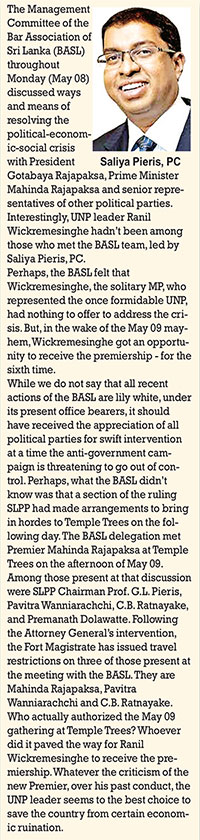
The first protest, targeting President Rajapaksa, was held at Pangiriwatte, Mirihana, on March 31, 2022. What began as a peaceful protest in the vicinity, quickly turned violent after the crowds made attempts to advance towards the President’s private home. The deployment of the Army, in support of the beleaguered police, failed to bring the situation under control.

Protesters set ablaze several vehicles, including two buses that brought Police and Army reinforcements to the scene of the unprecedented confrontation. Therefore, it would be pertinent to discuss the circumstances, Justice Marasinghe called for sufficient protection for President Gotabaya Rajapaksa and Prime Minister Mahinda Rajapaksa, over two weeks after the launch of the protest campaign, in front of the Presidential Secretariat, on April 09, 2022.

Perhaps, the HRCSL should have also advised the Army, as well as the Special Task Force (STF), regarding adequate protection for the President and the Prime Minister. The Army and the STF play an integral role in the protection of key leaders. The HRCSL cannot be unaware of the involvement of the Army and the STF in the protection of the President and the Prime Minister.

Justice Marasinghe called for ‘necessary and proportionate measures’ to meet the threat on the two leaders as those who had been demanding their resignation stepped up the campaign.

The HRCSL consists of five Commissioners, namely Justice Rohini Marasinghe (Chairperson), Venerable Kalupahana Piyarathana Thera, Dr. M.H. Nimal Karunasiri, Dr. Vijitha Nanayakkara and Ms. Anusuya Shanmuganathan. The President constituted the HRCSL in terms of the 20th Amendment to the Constitution in Dec. 2020. Justice Marasinghe and Ven. Kalupahana Piyarathana Thera were brought in Dec. 2021 in the wake of the resignation of HRCSL Chairman Jagath Balasuriya and NGO, guru Harsha Kumara Navaratne taking up the post of Sri Lanka High Commissioner to Canada.

Did HRCSL make an assessment before Justice Marasinghe issued instructions to the police? The HRCSL intervened in the wake of the erection of a new protest site, opposite Temple Trees, as the government struggled to cope up with an unprecedented political-economic-social crisis that brought the ruling Sri Lanka Podujana Peramuna (SLPP) to its knees.

The writer, over the last weekend, sought a clarification from Justice Marasinghe. The HRCSL Chief said that instructions were issued as access to the residences of the President and the Prime Minister had been blocked. The HRCSL was also informed of possible threats to their lives, Justice Marasinghe said, adding that the issue at hand should be examined on the basis of equal protection of the law.

In spite of HRCSL’s instructions, the police, and at least an influential section of the SLPP government, appeared to have been caught napping. Was it due to the fear of the wrath of the HRCSL or they being under the so-called international community spotlight? In fact, the law enforcement authorities had contributed to the rapid deterioration of the situation to such an extent that mobs took control of roads. Had the police top brass realized the gravity of the situation, in the first week of May, they would have definitely advised the then Prime Minister Mahinda Rajapaksa not to summon several hundreds of his supporters to Temple Trees. The failure on the part of the police to advise the ousted Premier was nothing but a monumental blunder.

In fact, the police appeared to have been part of a political project meant to dismantle those who had been protesting against the government, while laying siege to both Temple Trees and the Presidential Secretariat. The operation was meant to regain control. Therefore, a primary objective was to silence those who had been asking Prime Minister Mahinda Rajapaksa to step down.

President Gotabaya Rajapaksa, too, has been of that view, in the wake of about one-third of the SLPP parliamentary group demanding Premier Rajapaksa’s resignation to pave the way for an all-party interim administration.

PM, family take refuge in SLN base

Just two weeks after HRCSL asked the police to ensure protection of the President and the Prime Minister through ‘necessary and proportionate measures’ the latter had to move out of Temple Trees, under heavy security escort. President Gotabaya Rajapaksa had to authorize the deployment of SLAF assets to evacuate the ex-Prime Minister and some members of the family. They took refuge at the strategic Eastern Naval Command premises, Trincomalee.

By then, Yoshitha Rajapaksa, the ousted PM’s second son and Chief of Staff and his wife, Nitheesha Jayasekera, had left the country. Interestingly, Yoshitha left for Singapore at 12.50 am on May 09 on Singapore Airlines flight SQ 469 several hours before SLPP activists started arriving at Temple Trees.

Yoshitha Rajapaksa couldn’t have been unaware of the meticulous plans underway to bring in hundreds of supporters from all parts of the country to Temple Trees where the Prime Minister was to address them. Those who believed Premier Mahinda Rajapaksa was to announce his resignation were proved wrong. Instead, lawmaker Johnston Fernando and the then Premier Rajapaksa created an environment conducive for an ‘operation’ to evict those who had been protesting against the Prime Minister and the President. The operation boomeranged. The end result was the Prime Minister having to take refuge in the Trincomalee Navy base.

Two days later, the Fort Magistrate’s Court issued a travel ban on Mahinda Rajapaksa, MP Namal Rajapaksa and 16 others. They are Pavithra Wanniarachchi, Johnston Fernando, Sanjeewa Edirimanne, Rohitha Abeygunawardena, C.B. Ratnayake, Sanath Nishantha, Kanchana Jayaratne (Pavitra Wanniarachchi’s husband), Sampath Athukorala, Mahinda Kahandagama, Renuka Perera, Nishantha Abeysinghe, Amitha Abeywickrama, Pushpalal Kumarasinghe, Dilip Fernando and Senior DIG Deshabandu Tennakoon. The Senior DIG had been present at the time, SLPP goons broke through the police line, near the Galle Face hotel, to demolish the Galle Face protest camp.

The Magistrate also imposed a travel ban on seven others who had been wounded during the violence on the fateful Monday or were eye-witnesses to the attacks.

President of the Colombo High Court Lawyers’ Association Lakshman Perera told the writer that the Attorney General‘s Department moved the Fort Magistrate’s court amidst preparations made by his outfit to move the court. Speaking on behalf of the Association, Perera underscored the pivotal importance of ensuring the safety and security of all, regardless of whatever the accusations directed at them.

For how long would the ex-Premier have to live under the protection of the Navy? In response to media queries, Defence Secretary retired General Kamal Gunaratne told a hastily arranged press conference, at the Battaramulla Defence Complex, that as a former head of State Mahinda Rajapaksa was entitled to required security. When would the ex-PM be able to move freely as protests demanding President Gotabaya Rajapaksa’s resignation continue amidst traffic disruptions on main roads, especially over shortage of cooking gas? The situation remains extremely dicey.

Politically-motivated mobs destroyed many properties belonging to the Rajapaksa family. Mobs set ablaze the Rajapaksas’ ancestral home at Medamulana, Hambantota, and did not even spare the memorial built for their parents also at Medamulana, while the former Premier’s home in Kurunegala, too, was destroyed.

Properties belonging to elder brother, Chamal Rajapaksa and his son, Shashendra were also destroyed.

Gangs set fire to Green Ecolodge, situated very close to the Sinharaja rain forest. The hotel, situated close to the UNESCO heritage site, is widely believed to be owned by Yoshitha Rajapaksa, who recently warned JVP leader Anura Kumara Dissanayake of legal action against the accusations made in respect of Green Ecolodge. But the JVP instead of backing their accusations regarding that prized eco-property (torched by the politically-motivated mobs early last week) with facts, issued a veiled threat to expose Yoshitha on some other issues if he dared to go to courts. Comrade Nalinda Jayatissa told the media that they would raise his fake qualifications, how he managed to enter the famed British naval college Dartmouth, etc., if he ventured to challenge them in court.

Well organized mobs also looted and set fire to properties of over 50 MPs, mainly of the government, across the country. They and their families were left with only the clothes on their backs.

Politicos under threat

The government should do everything possible to prosecute those responsible for incidents of violence, regardless of their status. Destruction of lawmakers’ properties should be denounced and punitive action taken against all those responsible. Who would take the responsibility for killing SLPP Polonnaruwa District MP Amarakeerthi Atukorale and his police bodyguard at Nittambuwa? The slain MP was on his way home, after attending the Temple Trees meet earlier in the day. Did Atukorale open fire on those who blocked his path? Did his police bodyguard, too, open fire? The post-mortem revealed the MP had been lynched and contrary to initial reports there were no gunshot injuries. The post mortem also set the record straight that the MP didn’t commit suicide with his own weapon as initially claimed by interested parties over the social and mainstream media. Having allowed SLPP goons to go on the rampage, the police pathetically failed to intervene when the public retaliated. Politically-motivated groups obviously took advantage of the situation. At an early stage of the ongoing protest campaign, German Ambassador in Colombo Holger Seubert tweeted: “I’m impressed with how peaceful the proud people of Sri Lanka are exercising their right to freedom of expression. It reminds me of German unification back in 1989 when we experienced how powerful peaceful protests can be. Wishing all parties involved the strength to remain peaceful.”

During the second JVP inspired-insurgency, the then JRJ government issued firearms to members of Parliament. Some lawmakers formed their own death squads. The government accepted extra-judicial killings as part of the overall defence against the JVP/DJV violence perpetrated against the UNP and those connected with that party.

Members of the SLPP raised security issues at a meeting they had with President Gotabaya Rajapaksa at the President’s House last Saturday (14). The government shouldn’t expect normalisation of the situation until tangible measures are taken to stabilize the national economy. Lawmakers wouldn’t be safe as long queues for diesel, petrol and cooking gas exist with the vast majority of the electorate struggling to make ends meet. The government should be mindful of interventions made by foreign powers and other external and internal players hell-bent on exploiting the situation to their advantage.

Recent demonstrations near the Parliament compelled the police to close several roads for traffic on May 05 and 06. The police closed the section from Diyatha Uyana junction (Polduwa junction) to Jayanthipura junction and from Jayanthipura junction to the Denzil Kobbekaduwa road to deter mass invasions by well organised demonstrators. The police asserted that closure of the roads were necessary, in spite of the inconvenience caused to the public, to prevent hindrance to lawmakers entering and leaving the parliamentary complex.

The police closed down the same sections of the roads yesterday (17) to facilitate parliamentary proceedings. Trade unions combine and the Inter-University Students’ Federation (IUSF) have vowed to lay siege to the Parliament. The warning that had been made several days before the May 09 mayhem should be reviewed. The trade union grouping and the IUSF affiliated to the Frontline Socialist Party (FSP), the breakaway JVP faction, should be mindful of the crises the country is experiencing.

A tragedy

War-winning President Mahinda Rajapaksa having to take refuge in the Trincomalee SLN base is a tragedy. Mahinda Rajapaksa gave resolute political leadership to Sri Lanka’s war effort at a time the vast majority of lawmakers felt the LTTE couldn’t be defeated. Therefore, many accepted peace at any cost. They were prepared even to give up Sri Lanka’s unitary status in a bid to reach a consensus with separatist Tamil terrorists mollycoddled by Western powers. Mahinda Rajapaksa had the strength and political acumen to take on the LTTE. The country should never forget how President Rajapaksa, in spite of strong objections from the military, flew into Kebitigollewa on June 15, 2006, in the immediate aftermath of a claymore mine attack on a passenger bus. The blast killed over 60 men, women and children. Having visited the survivors, President Mahinda Rajapaksa gave an assurance that the terrorism would be eradicated. The promise was made two months before the LTTE resumed large-scale offensive action in the Northern and Eastern Provinces. Sri Lanka brought the war to a successful end in May 2009. But, the President, who restored peace, has ended up virtually running for his life and had to seek refuge in a military installation for the time being as post-war policies and strategies take their toll with interested parties taking advantage of the tragedy facing the country.

Wednesday, 11 May 2022

Possible link between TID head’s arrest and Easter Sunday massacre baffles retired DIG

 SPECIAL REPORT : Part 418

Published


Retired DIG Priyantha Jayakody, one-time police spokesman, last Saturday (07) advised the police on how to deal with the current wave of protests. Jayakody addressed the media in the wake of President Gotabaya Rajapaksa declaring a State of Emergency following police crackdown on protests near the Parliament. The retired top cop urged his former colleagues not to give into illegal orders, under any circumstances. Jayakody is the first retired top cop to declare his support for the ongoing countrywide campaign for political reforms.

By Shamindra Ferdinando

Actor Jehan Appuhamy carried a life-sized cross on his shoulder from Katuwapitiya, in the Katana electorate, to the entrance of the President’s Office (Old Parliament), Galle Face, where a high profile ‘Go Gota Home’ campaign was underway.

The three-day trek began at the St. Sebastian Church premises, on April 19, where exactly three years ago Achchi Muhammadu Muhammadu Hasthun detonated his suicide device, killing over 100. Hasthun is widely believed to be one of the bomb makers, responsible for six suicide blasts, in the space of 20 minutes, beginning at 8.45 am on that particular day. The first detonation occurred at the St. Anthony’s Shrine, Colombo, Kochchikade, at 8.45 am. Other blasts ripped through Kingsbury, Colombo, at 8.47 am, St. Sebastian’s Church, Katuwapitiya, also at 8.47, Shangri-La, Colombo at 8.54, Cinnamon Grand, Colombo at 9 and Zion Church, Batticaloa at 9.05.

In addition to those planned blasts, there were two explosions – one at the Tropical Inn Guest House, Dehiwela, where one terrorist triggered his explosive device, and the last blast at Dematagoda, where Fatima Ibrahim, the wife of Inshaf Ibrahim (the Cinnamon Grand bomber), blew herself up, killing three police commandos. The blast also claimed the lives of her three young sons and her unborn child.

Actor Appuhamy’s endeavor received the blessings of the Catholic Church, campaigning for justice. The Catholic Bishops’ Conference has repeatedly demanded that the perpetrators of the Easter Sunday massacre, as well as those who failed to thwart the conspiracy, due to sheer negligence, or some other reasons, be punished, regardless of their standing in the society.

Appuhamy completed a 25-mile long journey, on April 21, on the 13th day of the ‘Go Gota Home’ campaign. A group of Catholics joined a protest launched opposite Temple Trees, three days later, demanding justice for the Easter Sunday carnage. The Catholic Bishops’ Conference members, and the Archbishop of Colombo, Rt. Rev. Malcolm Cardinal Ranjith, has pledged their support for the ongoing campaign, demanding the resignation of President Gotabaya Rajapaksa and the entire Cabinet-of-Ministers, including Prime Minister Mahinda Rajapaksa.

Quite a number of Catholics displayed placards, demanding justice for the Easter Sunday victims, an issue that has sharply divided the country, experiencing the worst-ever post- independence economic-political and social crisis.

Retired Deputy Inspector General (DIG) of Police, Priyantha Jayakody, in an open letter, addressed to Defence Secretary, retired Gen. Kamal Gunaratne, published in Annidda, in its May Day edition, has questioned the failure on the part of the incumbent dispensation to bring the perpetrators of the Easter Sunday massacre to justice. Jayakody also queried the inordinate delay in completing the high profile investigations, launched during the yahapalana administration, into the alleged attempts to assassinate the then President Maithripala Sirisena and Gotabaya Rajapaksa, the incumbent President.

The current dispensation couldn’t absolve itself of the responsibility for not adequately addressing the grievances of the Catholic Church, Jayakody told The Island. It would be a grave mistake on the government’s part to believe the issues, at hand, would be forgotten in a couple of years, therefore the current protests could be ignored. Jayakody, who had served the Police Department for almost 40 years, retired in late April 2021.

Namal Kumara affair

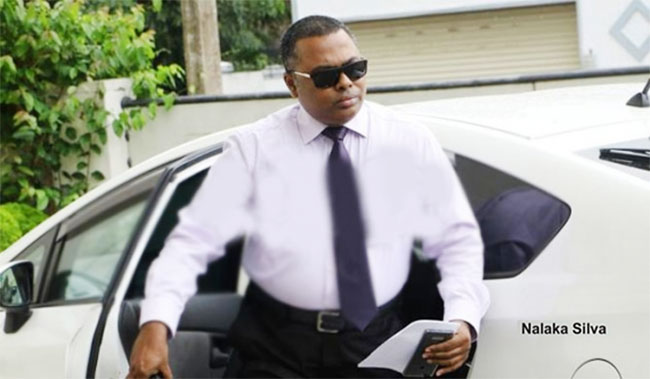
Ex-DIG Jayakody asserted that the arrest of DIG Nalaka Silva, the head of the Terrorist Investigation Division (TID) on Oct 25, 2018, over his alleged involvement in an attempt to assassinate President Maithripala Sirisena and incumbent President Gotabaya Rajapaksa (then an ordinary citizen) may have facilitated the Easter Sunday suicide mission. Declaring that at the time of Silva’s arrest, the officer had been tracking the would-be Shangri-La bomber, and the leader of the suicide squad, Zahran Hashim, Jayakody questioned whether the investigator was falsely implicated in an alleged assassination plot to clear the way for the dastardly suicide attacks.
Jayakody emphasized that the conspirators had intervened when the investigation reached a crucial stage. Did the government pay sufficient attention to the unwarranted delay at the Attorney General’s Department, in respect of its failure to deal with Zahran Hashim’s file? The National Catholic Committee for Justice, in a missive, dated July 12, 2021, addressed to President Goabaya Rajapaksa, referred to the conduct of the Attorney General’s Department. The Committee pointed out to the President, the PCoI (Presidential Commission of Inquiry) recommendation to the Public Service Commission (PSC) that disciplinary action be taken against State Counsel Malik Azees and Deputy Solicitor General Azad Navavi (PCoI Final Report, Vol 01, p 329).

The Criminal Investigation Department (CID) arrested Silva after having questioned him over a period of five days. At the time of his arrest, Silva had been suspended on the instructions issued by the National Police Commission (NPC).

Jayakody pointed out how within 24 hours after the TID Chief’s arrest, President Maithripala Sirisena sacked the Cabinet-of-Ministers, including Prime Minister Ranil Wickremesinghe. In spite of Mahinda Rajapaksa being sworn in as the Prime Minister, he couldn’t prove a simple majority in Parliament. A disappointed President Sirisena had no option but to dissolve Parliament, on Nov 09, 2018, and set January 05, 2019 as date for parliamentary election. But, the Supreme Court intervention restored Ranil Wickremesinghe’s premiership. Thus President Sirisena’s plan for January 05, poll was thwarted; thereby the stage was set for scheduled presidential election.

According to Jayakody, the arrest of the TID Chief, over alleged assassination plots, automatically crippled the unit. Those who had been attached to the TID were looked down, both by other police officers and men, as well as the public.

The retired top cop questioned the role played by the media, particularly the television channels, in propagating claims made by police informant Namal Kumara, as regards alleged plots to assassinate President Sirisena and incumbent President Gotabaya Rajapaksa. Pujith Jayasundera, who had served as the yahapalana IGP, is on record as having told the PCoI that Namal Kumara was paid by the Presidential Secretariat. Jayasundera quoted Dr. Saman Kithalawarachchi, the then Chairman of the Presidential Narcotics Bureau, as having told him that Namal Kumara served as a lecturer and was paid by the Presidential Secretariat.

Jayakody, in his open letter to Gen. Gunaratn, asked for the status of the investigation launched, following Namal Kumara’s unprecedented claims. “The people have a right to know. The government, under siege over the economic fallout, should come clean,” Jayakody stressed, adding that the ongoing countrywide protests reflected the crisis the country is in today.

Key issues

The Police Department owed an explanation to the public regarding the status of the investigation into the disgraced TID Chief’s alleged involvement in planned political assassinations. DIG Jayakody said that the incumbent dispensation, having repeatedly assured justice for the Easter Sunday victims, was yet to bring a critically important investigation into the Namal Kumara affair, to a successful conclusion. The need for a thorough investigation into the constitutional coup, perpetrated by President Maithripala Sirisena immediately after DIG Silva’s arrest, cannot be ignored. Would Zahran Hashim have gone ahead with the attacks if the constitutional coup succeeded? DIG Jayakody raised the following unresolved accusations leveled by Namal Kunara:

* DIG Silva dispatched a police hit squad, that had been assigned the task of carrying out VIP assassination, to Batticaloa

* DIG Silva sought special weapons used by snipers

* DIG Silva conspired with the then Prime Minister Ranil Wickremesinghe

* Involvement of Thushara Peiris, a person living overseas, in the assassination conspiracy

*Conspiracy to involve ‘Makandure Madush’ in the conspiracy

Suspected drug baron, Samarasinghe Arachchige Madush Lakshitha, alias ‘Makandure Madush,’ was shot dead in the early hours of Oct 21, 2020. Madush was killed, under controversial circumstances, while being in police custody. At the time of the incident, Madush had been in the custody of the Colombo Crime Division (CCD). The police claimed that Madush received gunshot injuries at the Lakshitha Sevana apartment complex at Applewatta, in Maligawatta. Madush was brought to Colombo on May 05, 2019, from Dubai, where he was arrested on February 05, 2019.

Jayakody questioned the rationale in Namal Kumara’s accusations, TID Chief’s arrest and delivering a crippling blow to investigations into Zahran Hashim’s outfit. Finally, the wartime Defence Secretary Gotabaya Rajapaksa, who had been the alleged target of a police assassination attempt, won an opportunity to contest the 2019 presidential election, on the SLPP ticket. Gotabaya Rajapaksa received the mandate of 6.9 mn votes whereas the other claimed target, Maithripala Sirisena, in his capacity as the SLFP leader, contested the 2020 General Election. Sirisena re-entered Parliament having contested the Polonnaruwa electoral district. The SLFP group, in the current Parliament, comprised 14 lawmakers, including one National List MP. Except for Angajan Ramanathan, elected on the SLFP ticket (Jaffna District), the remaining 13 entered Parliament on the SLPP ticket.

Ex-DIG Jayakody said that in the wake of the SLPP victory, they expected rapid progress, not only in the Easter Sunday massacre probe, but also investigations into the Namal Kumara affair. Jayakody compared the investigations into the Easter Sunday attacks, and the Namal Kumara affair, with that of the 1962 coup attempt meant to remove the then Premier Sirimavo Bandaranaike from power. Jayakody recalled how top military personnel, who had been accused of the bid to assassinate Premier Bandaranaike, were dealt with the following investigations. Unfortunately, investigations into Namal Kumara’s disclosure hadn’t been completed, even over three and half years after the arrest of TID Chief.

In his open letter, Jayakody posed the following questions to Gen. Gunaratne: (i) Would you disclose the current status of the investigations into claims made by Namal Kumara (ii) Would you explain why cases hadn’t been filed in court against ex-DIG Nalaka Silva or other suspects involved in the alleged assassination attempts (iii) Have the investigators succeeded in verifying the claims made by Namal Kumara? If the accusations could be verified, what delayed all suspects being arrested? In respect of those who had been arrested so far, what caused the delay in the government moving court against them? (vi) Have the investigators realized that there is no basis for Namal Kumara’s accusations? If so, why a case hadn’t been filed against the former police informant over making false accusation and finally (vii) Could you explain the failure on the part of the government to conduct investigations speedily in spite of one of the two main targets of ex-DIG Nalaka Silva, as alleged by Namal Kumara, is serving the incumbent administration as the President, who is also the Commander-in-Chief of the armed forces, and the other leader of a constituent party and a lawmaker.

Cardinal’s stand

The government should be mindful of the consequences of further delay in bringing the investigations into a conclusion. The widely held belief that the incumbent dispensation deliberately delayed, or undermined the investigations, may cause quite a serious situation, particularly against the backdrop of the Geneva-based United Nations Human Rights Council (UNHRC) taking up the issue last year. Sri Lanka Co Chairs at the UNHRC, too, have taken up the issue.

Jayakody warned that unless the government, at least now, dealt with the Namal Kumara affair properly, the public would believe it was related to the Easter Sunday conspiracy. According to Jayakody, the public are gravely suspicious of Namal Kumara ‘drama’ being the precursor for later developments. Jayakody questioned Gen. Gunaratne’s response to Archbishop of Colombo Rt. Rev. Malcolm Cardinal Ranjith’s repeated demands for justice. Referring to Gen. Gunaratne’s recent response to the Cardinal’s public criticism of the handling of the Easter Sunday investigations, Jayakody asserted that the Defence Secretary’s advice to the Cardinal that he should inform the CID of any relevant information without making public statements sounded like a challenge. Jayakody emphasized that the Cardinal had taken the issue beyond the CID against the backdrop of growing suspicions that justice couldn’t be expected under the current dispensation.

Jayakody, identifying himself as a Catholic, drew the government’s attention to the Cardinal’s fight, both here and abroad, that has attracted the attention of the international community. The retired top cop stressed that the government hadn’t so far been able to counter the spate of issues raised by the Catholic Church regarding the Easter Sunday massacre. Instead of challenging the Catholic Church, the government should answer pertinent questions.

Responding to The Island queries, Jayakody emphasized that he didn’t want to issue a character certificate to DIG Nalaka Silva. Jayakody said the issue at hand is whether Namal Kumara, at the behest of some interested party/parties, directed a spate of allegations, at the then TID Chief Silva, to create an environment conducive for law enforcement authorities to move against DIG Silva. Had Silva received the wrath of the powers that be, as he pursued the now proscribed National Thowheed Jamaat (NTJ) responsible for the Easter Sunday massacre?

The Easter Sunday massacre created an environment that undermined the yahapalana administration. The public responded to the SLPP’s assurances to ensure security in the run-up to the 2019 Presidential Election. Three years later, those who vowed to deal with extremism and terrorism are under fire over the failure to unravel the Easter Sunday mystery.

Tuesday, 3 May 2022

Sri Lanka’s moment of shame

 SPECIAL REPORT : Part 417

Published

  
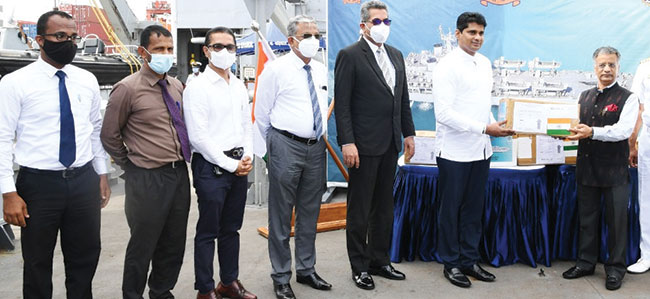
Onboard INS Gharial at the Colombo harbour: Prof. Jayasumana receiving drugs and other medical supplies from Indian HC Baglay (extreme right) Standing next to Jayasumana is Health Secretary retired Maj. Gen. Dr. Sanjeewa Munasinghe, Director General Health Services, Dr. Asela Gunawardana, Coordinator in charge of donor activities, Dr Anver Hamdani, Dr. Sangabodi Wijesinghe and Dr Panduka Mahamithawa

Successive governments allowed exporters to keep their USD earnings out of the country. Governments also turned a blind eye to people sending back money through illegal means (black market), especially with the help of private foreign currency dealers whatever the USD rate is. Basil Rajapaksa, during his short stint as the Finance Minister, went to the extent of commending the black market route much to the surprise of his colleagues. A British and Sri Lankan passport holder says Sri Lanka paid a huge price for turning a blind eye to what was happening. The promotion of the black market, at the expense of the banking system, cannot be condoned under any circumstances, he says, and those responsible should be named and shamed.

By Shamindra Ferdinando

INS ‘Gharial’–a Landing Ship Tank of the Indian Navy-arrived at the port of Colombo on the morning of April 29 amidst the worst ever economic-political-social crisis experienced in post-independence Sri Lanka now threatening to plunge the country into chaos. The vessel brought a large consignment of drugs and other medical supplies required by Sri Lanka as the country struggled to maintain it’ashealth services.

The delivery of Indian medical assistance highlighted the pathetic failure of the incumbent dispensation to meet the basic needs of the population. INS ‘Gharial’ left for the Maldives at 4:30 pm on May Day.

Prof. Channa Jayasumana, in his capacity as the Health Minister accepted the Indian medical supplies onboard the Indian LST. Indian High Commissioner Gopal Baglay was there to welcome the Health Minister. Prof. Jayasumana recently succeeded Keheliya Rambukwella following the massive violent explosion of public anger at President Gotabaya Rajapaksa’s private residence at Pengiriwatta, Mirihana, on March, 31 over the economic fallout.

Rambukwella continuously dismissed claims pertaining to the shortage of drugs and other medical supplies at State-run hospitals. Therefore, the Minister maintained that as sufficient supplies had been available there couldn’t be a shortage of drugs and medical supplies.

Having been twice elected to Parliament from the Kandy electoral district, Rambukwella switched his allegiance to the then President Mahinda Rajapaksa during his first term. Media Minister Rambukwella succeeded Health Minister Pavitradevi Wanniarachchi, in August 2021, in a mini-cabinet reshuffle that also conveniently removed Dullus Alahapperuma from the Energy Ministry to facilitate the controversial deal on the Yugadanavi power station.

Separate statements, issued by the Indian High Commission and the Health Ministry following the handing over of the Indian supplies, exposed how the Health Ministry tried to cover up a serious shortage of drugs and medical supplies at the Peradeniya Teaching Hospital.

The statements issued by the Indian High Commission clearly stated that the consignment of drugs and medical supplies, delivered on April 29, were meant for the Peradeniya Teaching Hospital whereas the Health Ministry statement made no reference at all to the Peradeniya hospital crisis that was first reported on March 29, 2022, during Indian External Affairs Minister Dr. S. Jaishankar’s visit to Colombo.

The Indian HC statement stressed several important issues (1) Indian Navy ship was especially deployed to ensure the expeditious delivery of the medical consignment, a gift from the people of India (2) The delivery was in response to a request from the Peradeniya Teaching Hospital after Dr. Jaishankar’s intervention after hearing difficulties experienced by hospital authorities (3) India has received more specific requests from Sri Lankan state hospitals and now is in the process of scheduling dispatches and (4) Of the USD 1 bn credit line provided by India to Sri Lanka, USD 200 mn has been allocated for the supply of drugs and medical supplies.

Let me reproduce verbatim the last paragraph of the Indian HC statement that dealt with the overall assistance provided so far this year. Eldos Mathew Punnoose, head of Press, Information and Development stated: “India has been extending expeditious support to Sri Lanka in the recent past.

Overall economic assistance which stands close to USD 3 billion in 2022 alone has been of various kinds:

USD 1 billion credit line for essentials; USD 500 million credit line for purchase of petroleum products; USD 400 million bilateral currency swap; and over USD 1 billion under the Asian Clearing Union Framework. The USD 1 billion credit line is operational and 16,000 MT of rice has already reached Sri Lanka, among other items, under this credit line.”

Why did India fund the development of Most Ven. Maduluwawe Sobitha Thera village Elapathagama in the Anuradhapura district during yahapalana administration? India made available Rs 300 mn for the project, launched in memory of the late Ven. Maduluwawe Sobitha, the architect of Mahinda Rajapaksa’s defeat at the 2015 presidential election. Karu Jayasuriya, who sought Indian assistance, in his capacity as the Speaker today heads the National Movement for Social Justice (NMSJ) the brainchild of the late Ven. Sobitha.

Jayasuriya, who poses as a Mr. Clean in local politics, always clad in immaculate white clothing, owed an explanation as to why he sought foreign funding for a political project. No point in finding fault with India for seeking to enhance its clout. The Indian project seems on track and facilitated by the deterioration of Sri Lanka’s national economy.

Tamil Nadu Chief Minister M. K. Stalin, too, sought to take advantage of the situation. Sri Lanka shouldn’t be surprised the way the State government unanimously passed a resolution urging “the central government to positively consider the request of the Tamil Nadu Government to immediately send food and other essential commodities including lifesaving medicines from Tamil Nadu, to the people of Sri Lanka, who are facing severe hardships; Stalin cannot be unaware of the Indian assistance programme.

We also should not forget the fact that arch villain in the US State Department, responsible for many a bloody regime change around the world, especially in the toppling of the legally elected government in Ukraine in 2014, where she was seen handing out sweets in the streets of Kiev, while the US instigated maidan rebellion was in full swing there, led by Nazis, was here recently.

India’s great generosity could be due to it seeing a hidden Western hand in the burgeoning problems here. Already the West has taken up the human rights club to hammer India with over Kashmir no sooner New Delhi refused to toe the one sided Western narrative on Ukraine, while they have had no qualms about atrocities committed in Yemen and elsewhere, with their blessings.

While we don’t condone even for a moment some utterly imbecile decisions of this government that have exasperated the country’s problems, yet at the same time we can’t help in suspecting a Victoria Nuland led American plot here. Did she come here to give the go ahead to a bloody regime change with willing local quislings, especially among the Western funded NGOs? Don’t forget the fact that former US Secretary of State John Kerry foolishly crowed publicly about how they funded the regime change here in 2015!

At the mercy of foreign countries

The incumbent government obviously let down the people. Having repeatedly promised to do better than the previous administration, accused of twice robbing the Central Bank and betraying the war-winning military at the Geneva-based United Nations Human Rights Council, the Sri Lanka Podujana Peramuna (SLPP) within two years presided over the collapse of the national economy. It was no doubt speeded up by the successfully drying up our worker remittances (billions of dollars) by an underground banking network. Here again our intelligence failed us badly.

The Indian statement that dealt with the pathetic state of Sri Lankan hospitals should be examined against the backdrop of how the current dispensation pleaded with the international community to help run state hospitals.

Indonesia, in consultation with the World Health Organization (WHO) offered essential medicines and medical equipment worth USD 1.6 mn. Altogether 3.1 tonnes of humanitarian assistance was to be delivered in two batches-the first arrived in Sri Lanka on April 28 and the rest will be on May 08. Sri Lanka received a cheque for 700,000 Thai Baht. The Sri Lankan mission in Bangkok, in a statement issued on April 29, quoted President of the National Assembly and Speaker of the House of Representatives of the Kingdom of Thailand, Chuan Leekpai as having said 700,000 Thai Baht was not much, but the gesture represented a feeling of true friends, helping each other in difficult times.

Italy, too, announced emergency aid to the tune of Rs 125 mn (341,115 Euros) to procure drugs and medical supplies. The Italian mission in Colombo said that their contribution would be channlled through the Italian Bilateral Emergency Fund at the World Health Organization (WHO) to allow payment to suppliers abroad directly as per planned procurement by the Ministry of Health in line with supply-chain management processes.

The Foreign Ministry announced that the International Committee of the Red Cross, too, has assured drugs and medical supplies and even humanitarian assistance whereas cash-strapped Sri Lanka engaged in a desperate exercise to procure essentials. The failure on the part of the Rajapaksas to come to terms with the reality has further deteriorated the overall outlook. The crisis rapidly developing at the network of state and private hospitals has been publicly acknowledged by Prof. Jayasumana whose appearance at an Indian Navy vessel that brought in drugs and other medical supplies reminded Sri Lanka utterly corrupt and inept political party system that they were only good at one thing. That was to rob the country. The Opposition is no better in having staged two daylight Central Bank robberies and those same MPs, who did their best to whitewash those crimes have no shame in now pointing the finger at the present rulers.

Since the forex crisis curtailed imports, including petroleum products, lawmakers and officials appeared with Indian High Commissioner Baglay and other officials at various occasions. Energy Minister Udaya Gammanpila and his successor Gamini Lokuge appeared with Indians when India delivered petroleum products. Then there was another picture of humiliation when trade officials, including Trade Secretary,

Bhandrani Jayawardhana received a consignment of Indian rice. As the situation deteriorates further Sri Lanka would go down further under debt as a result of 30 years of continuous mismanagement of the national economy by those elected by the people.

China-Lanka relations at a crossroads

Chinese Ambassador in Colombo Qi Zhenhong didn’t mince his words when he expressed concerns over Sri Lanka entering into a dialogue with Washington-based International Monetary Fund (IMF). Declaring that China is ‘sad’ over Sri Lanka’s move Qi Zhenhong, addressing the media at the Cinnamon Grand on April 25, faulted the latter over its strategy.

Having worked closely with Sri Lanka throughout the war against separatist Tamil terrorists, China is obviously annoyed and disappointed over the latest developments though they were not really surprising.

The India backing for Sri Lanka at the IMF must have compelled China to rethink its overall strategy vis-a-vis Sri Lanka. US ally India backing Sri Lanka at the IMF is clearly in line with the overall Western strategy pursued by ‘Quad’ comprising the US, Japan, Australia and India.

Ambassador Qi Zhenhong side-stepped a media query on Sri Lanka seeking IMF intervention at a media briefing at the Kingsbury on March 21. The Chinese envoy revealed Sri Lanka’s request for funds amounting to USD 2.5 bn, in addition to USD 2.8 bn obtained since the global Covid-19 pandemic eruption in early 2020. Subsequent media queries forwarded to the Chinese Embassy, in respect of Sri Lanka’s request for 1.5 billion US dollars in buyer’s credit and another billion-dollar loan, didn’t yield a positive response.

Obviously with the advent of Basil Rajapaksa, the dual US citizen and his pro-American line (read Yugadanavi deal concluded at midnight in utter secrecy, for example) the China’s distancing from us began.. When we were fighting the war with the separatist terrorists, the West always tried to trip us and it was China that stood by us. Actually by helping us to fight separatist terrorists Beijing did India a great favour as the real target of the West has always been the breakup of India.

The besieged government fighting for its survival even at the expense of Prime Minister Mahinda Rajapaksa may not know yet or haven’t examined the issues at hand in depth. What would be the consequences of Sri Lanka’s dialogue with the IMF? One of the key issues that had emerged since Ambassador Zhenhong’s April 25 media briefing is whether China would turn down Sri Lanka’s request for USD 2.5 bn or can Colombo do away with the Chinese funding and be at the mercy of the IMF?

The Chinese Ambassador called the second media briefing two weeks after newly appointed Governor of the Central Bank Dr. Nandalal Weerasinghe announced Sri Lanka would suspend payments on its foreign debt and initiate negotiations with creditors.

The IMF has declared that Sri Lanka’s debt is not sustainable or cannot be repaid with macro-economic adjustments involving rate and tax hikes alone and debt had to be restructured to reduce the gross finance need to a manageable level. China believes Sri Lanka is on the wrong path.

Sri Lanka needs to discuss contentious issues with China. It would be pertinent to ask whether Sri Lanka’s decision to enter into a dialogue with the IMF had been discussed with China the way Sri Lanka secured India’s backing for the move. Or did India advice Sri Lanka to take its woes to the IMF? Sri Lanka needs to set the record straight without further delay. Sri Lanka-IMF dialogue appeared to have dealt quite a serious blow to China-Sri Lanka relations and the failure to address China’s concerns may cause irreparable damage.

During yahapalana administration, also on the request of Speaker Karu Jayasuriya, China arranged the entire parliament to visit China. China also provided laptops to members of Parliament and senior officials.

Perhaps Justice and Finance Minister Ali Sabry’s recent meeting with the Chinese Ambassador must have helped stabilize the situation.

Galle Face uproar

The continuing political crisis against the backdrop of economic fallout continues to attract foreign attention. For over three weeks, the government has struggled to contain the volatile situation and the continuing large scale protests opposite the Presidential Secretariat and Prime Minister Mahinda Rajapaksa’s office/residence at Temple Trees, indicate the deterioration. To make matters worse for the government, the Maha Sangha has issued an ultimatum to Prime Minister Mahinda Rajapaksa to resign forthwith to enable consensus among political parties represented in Parliament. The ultimatum was issued the day after a top Australian diplomat received a briefing on the developments from the Foreign Secretary, Admiral Prof. Jayanath Colombage.

The unprecedented challenge to the government has received the attention of First Assistant Secretary, North and South Asia Divisions of the Department of Foreign Affairs and Trade of Australia, Gary Cowan when he met Colombage at the Ministry of Foreign Affairs.

First of all, the Foreign Ministry claim that the crisis was solely due to the Covid-19 pandemic cannot be accepted. Australia, being a ‘Quad’ member, is fully aware of the developments here and it would be nothing but silly to pretend Covid-19 alone caused the current economic crisis. The declaration that the government and President Gotabaya Rajapaksa were prepared for a solution in terms of the Constitution, too, cannot be taken seriously as the situation has reached a critical point, with the public demanding the resignation of both President Gotabaya Rajapaksa and the entire Cabinet of Ministers, including Prime Minister Mahinda Rajapaksa. There is no doubt that reference has been made to law enforcement personnel opening fire on those who blocked the main railway line at Rambukkana.

In spite of strong relations between the two countries, Australia is among those who punished the war-winning Sri Lankan military on the basis of unsubstantiated allegations, obviously towing the Western Line, dictated by Washington and London. Perhaps, the Foreign Ministry should have politely inquired as to how and on what basis Maj. Gen. Chagie Gallage was categorised as a war criminal and deprived of visa during the yahapalana administration. The Australian official was here to mark the 75th anniversary of the establishment of diplomatic ties between Australia and Sri Lanka.

The government seems to have conveniently ignored the ground situation. Former Foreign Affairs Minister and the leader of the Mahajana Eksath Peramuna (MEP), that has aligned itself with the SLPP on May Day declared the ruling party was still in control. Addressing supporters at Nugegoda, lawmaker Gunawardena emphasised that they formed a government not to quit in the face of protests. The MEP leader declared that the SLPP, and those aligned with the ruling party, had the mandate, both in and outside Parliament. The Chief Government Whip reiterated the commitment of President Gotabaya Rajapaksa, Premier Mahinda Rajapaksa and Members of Parliament to the government, amidst about one third of those elected on the SLPP ticket demanding the immediate resignation of the entire Cabinet of Ministers, including the Prime Minister. The absence of President Rajapaksa, the Premier, as well as the founder of the SLPP, Basil Rajapaksa, at the event, underscored the crisis the ruling coalition is faced with. The MEP leader appeared to have conveniently forgotten the government has suffered irreparable damage, therefore, incapable of exercising any political power.