Tuesday, 10 August 2021

Roadmap for India relations, growing Chinese influence and Quad politics

 SPECIAL REPORT : Part 380
Published

  
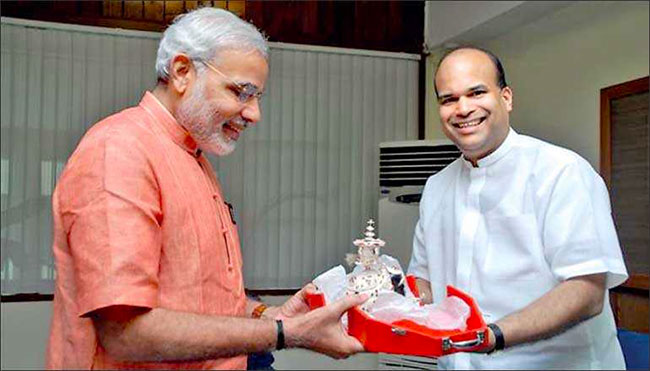
January 2009 Gujarat: The then Tourism Minister of Mahinda Rajapaksa administration Milinda Moragoda with the Chief Minister of Gujarat Narendra Modi. Moragoda was there to address the annual "Vibrant Gujarat" Investor Forum.

By Shamindra Ferdinando

Naming former lawmaker Milinda Moragoda as Sri Lanka’s High Commissioner in New Delhi had been one of the most controversial decisions taken by President Gotabaya Rajapaksa at the onset of his administration.

The appointment was made in spite of strong objections, even by some of those who had backed Gotabaya Rajapaksa’s candidature at the 2019 presidential election. President Gotabaya Rajapaksa went to the extent of issuing a statement vowing to go ahead with appointments made following careful consideration. However, Moragoda couldn’t take up his new assignment due to the raging Covid-19 epidemic in India. Although the Covid-19 situation remains critical, Moragoda is planning to move to New Delhi soon.

Ahead of taking up his post in Delhi in the coming weeks, Moragoda released a document titled, ‘Integrated Country Strategy for Sri Lanka Diplomatic Missions in India’ that dealt with the 2021-2023 period.

Deputy High Commissioner in New Delhi Niluka Kadurugamuwa, in his introduction to what can be called a road map, asserted that this could provide the required agenda though ideally it should be further fine-tuned and developed in the implementing phase. Sri Lanka needs a long term strategy. Sri Lanka cannot pursue an agenda to suit a particular envoy/government though differences in political approach are understandable.

A meticulous planner, Moragoda having thanked the Deputy HC and members of the Country Team as well as the group of experts who provided invaluable advice and inputs in preparation of the roadmap declared he accepted full responsibility for any omissions or oversights.

Having first entered Parliament through the UNP National List in late 2000, Moragoda successfully contested the 2001 and 2004 general elections on the UNP ticket though in 2007 he switched his allegiance under controversial circumstances to the then President Mahinda Rajapaksa. Moragoda, who had been a key government negotiator in talks with the LTTE during Ranil Wickremesinghe’s tenure as the Premier in 2001-2003 was among those UNPers who received ministerial portfolios after they switched sides in 2007. Moragoda played quite an impressive role during his tenure as the Justice Minister. The writer had an opportunity to cover the rehabilitation process undertaken under Moragoda’s guidance. Perhaps, the involvement of the All Ceylon Hindu Congress in the rehabilitation of LTTE cadres is definitely a high point for the then Minister.

Moragoda remained with the Rajapaksas and was President Gotabaya Rajapaksa’s first choice as the country’s top envoy in New Delhi. Throughout his political career, and post-parliament period, Moragoda pursued a strategy that was alien to many MPs/ex-MPs with the formation of Pathfinder Foundation being a singular achievement. Formation of Pathfinder Foundation (PF) that dealt in foreign relations among a range of other issues with the focus on developing relations and Quad countries, namely the US, Japan, Australia and Japan and US ally South Korea. In the wake of receiving diplomatic assignment, Moragoda gave up the chairmanship of PF to top ex-career diplomat Bernard Goonetilleke, who had been with the outfit for some time.

But what the writer likes to highlight is the recognition of PF by China as one of its top 10 partners here during Mahinda Rajapaksa’s tenure as the President. The recognition was made at a ceremony to mark the Chinese New Year and Sri Lanka’s National Day held at the BMICH. Among those present were President Mahinda Rajapaksa (current Prime Minister), Prime Minister D.M Jayaratne (passed away in Nov 2019), Minister of Health Maithripala Sirisena (former President, SLFP leader, and currently SLPP MP), Minister of External Affairs G.L Peiris (SLPP Chairman and Education Minister), Secretary to the President Dr. P.B. Jayasundera and President Gotabaya Rajapaksa’s Senior Advisor Lalith Weeratunga. The then Chinese Ambassador Wu Jianghao who presented the top 10 partner’s award to Moragoda, Founder of Pathfinder Foundation, is now Assistant Minister of Foreign Affairs.

In his thank you note therein addressed to President Gotabaya Rajapaksa, Moragoda declared the two countries were bound by circumstances of geography, economics, culture, history, and just as importantly, democratic values. Against this backdrop, the former lawmaker asserted any setbacks to Indo-Lanka relationship, however intractable they may appear to be at any given point in time, could only be temporary. Perhaps the proposed road map should be discussed taking into consideration what Moragoda stated in the section headlined ‘Mission Strategic Framework.’ Let me reproduce that vital part verbatim: “In recent years, the Indo-Sri Lanka bilateral relationship has been increasingly dominated by a transactional approach. This is a consequence of the changes in the geo-political equilibrium in the region that have resulted in a growing trust deficit.”

But the Milinda Moragoda saga is not complete, we believe, without going into his background. He is the grandson of late legendary first Sri Lankan Governor of the country’s Central Bank N. U. Jayawardena, but left it under a cloud. The literally self-made, NU then went onto build a financial empire, but that too caved-in in the late’ 80s amidst a public spat with then Governor of the Central Bank Dr. H.N.S Karunatillake.

Indo-Lanka relations and Quad

Sri Lanka cannot even discuss Indo-Lanka relations without taking into consideration the US-led Quad (Quadrilateral Security Dialogue) the very purpose in its formation has been to gang up against Beijing. The Quad comprising the NATO leader the US, Japan, Australia and India, meant to counter the rapidly growing Chinese military, political and economic power and is also wary about Sri Lanka’s strategic relationship with China. The passage of the Colombo Port City Economic Commission Bill in May this year certainly dismayed Quad. The outgoing US Ambassador Alaina B. Teplitz in April and in July this year sought to subvert the high profile Colombo Port City project. Of course, the CHEC Port City promptly set the record straight. Unfortunately, the government and the Foreign Ministry remained conveniently silent though issues raised by Ambassador Teplitz shouldn’t go unanswered. It would be pertinent to mention that the US statement definitely had the backing of other Quad members, Japan, Australia and India. South Korea though not being part of Quad certainly stands with the US-led grouping.
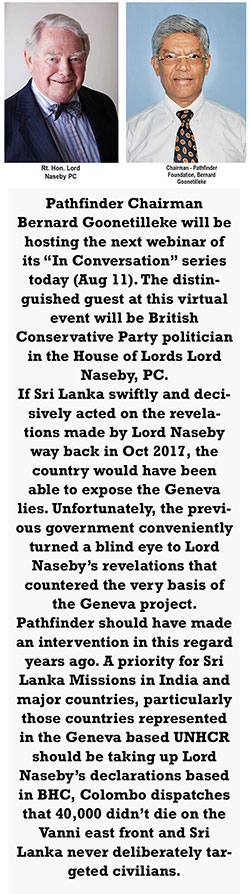
HC Moragoda’s roadmap that dealt with Indo-Lanka relations cannot be discussed leaving Quad out. In fact, Indo-Lanka relations, regardless of Sri Lanka’s position on bilateral matters, are essentially part of Sri Lanka’s response to Quad concerns relating to China. The forthcoming Malabar exercises off the coast of Guam in the Indo-Pacific are taking place ahead of the much-awaited Quad summit in the US in which Australian, Japanese and Indian leaders are scheduled to meet the US President Joe Biden in October.

Sri Lanka should pay attention to the evolving situation. If decision-makers bother to peruse Chapter 6: ‘An Indocentric Practitioner of Realpolitik’ in ‘Makers of India’s Foreign Policy’ authored by the late Indian Foreign Secretary J.N.Dixit , it wouldn’t be too difficult to understand the complexity of the situation.

The Moragoda roadmap made reference to the loss of about 1,300 Indian soldiers here. The reference is quite questionable and inappropriate. Let me reproduce the relevant section verbatim below: “The intervention in the conflict in Sri Lanka where India lost about 1300 soldiers (emphasis is mine), India’s commitment of billions of dollars as development assistance and grant assistance to Sri Lanka, the Indo-Sri Lanka Free Trade Agreement, cooperation extended through training of Sri Lankan military personnel, undergraduate and postgraduate scholarships to Sri Lankan students, as well as Joint Statements issued on the occasions of state visits of the leaders of the two countries, are but a few examples that amply demonstrate the breadth and depth of the strategic partnership enjoyed by the two countries (emphasis is mine).

It would certainly be a mistake on Sri Lanka’s part to recognise India’s uninvited intervention here as a benevolent example of the strategic partnership between the two countries. Actually, the Indian intervention should have been correctly assessed taking into consideration the late Dixit’s assessment as regards the then Indian Premier, the late Indira Gandhi’s decision vis a vis Sri Lanka.

In his memoirs, Dixit stated: “The two foreign policy decisions on which she could be faulted are: her ambiguous response to the Russian intrusion into Afghanistan and her giving active support to Sri Lankan Tamil militants. Whatever the criticisms about these decisions, it cannot be denied that she took them on the basis of her assessment about India’s national interests. Her logic was that she could not openly alienate the former Soviet Union when India was so dependent on that country for defence supplies and technologies. Similarly, she could not afford the emergence of Tamil separatism in India by refusing to support the aspirations of Sri Lankan Tamils. These aspirations were legitimate in the context of nearly 50 years of Sinhalese discrimination against Sri Lankan Tamils.

In both cases, her decisions were relevant at the point of time they were taken. History will judge her as a political leader who safeguarded Indian national interests with determination and farsightedness.”

Dixit also justified the Indian intervention on the basis of what he described as ‘Sri Lankan government’s evolving security connections with the US, Pakistan and Israel.’

Indian stand in Geneva

Can one envisage the normalisation of Indo-Lanka ties as long as war-winning Sri Lanka remained on the United Nations Human Rights Council (UNHRC) agenda? Can we ever forget Sri Lankan armed forces and political leadership are being hounded for bringing the devastating near three-decades long war to an end whereas those responsible for terrorism here sit in judgment? Sri Lanka needs to set the record straight. India can never absolve itself of the responsibility for causing terrorism here.

The world should acknowledge Sri Lanka would never have to fight a conventional military challenge on its soil if not for the Indian sponsorship of terrorism. Obviously, India wants everyone to conveniently forget its past military misadventure here (July 1987-March 1990) as it seeks a bigger role in the world stage as a US ally. India joined the US project against China long before the formation of Quad in 2007. Whether New Delhi’s policy towards Sri Lanka would be influenced by the overall Quad strategy in Indo-Pacific, Sri Lanka should be wary of India exploiting Geneva as a platform to pursue its objectives here. Clearly Quad countries, as well as South Korea home to nearly 30,000 US military personnel might be swayed to take a common stand in Geneva. Those countries either vote for Geneva resolutions moved by interested parties against Sri Lanka or abstained. Having caused terrorism here in the’ 80s to pave the way for the deployment of the Indian Army in 1987 with catastrophic consequences, India urged Sri Lanka in Geneva March 2021 to address Tamil aspirations. India said that Sri Lanka should take necessary steps through the process of reconciliation and full implementation of the 13th Amendment (shoved down our throat by Delhi) to the Constitution of Sri Lanka. Why should the 13th Amendment to Sri Lanka’s Constitution or the new Constitution making process be an issue at the Geneva-based UNHRC?

The March 2021 Geneva session paved the way for a fresh international investigation into Sri Lanka’s accountability issue. Those who had openly and tacitly backed fresh investigation remained conveniently silent on now-disclosed diplomatic cables from the British High Commission in Colombo (January-May 2009) which contradicted unsubstantiated war crimes accusations directed at Sri Lanka.

It would also be pertinent to mention that Quad countries the Japan and Australia, have to share the expenditure incurred by the US military deployment. South Korea, too, pays for the US military. The US-India relations are now at an extremely high status with the latter being part of the Western powers’ overall thinking. Therefore, Sri Lanka cannot, under any circumstances, ignore the fact its close relationship with China may cause apprehensions among Quad members, particularly India. Such a situation cannot be addressed by improving bilateral relations between Sri Lanka and India. That is the undeniable truth. Against the backdrop of unbearable devastation caused by the raging Covid-19 epidemic, Sri Lanka is easy prey for foreign powers. The epidemic has weakened the country to such an extent that repayment of debt of USD 01 billion International Sovereign Bond Issue received media attention. Have you ever heard of such a fund transfer receiving media attention? Bloomberg quoted State Minister Ajith Nivard Cabraal as having said Sri Lanka has transferred funds to repay the $1 billion bond by Tuesday (July 27) deadline.

Roadmap: Seven primary objectives

As mentioned, the objectives of the Sri Lankan High Commission are (1) Elevate the existing close bilateral relationship to a strategic level through increased interactions at political level (2) Bolster foreign investments as well as earnings from exports. Achieve significant export growth and increase foreign exchange earnings, with the ultimate objective of increasing productivity, employment generation and international competitiveness to uplift the living standards of the people in Sri Lanka, with a view to achieving the macro-economic targets set out for the period 2020- 2025, in the Government Policy framework document, ‘Vistas of Prosperity and Splendour’ (3) Expand collaboration in the fields of strategic cooperation, defence and Indian Ocean security between Sri Lanka and India (4) Further enhance cooperation between Sri Lanka and India, particularly in the fields of culture, education and science and technology, to promote Sri Lanka’s interests (5) Project a more positive image of Sri Lanka in India through public diplomacy initiatives, with a view to reaching out to the people of India and strengthening people-to-people contacts (6) Enhance connectivity between Sri Lanka and India and finally (7) Promote Sri Lanka’s interests in protecting its ocean resources.

Perhaps one of the most important issues (objective number 7) is taking tangible measures to stop ongoing large scale organised poaching in Sri Lankan waters by the Indian fishing fleet. In spite of talks with the Central government, relevant state governments and other stakeholders, poaching continues unabated much to the dismay of local fishermen. India had the wherewithal to comfortably curb the Indian fishing fleet from crossing the Indo-Lanka maritime boundary though New Delhi would never do so for obvious reasons. During the conflict (1980s-2009) terrorists exploited Indian poaching to move men and lethal material between South India and Sri Lanka. The poaching issue can be successfully dealt with only if India is genuinely interested in denying access to her fishermen, who literally invade Sri Lankan waters in thousands of boats to plunder our fish resources. Indo-Lanka relations should be examined against such bilateral issues as well as India being part of Quad ranged against emerging Superpower China. The bottom line Indo-Lanka relations cannot be decided bilaterally. The 99-year-lease of Hambantota port to China, flagship Chinese venture Colombo Port City project, Chinese managed terminal in the Colombo Port and a plethora of other agreements are all part of not only Indo-Lanka relations but relations with other Quad countries as well. Quad nations, the US and Japan recently conducted naval exercises off Trincomalee with the Sri Lanka Navy. The exercise marked a new phase of their strategy as Sri Lanka struggled to maintain a balance and is now forced to walk a diplomatic tightrope.

Tuesday, 3 August 2021

Celebrating 50 years of Lanka-Singapore diplomatic ties with fugitive Mahendran harboured there

 SPECIAL REPORT : Part 379

Published

  
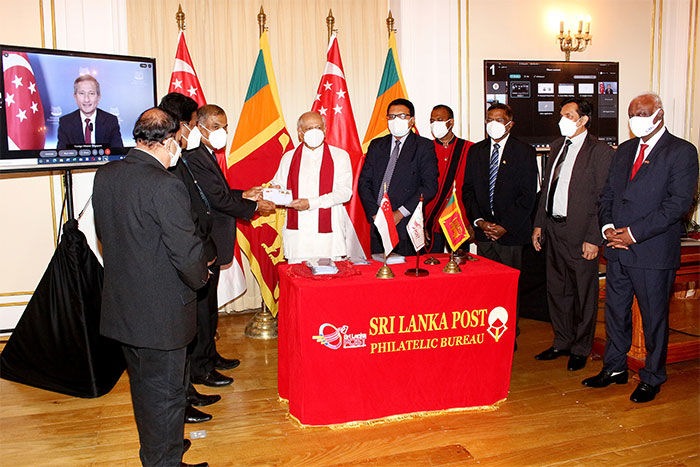
Foreign Minister Dinesh Gunawardena attends a ceremony at the Foreign Ministry on July 27, 2021 to mark the 50th anniversary of the establishment of diplomatic ties with Singapore. Singaporean FM Dr Vivian Balakrishnan joined the event virtually. Sri Lanka issued two stamps to mark the occasion.

By Shamindra Ferdinando

UNP leader and yahapalana Prime Minister Ranil Wickremesinghe was a political devil and the earlier administration in which he served as PM, akin to a mismatched wedding, former President Maithripala Sirisena told the Presidential Commission of Inquiry (PCoI) investigating the Easter Sunday attacks.

SLFP leader Sirisena told the PCoI that disputes arose between him and Wickremesinghe within the first week of establishing the yahapalana government.

“Within the first week Wickremesinghe wanted to appoint Arjuna Mahendran as the Governor of the Central Bank. I wasn’t happy because Mahendran was a citizen of Singapore. However, Wickremesinghe insisted that Singaporean of Sri Lankan origin Mahendran was the ideal person and since I also did not want to create a conflict, within a week of coming to power, I let it happen,” Sirisena said.

The ex-President said that their relationship further deteriorated after he appointed the Presidential Commission of Inquiry, in January 2017, to investigate the Central Bank Treasury Bond Scams. Mahendran sought refuge in Singapore about a year after the appointment of the PCoI. The Commission comprised Supreme Court Justice K.T. Chitrasiri, the late SC Justice P S Jayawardena and retired Deputy Auditor General V. Kandasamy. Sumathipala Udugamsuriya functioned as its Secretary.

President Sirisena couldn’t convince Singapore to hand over Mahendran to Sri Lanka though he repeatedly vowed to get him.

Mahendran was indicted in June 2019 for causing losses to the government. The Treasury bond scams, the October 2015 Geneva betrayal, in between the two scams and the Easter Sunday carnage, sealed the fate of yahapalana partners, the UNP and the SLFP.

The Joint Opposition/Sri Lanka Podujana Peramuna in the run-up to the 2019 presidential and 2020 parliamentary elections, vowed to bring back Mahendran. Recalling how the LTTE financier, living in Malaysia had been brought back in 2009, some JO/SLPP spokespersons vowed to bring back Mahendran.

In spite of a change of government, in Nov 2019, the government hadn’t been able to secure Mahendran’s arrest. Singapore continues to ignore Sri Lanka’s request to hand over Mahendran. It would be pertinent to mention the previous yahapalana administration entered into Free Trade Agreement with Singapore in January 2018. The agreement followed just six rounds of talks beginning July 2016.

Singapore has indicated that handing over of Mahendran is very much unlikely. The Colombo High Court Trial-at-Bar last month ordered the Treasury bond scam case to proceed in spite of the absence of Mahendran and Ajahan Gardiya Punchihewa. Both are abroad. The bench comprised High Court Judges Damith Thotawatte, Manjula Tilakaratne and Mohamed Irshadeen.

This directive was given when the case in respect of the misappropriation of Treasury bonds worth Rs 36 bn at the Central Bank bond auction on March 29, 2016 was taken up in court. It was the far larger second Treasury bond scam perpetrated by Mahendran with the connivance of the then government, the first being the Feb 27, 2015 scam. Altogether, the Attorney General has moved court against 10 persons, including Mahendran for misappropriation of Rs 688 mn in the Treasury bond issue held on Feb 27, 2015. The suspects included Mahendran’s affluent son-in-law Arjun Aloysius, who actually carried out the scams though his firm PTL.

We have grave suspicions about the squeaky clean image that Singapore has been putting out to the world, especially after how it picked up a Supreme Court Judge from here after he went into quiet retirement soon after then President Chandrika Kumaratunga went around the country accusing him of helping an LTTE man to escape justice here. (VINCENDIRAJAN FLED THE COUNTRY NO SOONER HE WAS GIVEN BAIL). And presto that tainted SC Judge was appointed to a respected arbitration panel there. So we cannot believe that a country like Singapore, whose intelligence gathering is second to none didn’t know about our judge’s background or was he picked because of his sordid background?


Stamp launch

Let me reproduce a statement headlined ‘Joint stamp launches in Sri Lanka and Singapore to commemorate 50 years of diplomatic ties’ issued by the Foreign Ministry on July 27, 2021. The following is the text of the statement verbatim: “A joint stamp release ceremony was held at the Foreign Ministry, Sri Lanka, on 27 July to mark the 50th anniversary of the establishment of diplomatic ties with Singapore which took place on the same day in 1970. This milestone event was held with the participation of the Foreign Minister Dinesh Gunawardena and Minister for Foreign Affairs of Singapore Dr. Vivian Balakrishnan, joining virtually.

The two stamps ceremonially unveiled at the event, were especially designed for the occasion to depict the theme “Marine Conservation”, and showcase the restoration of Coral Ecosystem in Sri Lanka, and Mangroves in Singapore and reflects the shared interest and commitment of both countries in protecting the marine environment.

Speaking at the occasion, Foreign Minister Dinesh Gunawardena highlighted the long standing friendly relations between the two countries, nurtured by deep rooted linkages at community and societal levels. He recalled his meeting with Minister Balakrishnan when both were holding different portfolios and the discussions held on tackling challenges posed by climate change across the globe. Minister Gunawardena said further that the unveiling of commemorative postage stamps to mark the 50th anniversary of diplomatic ties, undoubtedly shows the great warmth and friendship that exist between the two countries.

The Minister of Foreign Affairs of Singapore Dr. Vivian Balakrishnan, in his remarks, spoke on the warm and long-standing nature of Singapore-Sri Lanka relations. He noted the close and meaningful cooperation between our two countries, including during this COVID-19 period.

The event was attended by the former Sri Lanka High Commissioners who served in Singapore, Chitranganee Wagiswara, Nimal Weerarathna, Ferial Ashraff and Consul of Singapore in Sri Lanka Dr. Jayantha Dharmadasa, Singaporean business community in Sri Lanka, Secretary of the Ministry of Mass Media, Officials of the Foreign Ministry and the Department of Posts.

Meanwhile, in Singapore, a ceremony was held at the Shangri La a few hours prior to the Colombo event where High Commissioner of Sri Lanka to Singapore Sashikala Premawardhane and Non-Resident High Commissioner of Singapore Chandra Das unveiled the two stamps in the presence of Director-General of the South Asia and Sub-Saharan Africa Directorate of the Ministry of Foreign Affairs of Singapore Gilbert Oh. Deputy Director of Postal & Consumer Policy, Infocomm Media Development Authority of Singapore (IMDA) Ruth Wong, and Vice President Philately & Stamps Peggy Teo together with several other officials of MFA, IMDB, SingPost and the High Commission of Sri Lanka.

The Foreign Ministry extends its appreciation and congratulations to the Government of Singapore, Ministry of Foreign Affairs of Singapore, Infocomm Media Development Authority of Singapore, SingPost, and the Department of Post of Sri Lanka and to the High Commission of Sri Lanka in Singapore for the successful issuance of the commemorative stamps marking 50 years of friendship between Sri Lanka and Singapore.”


A Singaporean of Sri Lankan origin

Even if Mahendran attended the event at Shangri La, Singapore, the public shouldn’t be surprised. Whatever, the government spokespersons say, Singaporean Mahendran obviously received assurance that he would enjoy the protection of Singapore, regardless of Sri Lanka’s push to bring the fugitive to justice. Examination of Sri Lanka’s pathetic failure to get hold of Mahendran should be examined against the backdrop of celebration of 50 years of diplomatic ties.
Why does Singapore continue to protect Mahendran? Did the incumbent regime here make a genuine effort to get Mahendran back to Colombo? What is the responsibility of Sri Lanka Parliament as regards the failure on the part of the government to convince Singapore to hand over Mahendran? UNP leader Ranil Wickremesinghe, who orchestrated Mahendran’s appointment as the Governor of the CBSL, immediately after the 2015 presidential election, is now back in parliament as the UNP’s solitary National List MP of that party. Have we heard any government lawmaker demanding an explanation from Wickremesinghe over accountability on his part regarding the Treasury bond scams and Mahendran taking refuge in Singapore? The CBSL was under Wickremesinghe at the time Mahendran perpetrated the Treasury bond scams, the court hadn’t been moved against him. The main Opposition Samagi Jana Balavegaya (SJB) is not in a position to attack Wickremesinghe over the Treasury bond scam as it consists of former UNP lawmakers who backed the UNP leader’s stand on bond scams.

The JO/SLPP and the SJB have conveniently forgotten the Treasury bond scams. The then President Sirisena, who paved the way for the much bigger second Treasury bond scam in March 2016 by dissolving Parliament in late June 2015 to save the UNP government reeling under the first scam. By the time, Sirisena received the PCoI report in late Dec 2017 or soon thereafter Mahendran was away. Mahendran couldn’t have left the country without the top UNP leadership’s knowledge. Wickremesinghe knew Mahendran was leaving. In fact, President Sirisena and Wickremesinghe hadn’t been able to agree on many contentious issues, including the Free Trade Agreement with Singapore though the President finally gave in.

The incumbent government owes the country an explanation why Mahendran couldn’t be extradited in spite of making representations to Singapore. In early Dec 2020, the then Attorney General Dappula de Livera submitted a note of clarification to Singapore as regards the request to Mahendran.

The Attorney General tendered the extradition request to the Defence Ministry and the Foreign Affairs Ministry in 2019 for necessary authentication and transmission to the Singaporean government after the Permanent High Court at Bar issued an arrest warrant on Mahendran.

Singapore’s Ministry of Foreign Affairs subsequently informed that the Singapore Government would consider the extradition request once the necessary supporting information and documents were received.

In September 2019, the Ministry of Foreign Affairs forwarded the extradition request on Arjuna Mahendran, to the Sri Lankan High Commission in Singapore. The extradition request was then forwarded to the Government of Singapore for necessary action.

However, Singapore has declined to hand over Mahendran. Singapore is believed to have questioned the basis of the ongoing investigation into the Treasury bond scams. Speaker Lakshman Yapa Abeywardena should hold the debate on the much delayed Treasury bond scams in Parliament without further delay. The failure on the part of Parliament to debate the PCoI report on the Treasury bond scams cannot be justified or tolerated under any circumstances. Those political parties represented in Parliament should be ashamed for their failure to debate the report for well over three years.

How can we forget the fact that Wickremesinghe made a desperate bid to extend Mahendran’s term in spite of accusations relating to the 2015 and 2016 Treasury bond scams? Under heavy pressure to replace Mahendran, Wickremesinghe pushed for Charitha Ratwatte’s appointment as Governor.

In spite of issuance of Interpol red notice on Mahendran, in relation to the ongoing investigation into Treasury bond scams, he remains safe in Singapore, the number one destination for Sri Lankan lawmakers and even Presidents to seek medical treatment. President Sirisena was in Singapore when the Easter Sunday suicide bombers mounted near simultaneous attacks in Colombo, Negombo and Batticaloa. Sirisena claimed that he was in Singapore for a medical checkup when he received a message from Colombo about the carnage.


Chronology of events

Jan. 8, 2015:

Presidential election

Jan.9, 2015:

Maithripala Sirisena sworn in as President (now SLPP lawmaker, representing Polonnaruwa district)

Jan.9, 2015:

Ranil Wickremesinghe sworn in as Prime Minister (now solitary UNP MP in Parliament)

Jan.23, 2015:

Then Finance Minister Ravi K recommended Arjuna Mahendan as Governor, CBSL (No longer in Parliament)

Jan. 26, 2015:

President Sirisena appointed Singaporean Mahendran as Governor, CBSL (privileged life in Singapore)

Feb. 26, 2015:

Mahendran met ministers, Ravi K, Kabir H (now SJM lawmaker) and UNP Chairman Malik S (not engaged in active politics now) at CBSL, allegedly to discuss a massive fund requirement of Rs 18 bn (All three politicians were present when President Sirisena lambasted the UNP over treasury bond scams on Dec 16, 2018 at the Presidential Secretariat in the presence of PM Wickremesinghe and Mrs. Wickremesinghe.)

Feb 27, 2015:

First bond scam perpetrated. Within hours, those who mattered knew how PTL had carried out the operation in connivance with Mahendran.PTL is a fully owned subsidiary of Perpetual Capital (Pvt.) Limited, owned by Geoffrey Joseph Aloysius and Arjun Joseph Aloysius. The Central Bank was under the purview of Premier Wickremesinghe, though previously it functioned under the Finance Ministry.

President Sirisena directed his party to lodge a complaint with the CIABOC. The high profile institution, handling of that particular inquiry, should be examined for obvious reasons.

March 10, 2015:

Wickremesinghe, following consultations with Sirisena, appointed a three-member committee to probe the issuance of treasury bonds. The committee comprised those considered UNP loyalists i.e. Attorneys-at-law Gamini Pitipana, Mahesh Kalugampitiya and Chandimal Mendis.

May 21, 2015:

The Joint Opposition requested Speaker Chamal R to call a special debate on the bond scam.

May 22, 2015:

Special Sub Committee of CoPE appointed to probe the Feb 27, 2015 issuance of treasury bonds. The 13-member Sub Committee had its inaugural meeting on the same day under the chairmanship of Dew Gunasekera.

May 26, 2015:

Probe commenced with Treasury Secretary Dr. R.H.S. Samaratunga and Director General, Department of Treasury M.S.D. Ranasiri was questioned (Later it was revealed Samaratunga took part in a discussion when Ravi K issued controversial directives to state bank officials pertaining to issuance of treasury bonds).

June 18, 23, 2015:

CoPE questioned Mahendran. The Singaporean was the last to appear before the committee.

June 25, 2015:

Wickremesinghe alleged CoPE denied him an opportunity to appear before the watchdog. (In terms of the Standing Orders, ministers cannot be summoned before COPE.)

June 26, 2015:

Sirisena dissolved Parliament to thwart CoPE presenting its report on Treasury bond scam. General election set for Aug. 17, 2015. The dissolution prevented Dew Gunasekera from presenting his report on the first Treasury bond scam. In a related action, UNP Deputy Justice Minister Sujeewa Senasinghe moved court to bar Gunasekera from releasing his report to the media.

June 28, 2015:

The writer in an exclusive story based on Dew Gunasekera’s suppressed report headlined ‘COPE inquiry finds Mahendran had intervened in bond issue’ in the June 28 edition of The Sunday Island dealt with Mahendran’s clear complicity in the first scam.

July 3, 2015:

Dew Gunasekera declared that Sirisena could take tangible action on what he called ‘dossier of evidence’ produced by his committee. Gunasekera asserted that Sirisena could call for a copy of the 447-page report from the Secretary General of parliament W.B.D. Dissanayake. President Sirisena chose not to do anything.

Aug. 17, 2015:

Parliamentary polls.

Nov. 27, 2016:

COPE reconstituted with JVP MP Sunil Handunetti as its Chairman.

March 29, 2016:

The second far bigger bond scam perpetrated. The Central Bank was still under Premier Wickremesinghe.

June 29, 2016: Sirisena visited the CBSL much to the discomfort of Wickremesinghe and Mahendran. Recently, President Sirisena revealed how Wickremesinghe tried to discourage him from visiting CBSL.

July 2, 2016:

Renowned economist Dr. Indrajith Coomaraswamy succeed Mahendran as Governor of CBSL after Wickremesinghe made an abortive bid, with the support of Karunanayake, to secure Sirisena’s approval for Charitha Ratwatte to be appointed to the post.

January 27, 2017:

Sirisena appoints P-CoI consisting of Supreme Court Judges Kankanithanthri T. Chitrasiri and Prasanna Sujeewa Jayawardena and former Senior Deputy Auditor General Kandasamy Velupillai to probe bond scams.

Aug. 2, 2017:

Karunanayake was humiliated at PCoI over the lease of a fifth-floor super luxury condominium apartment at the Monarch Residencies that was allegedly paid for by Arjun Aloysius.

Aug. 10, 2017:

Foreign Minister Karunanayake resigned in the wake of shocking revelations at the PCoI. Karunanayake received the foreign ministry portfolio on May 25, 2017. Karunanayake switched portfolios with Mangala Samaraweera.

Nov 16, 2017:

Evidence at the Bond Commission revealed how Arjun Aloysius had been in touch with some members of the COPE during its hearings. Aloysius had spoken a total of 227 times to Sujeewa Senasinghe, 18 times to Dayasiri Jayasekara, 176 times to Harshana Rajakaruna and 73 times to Hector Appuhamy during the period commencing January 2015.

Nov 20, 2017:

Wickremesinghe received kid glove treatment at PCoI with AG Jayantha Jayasuriya (now Chief Justice) specially assigned to question him. But Wickremesinghe’s affidavits received by PCoI in response to questions sent to him by it and the AG’s department and PM’s responses to AG Jayasuriya established the UNP’s leader’s complicity and failure to thwart the scams beyond doubt.

Dec 30, 2017:

PCoI report handed over to Sirisena.

Jan. 4, 2018:

Sirisena, in a special statement to the nation regarding the P-CoI report mounted a devastating attack on the UNP over Treasury bond scams in the run-up to the Feb. 10 local government polls.

Feb 04, 2018:

Arjun Aloysius and Chief Executive Officer of PTL Kasun Palisena arrested. Subsequently, they were granted bail.

Feb. 10, 2018:

UNP and SLFP suffered debilitating setbacks at the long delayed local government polls. Their sidekick JVP too suffered heavy defeat.

March 28, 2018:

Sirisena removed the Central Bank and the Securities and Exchange Commission from Wickremesinghe’s purview 1,125 days after the first bond scam and 727 days after the second bond scam.

April 04, 2018:

Wickremesinghe comfortably defeats a No-Confidence Motion (NCM) moved by the Joint Opposition and the SLFP against him by a majority of 46 votes.

Tuesday, 27 July 2021

A common agenda for Opposition sought amidst political chaos

SPECIAL REPORT : Part 378

Published

  
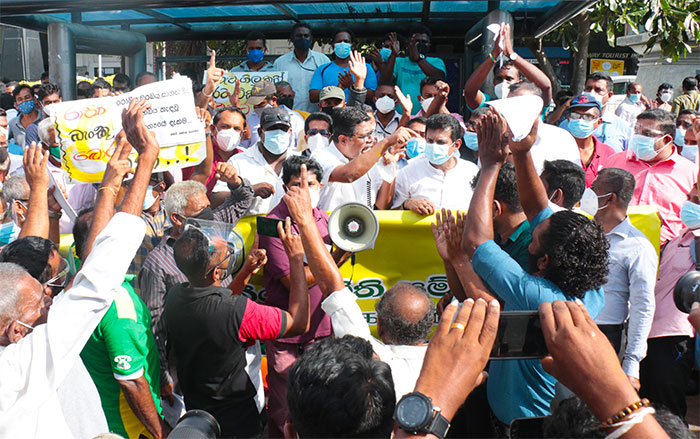
SJB lawmakers Mujibur Rahman and Asoka Abeysinghe lead a protest opposite the Fort Railway station yesterday (27) to draw the government’s attention to the grievances of the striking teachers and the difficulties experienced by those struggling to make ends meet (pic by Kamal Bogoda)

By Shamindra Ferdinando


UNP leader Ranil Wickremesinghe recently called for a common agenda for the Opposition. The announcement was made in the wake of the Samagi Jana Balavegaya (SJB) moving a No-Confidence Motion (NCM) against Energy Minister Udaya Gammanpila over the increase in fuel prices and it being comfortably defeated by the government with a 2/3rd majority on July 20.

The NCM received 61 votes in its favour and 152 against with General Secretary of the SLPP Sagara Kariyawasam who declared war on Pivithuru Hela Urumaya leader Gammanpila, too, standing by the Energy Minister.

Obviously, National List lawmaker Wickremesinghe felt he could take advantage of the situation at the expense of the SJB, a big breakaway group of the UNP, which outperformed the grand old party itself, reducing the latter to a zero in Parliament, if not for the solitary National List seat it won.

The main Opposition party, the SJB, secured 54 seats at the last parliamentary election, in August 2020, against virtual zero by the UNP.

SJB lawmaker, Field Marshal Sarath Fonseka, on the second day of the debate, on the NCM, questioned the role played by Wickremesinghe in Parliament. Alleging that the SLPP had given Wickremesinghe an opportunity to address Parliament, MP Fonseka accused the UNP leader of trying to undermine the Opposition.

Having sought to cause turmoil in the SLPP, over Kariyawasam’s demand that Minister Gammanpila should resign over the fuel price hike, the SJB ended up with egg on its face. Perhaps, the SLPP’s strategy had been meant to pave the way for Basil Rajapaksa to enter Parliament, through the National List. The SLPP strategy succeeded though Attorney-at-Law Kariyawasam looked quite uncomfortable, defending the decision to vote against the NCM.

The bottom line is that the SLPP, too, agrees that the fuel prices cannot be brought down against the backdrop of a much deteriorated national economy. Former General Secretary of the Communist Party and one-time Chairman of the Committee on Public Enterprises, Dew Gunasekara, says the situation is so bad the government revenue could be even less than 09 of the Gross Domestic Product (GDP).

Twelve years after Sri Lanka’s triumph over terrorism, the country is in an unprecedented financial turmoil as a result of the national economy suffering a debilitating setback due to the raging Covid-19 pandemic, as in most countries. Waste, corruption, irregularities, mismanagement and negligence also contributed to the current sorry state of the country. The country that clinched an unbelievable victory against the most ruthless terrorist group in the world, is in a state of flux. Actually, what the public now needs is certainly not a common agenda for the Opposition but consensus among all political parties, represented in Parliament, on how to overcome the daunting economic challenges.

Former Minister Mangala Samaraweera, on Sunday (25), faulted the political party system for the current state of the national economy. Samaraweera explained the difficulty in settling foreign debt, running to billions of USDs, while the country’s foreign reserves are nearing the rock bottom. Having represented the cabinet of Chandrika Bandaranaike Kumaratunga, Mahinda Rajapaksa and Maithripala Sirisena, Samaraweera’s declaration should be examined, taking into account his current political strategy.

During Sunday’s briefing at ‘Freedom Hub’, at T.B. Jayah Mawatha, Samaraweera, one of the fiercest critics of the Rajapaksas, asserted the futility of forming a political alliance, only on the basis of opposition to them. Samaraweera declared that such an opposition alliance should be based on a set of principles. Can Samaraweera’s call also meant to strengthen Wickremesinghe’s call for the Opposition to adopt a common agenda? ‘Freedom Hub’ is situated in the same building that housed Derana, situated in close proximity to the now sort of dilapidated SLFP main office.

It would be pertinent to mention that Samaraweera, having backed Sajith Premadasa at the 2019 presidential election, abandoned him soon after the formation of the SJB. Samaraweera quit the SJB, ahead of the 2020 general election, after having handed over nominations on behalf the newly formed party’s Matara district team.

Wickremesinghe’s strategy

Wickremesinghe is pursuing a dicey political strategy. The Embattled UNP leader has to simultaneously attack the SLPP government, and undermine Premadasa’s leadership as well. Having suffered the worst ever defeat at a parliamentary election, Wickremesinghe is struggling to consolidate his position, both in Parliament and outside.

Facing a legal challenge against entering Parliament, in violation of Section 99 A of the Constitution, Wickremesinghe, during the debate on the NCM, said that both the ruling SLPP government and the SJB qualified to enter the Guinness World Book of Records for incompetency.

Wickremesinghe declared that the incumbent government was the first in the world to mess up its affairs and ruin a country in such a short period of time, whereas the SJB had set a world record by not moving a NCM against the government.

The status of the SLPP government cannot be discussed without taking into consideration the global Covid-19 challenge. If not for the crisis caused by the epidemic, the Opposition would have been in a much weaker position. The Covid crisis has sort of facilitated an Opposition strategy meant to undermine President Gotabaya Rajapaksa’s government struggling to cope up with drying up of two major revenue sources, namely funds remitted by Sri Lankan workers overseas and from the once bourgeoning tourism sector. Having secured strong mandates at the 2019 presidential and 2020 parliamentary polls, the SLPP could have pushed ahead with President Gotabaya Rajapaksa’s agenda, comfortably, if not for the Covid-19 menace.

UNP leader Wickremesinghe quite obviously has forgotten the first Treasury bond scam, perpetrated by the then Governor of the Central Bank, Singaporean Arjuna Mahendran, (handpicked by him) within weeks after the 2015 presidential election. The first Treasury bond scam carried out on Feb 27, 2015, less than 50 days after the January 8, 2015 presidential election, messed up the UNP government. Its exposure ruined the UNP as it unsuccessfully tried to dismiss it, with one of its MPs even writing a book denying it ever took place. The crisis caused an irreparable damage to Wickremesinghe’s marriage of convenience with the then President Maithripala Sirisena. The Treasury bond scam rocked the UNP-led government that at the onset had nearly a two-thirds majority. An irate President Sirisena, in spite of the despicable act on the part of the UNP, tried to save the UNP-SLFP partnership. So much so the President who is also the SLFP leader, cunningly dissolved Parliament, in late June 2015, to thwart the then COPE Chairman Dew Gunasekera from tabling an explosive report on the Treasury bond scam, in Parliament. President Sirisena though being the leader of the SLFP delivered a knockout blow to his own party by declaring Mahinda Rajapaksa wouldn’t be named Prime Minister in case of their victory. Perhaps that un-called for statement should have earned President Sirisena a place in the Guinness World Book of Records.

Having won the August 2015 parliamentary election, though it couldn’t secure at least a simple majority, the UNP perpetrated the second Treasury bond scam in late March 2016. Between the two Treasury bond scams, the UNP also betrayed the war-winning military, at the Geneva-based United Nations Human Rights Council. The Oct 2015 Geneva betrayal earned the yahapalana government the wrath of the vast majority of the people of this country.

While alleging the SLPP messed up its affairs in such a short period of time, Wickremesinghe has conveniently forgotten his own record. The emergence of the Joint Opposition, in the aftermath of the shocking defeat of Mahinda Rajapaksa in the January 2015 Presidential election, and its transformation as the SLPP, thanks to Basil Rajapaksa’s skills as an organiser and the stunning victory the newly registered party achieved, in Feb 2018, at the local government polls, should be studied against the backdrop of the UNP kicking its own goal, repeatedly. Did the top UNP leadership believe that it could create a massive slush fund by way of the Treasury bond scams to undertake consolidation of the party? Those who had backed the then UNP strategy, some of them vociferously, now represent the SJB. The UNP and the breakaway faction, registered under controversial circumstances cannot under any circumstances, absolve themselves of the Treasury bond scams. Despite the two Treasury bond scams, the second far bigger than the first, Wickremesinghe made a desperate bid to retain Mahendran as the Governor. Wickremesinghe failed. The UNP accepted the seriousness of the situation only after it suffered a humiliating defeat at the Feb 2018 Local Government polls. The SLPP emerged as a formidable political force, thanks to the bungling UNP and the SLFP. By the time the Covid-19 epidemic erupted here, in early 2020, that caused the postponement of the general election scheduled for April to August, the SLPP was in control of Local Government authorities (Feb 2018), Office of the President (Nov 2019) and general election (Aug 2020). Today, the main Opposition largely depends on the outcome of the battle between President Gotabaya Rajapaksa’s government and the epidemic.

Stinking Bathiudeen affair

All Ceylon Makkal Congress (ACMC) leader Rishad Bathiudeen, embroiled in a spate of controversies, was elected to Parliament on the SJB ticket. The ACMC is a constituent of the SJB. Bathiudeen is now under investigation over the death of 16-year-old Ishalini, who succumbed to burn injuries she suffered at the Vanni District SJB MP’s Baudhaloka Mawatha residence on July 3. She died at the National Hospital on July 15th. The revelation that Ishalini had been raped repeatedly sent shock waves through the country as various interested parties exploited the situation. Some remained silent. Having first entered Parliament, at the Dec 2001 general election, Bathiudeen switched his allegiance to various political party leaders over the years, ultimately ending up with Sajith Premadasa in the wake of the UNP split. Bathiudeen served as a Cabinet minister under Presidents, Mahinda Rajapaksa and Maithripala Sirisena and deserted Wickremesinghe at a crucial phase of the battle between the UNP leader and his deputy. The Supreme Court found him guilty of clearing the Kallaru forest reserve and he has continuously been under the media glare for the wrong reasons. Four days after the death of Ishalini, UNP leader Wickremesinghe, on the first day of the NCM against Minister Gammanpila, questioned the circumstances the police arrested Bathiudeen over the Easter Sunday carnage. Wickremesinghe also questioned the alleged moves to take SJB National List lawmaker Harin Fernando into custody over a statement he made as regards the Easter Sunday carnage. One cannot find fault with Wickremesinghe for speaking on behalf of those elected on the SJB. But, obviously Wickremesinghe didn’t anticipate Ishalini’s death causing such a furor with the Upcountry Tamil Progressive Alliance (TPA) demanding justice for the girl from there. The TPA’s Deputy Chairman Palani Digambaram led a noisy protest in the Hatton town while Vadivel Suresh, also a member of the SJB parliamentary group declared that those responsible for Ishalini’s death should be punished Saudi Arabia style.

Among those who had been arrested so far in connection with Ishalini’s death, is Bathiudeen’s 46-year –old wife Ayesha, father-in-law, brother-in-law and the broker, who arranged the underage girl to receive employment at the former minister’s residence. How many female domestic workers had been employed by the Bathiudeens, did another one of them commit suicide by jumping before a train and did any of them been sexually harassed during their employment there?

The case took a new turn on Monday (26) in the wake of shocking disclosure made by Deputy Solicitor General Dileepa Peris before Colombo Additional Magistrate Rajindra Jayasuriya. Peris explained how those at Rishad Bathiudeen’s residence delayed taking Ishalini to the National Hospital in spite of having the vehicles at home and deceived the hospital by giving a Sinhala name to the Tamil girl when she was admitted.

Although Wickremesinghe is on record as having cleared Bathiudeen of involvement in the Easter Sunday carnage, on the basis of a confidential police report he received during his tenure as Prime Minister, the National Catholic Committee for Justice recently named the former minister as a person who assisted terror attacks ‘in different ways.’ In a July 12 dated appeal to President Gotabaya Rajapaksa, the Catholic Church pointed out that the Presidential Commission of Inquiry (P CoI) that inquired into the Easter Sunday carnage recommended that the Attorney General consider criminal proceedings against Bathiudeen under any suitable provision of the Penal Code. The Church also made reference to the MP’s brother, Riyaj, requesting that he be subjected to further investigations by the police as well as the Commission to Investigate Allegations of Bribery or Corruption.

The ACMC is obviously in serious turmoil. The 20th Amendment to the Constitution enacted in Oct 2020, at the expense of the 19th Amendment, divided the four-member ACMC group in the Opposition SJB. The Bathiudeens wielded immense power whoever was in power. There cannot be a better example than Riyaj’s sudden release, ahead of the vote on the 20th Amendment. Riyaj taken into custody on April 14th, 2020 was released though police headquarters earlier asserted a direct connection between the suspect and those responsible for the Easter Sunday carnage. Although the then Attorney General Dappula de Livera made a highly publicised intervention, Riyaj’s release remains a mystery though he was again taken into custody subsequently amidst an outcry. Actually, the Law and Order Ministry owed an explanation as regards Riyaj’s release, especially because the suspect was arrested again, under the Prevention of Terrorism Act (PTA). Rishad Bathiudeen, too, is held under the PTA.

The ACMC tainted by a series of equally destructive controversies will have to charter a new path as major political parties namely the SLPP and the SJB no longer could accommodate Rishad Bathiudeen’s outfit on their ticket at a future election.

The Catholic Church also questioned the delay in initiating criminal proceedings against SLFP leader, now an SLPP MP, under any suitable provision in the Penal Code, in respect of the Easter Sunday carnage, and also the P CoI’s failure to make any specific recommendation against the UNP leader.

A House in tumult

Parliament seems to be in turmoil with political parties therein unable to comprehend the crisis the country is facing. The Finance Ministry shocked all by opening LCs for the import of Toyota Land Cruisers for all 225 members of Parliament. In addition to them, LCs were opened for three more Toyota Land Cruisers though the identity of the intended recipients remained a mystery. Obviously, the SLPP felt that luxury vehicles should be ordered for all lawmakers representing 15 registered political parties in the current Parliament, though the largest beneficiary would be the SLPP with a 145-member parliamentary group. In addition to the SLPP group, those who voted for the 20th Amendment had to be appeased. The worst post-independence financial crisis didn’t discourage the SLPP from seeking to appease lawmakers at the taxpayers’ expense. Although the government spokesmen claimed the order for the luxury vehicles was put on hold the real issue is for how long?

Parliament remained silent over Attorney-at-Law Nagananda Kodituwakku moving Supreme Court against accommodating members on the National List, contrary to Section 99 A of the 14th Amendment. Kodituwakku sought the annulment of such NL appointments as well as the abolishment of the 14th Amendment itself. In fact, all political parties refrained from commenting on such a controversial issue, now before the Supreme Court. Issues pertaining to Parliament needs to be examined, also taking into consideration Ranjan Ramanayake losing his parliamentary seat (SJB/Gampaha District) after being found guilty in a case of contempt of the Supreme Court, convicted murderer Premalal Jayasekera (SLPP/Ratnapura District) taking oaths as a member of Parliament and the recent dismissal of cases involving one-time Eastern Province Chief Minister Sivanesathurai Chandrakanthan, alias Pilleyan, now an MP and ministers Johnston Fernando, Rohitha Abeygunawardena, Basil Rajapaksa, Mahindananda Aluthgamage and Janaka Bandara Tennakoon.

The CIABOC also owed an explanation as to how the decision to drop all charges against former lawmaker and Foreign Ministry Monitoring MP Sajin Vass Gunawardena, pertaining to the Mihin Lanka case, was arrived at. That particular case dealt with misappropriation of public funds amounting to Rs 883 mn and another case involving former Chief Justice Mohan Peiris, now Sri Lanka’s top diplomat at UN, in New York, was dismissed. Present Chief Justice Jayantha Jayasuriya, the AG during whose tenure legal proceedings had been initiated against those above-mentioned persons, is now the head of the judiciary, in his capacity as the Chief Justice.

Presidential pardon granted to former UPFA MP Duminda Silva, now Chairman of the National Housing Development Authority (NHDA) should be examined taking into consideration the dismissal of a spate of high profile cases since 2019. Duminda Silva, one-time monitoring MP for the Defence Ministry is the only parliamentarian to receive a presidential pardon so far!