Tuesday, 4 January 2022

Predicament of war-winning Sri Lanka military

 SPECIAL REPORT : Part 401
Published


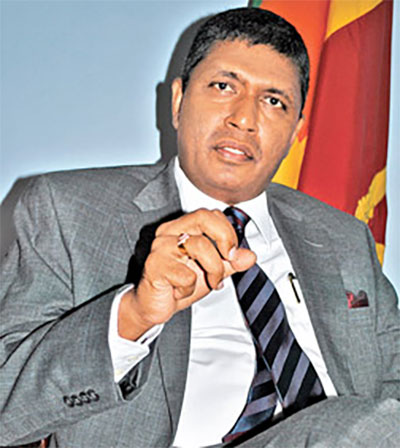
Maj. Gen. Udaya Perera

By Shamindra Ferdinando

In spite of issuing a five-year multiple visa to retired Maj. Gen. Udaya Perera in Aug 2019, the US, in early Dec, 2021, barred him from entering the country. The US ordered Singapore Airlines not to permit the Gajaba Regiment veteran to board the Singapore-bound flight, from where he, his wife and a son were to continue their journey to the USA. Maj. Gen. Perera, who had retired in 2017 after having served the Army for 36 years, suddenly found himself categorised among war criminals. One-time Sri Lanka’s Deputy High Commissioner in Malaysia (2009-2011) Maj. Gen. Perera was about to board the flight (Colombo/Singapore/Los Angeles) with the final destination being California, to see his granddaughter. However his wife and son departed as planned, whereas the ex-top combat officer of the famed Gajaba regiment had to return home dejected at having been humiliated at the country’s main international airport by such crass behaviour of the self-appointed world policeman. We could forgive such behaviour as a mistake if it came from a country that has clean hands, but certainly not from one that has shed so much innocent blood around the world and continue to do so at will.

The highly embarrassing snub, in full view of the public, of Maj. Gen.Perera, who had received his Master’s Degree from the prestigious US Army War College, a couple of years after the successful conclusion of the war, didn’t attract the attention it deserved. The government and the Opposition conveniently refrained from at least issuing a statement as regards the development. Perhaps they felt there was no point in trying to complain against two members of the self-appointed international community, as the US and Australia imposed similar travel restrictions earlier on Field Marshal Sarath Fonseka, General Shavendra Silva and Maj. Gen. Chagie Gallage et al over unsubstantiated war crimes accusations and they, too, were left unanswered.

Maj Gen Perera received the prestigious United States Army War College Alumni Award for his academic performances and in recognition of his services as the International Fellows Class President at the US Army War College and is a lifetime member of the US Army War College Alumni Foundation.

During his tenure as the Deputy HC in Malaysia, Maj. Gen. Perera played a significant role in the extradition of Kumaran Pathmanathan alias ‘KP.’ It would be pertinent to mention that the Eelam War IV time Director Operations, received the diplomatic appointment in April 2009, a few weeks before the military eradicated the top LTTE leadership.

The incident involving Maj. Gen. Perera that happened on the night of Dec 5 at the Bandaranaike International Airport (BIA) remained under wraps till Dec 26. Perhaps the incident could have gone unreported at all if not for some concerned party bringing it to the notice of The Island. But the issue failed to attract sufficient interest of the print and electronic media, including social media.

Need for US clarification

The Foreign Ministry should seek an explanation from the US Embassy, in Colombo, as regards the punitive measures taken against Maj. Gen. Perera. Only the US can explain why Maj. Gen. Perera, now a top employee of a prominent private sector enterprise, did during the Eelam War IV to be categorised as a war criminal. Eyebrows have been raised over the ex-officer’s predicament as he hadn’t been assigned to fighting formations on the Northern front (2007-2009) or involved in the Eastern campaign (2006-2007) or commanded the divisions after the war. Australia found fault with Maj. Gen. Gallage for commanding the 59 Division after the conclusion of the war.

What did the US find unacceptable about Maj. Gen. Perera’s conduct after the issuance of five-year multiple visa in August 2019? The US has issued the visa over two years after his retirement and eight years following the end of the war. Maybe, the US wants to expand the proscribed list as part of its overall strategy to intensify pressure on Sri Lanka to bring it to its knees for daring to get financial and other assistance from China that has helped us in numerous ways in the past, especially when the West attempted to throttle us on the military front by putting an arms embargo.

No doubt India, too, helped us at crucial times, but as we have said before what Beijing did by helping us to defeat the LTTE in actual fact was a favour done to Delhi because initially the ultimate goal of the Eelam project was the breakup of India, but with the collapse of the Soviet Union the equation changed with America also wanting to have a solid friend for Tel Aviv in India for increasingly arrogant and unpopular Israel among a sea of Arab masses.

The Foreign Ministry should be mindful of the growing threat posed by the continuing Geneva agenda meant to weaken the country. Over two years after the last presidential election that brought wartime Defence Secretary Gotabaya Rajapaksa into power in Nov 2019, the incumbent dispensation is yet to properly address the accountability issues. Sri Lanka’s pathetic response has facilitated the despicable Geneva agenda intended to weaken the Sri Lankan State.

May be it is time that we raised such issues as justice for victims of West in places like, for example, Iraq, Syria, Libya, Palestine, etc., especially due to false flag operations like the one staged on entirely staged weapons of mass destruction that supposedly Saddam Hussein had. Then what about justice for victims of hundreds if not thousands of hell fire missiles that rained death and destruction on innocent wedding parties, funeral processions, etc., in those countries, in the guise of killing terrorists. Where are you UNHRC?

The political leadership needs to realize that humiliation of the military is part of the Western strategy. That is the undeniable truth. Geneva wants to tarnish the image of those who spearheaded the actual military campaign against the LTTE, service commanders and selected senior as well as junior security forces officers.

Both Canada and Italy snubbed Sri Lanka over the latter’s proposal to name retired Air Force Commander Air Marshal Sumangala Dias as High Commissioner. Regardless of AM’s clean war record, Canada rejected him. Having allowed the LTTE rump a free hand over a period of time and undermined the war-winning Sri Lanka at every turn, the Canadian rejection of AM Dias was meant to degrade the country.

Human rights crusader Canada, member of the Sri Lanka Core Group in Geneva recently attracted massive media attention following the shocking revelation of how thousands of indigenous children perished in government-run schools. These schools were meant to erode indigenous culture, language and family and community ties. Politically motivated racial project was notorious for the neglect and abuse of the children compelled to attend them. Thousands of Indigenous children died therein and had been interned in unmarked graves on grounds of such schools among other places, obviously hoping such dastardly deeds would never come to light.

An utterly contemptible Canadian decision to back Tamil Diaspora propaganda pertaining to genocide in Lanka by way of a Private Member Bill 104 on ‘Tamil Genocide Education Week’ in the Ontario Legislative Assembly should be examined against the backdrop of Ottawa’s rejection of AM Dias. Instead, Canada swiftly accepted prominent civil society activist Harsha Kumara Navaratne as Sri Lanka’s High Commissioner. The writer recently dealt with the Navaratne’s appointment in an article titled ‘From meeting Pottu, Balraj and Soosai to being Sri Lanka’s top envoy in Canada’ in the Dec 22, 2021 issue of The Island.

Foreign Ministry bid to save precious dollars

Cash-strapped Sri Lanka on Dec 27, 2021, announced a long overdue decision to close down some missions. Declaring that the Sri Lanka High Commission in Abuja, Nigeria, the Consulate General of Sri Lanka in Frankfurt, Germany; and the Consulate General of Sri Lanka in Nicosia, Cyprus, would be closed down with effect from 31 December 2021, the Foreign Ministry announced that the Cabinet of Ministers approved the move. The Foreign Ministry asserted that foreign reserves could be saved by minimising expenditure on the maintenance of diplomatic missions. Perhaps, the Cabinet of Ministers should have considered closing down many more missions than those at Abuja, Frankfurt and Nicosia.

Over the years, Sri Lankan missions overseas have become a haven for political appointees. We also wonder whether many of our serving diplomats are rendering a worthy service to the country. Some of them have joined the service through the backdoor, thanks to influence. We can recall how our top career diplomat, in a leading capital in the East, gave a talk to a group of leading businessman in that country’s capital in the presence of our then Foreign Minister Lakshman Kadirgamar and repeatedly referred to the construction of the second RUNAWAY at BIA with valuable assistance from that country. At that moment we ourselves felt like running away from there!

Successive governments have shamelessly utilised diplomatic missions to accommodate associates, friends as well as some former parliamentarians. The incumbent dispensation is no exception.

The Parliamentary High Posts Committee, whoever chairs it, follows political directives. There cannot be a better example than the yahapalana administration granting an ambassadorial position to businessman A.S.P. Liyanage. The self-serving cunning businessman, who merely pretended to play the part of a stooge to those in power and served twice as head of mission, contested the presidential election on more than one occasion and at the last parliamentary election appeared on the Colombo District UNP list. Liyanage was on the same list with UNP Leader Ranil Wickremesinghe and its Assistant Leader Ravi Karunanayake at the disastrous August 2020 parliamentary election that reduced the former governing party to just one National List slot. Liyanage was so influential he received appointment as Sri Lanka top envoy in Nigeria during the previous Rajapaksa administration. President Maithripala Sirisena then made him Sri Lanka’s Ambassador in Qatar.

Controversy over Embraer Legacy 600 jet

About a week before the New Year, an unexpected controversy erupted over Prime Minister Mahinda Rajapaksa, accompanied by wife, Shiranthi, and other members of the family, utilising a private jet to visit the famous hill shrine of Lord Venkateswara in Andhra Pradesh’s Tirumala where they offered prayers. Social media was dominated, their two-day visit. Rajapaksa visited the temple in February 2020, less than three months after the last presidential election, when a special puja was performed at the Devasthanam on the first anniversary of his current term.

Contradicting statements relating to the visit (departure Dec 23 morning and return De 24 evening) resulted in speculation that Sri Lanka’s High Commissioner in Uganda Velupillai Kananathan provided the Embraer Legacy 600 jet. Velupillai Kananathan had been among Premier Rajapaksa’s entourage and was pictured holding his hand as they walked away from the aircraft in question having landed at Renigunta airport in Andra Pradesh. Kananathan had moved to Uganda way back in 1987 and established therein before receiving the appointment as High Commissioner in 2013. Velupillai Kananathan has received the top posting back after the last presidential election.

Social media alleged that Velupillai Kananathan had been with the LTTE though well informed Tamil Diaspora as well as former intelligence officers emphasised there was absolutely no involvement with the terrorist organisation. Studied at S. Thomas College, Mount Lavinia, Velupillai Kananathan had been involved in the hospitality trade, having first served the Hatton National Bank.

The Divaina quoted Premier Mahinda Rajapaksa as having said that it was a private visit with no expenditure of public funds. The Premier’s Media Secretary Rohan Weliwita, too, declared that public funds hadn’t been utilised and expenses borne by the Premier himself. However, Pohottuwa lawmaker Milan Jayatilleke is on record as having said that a powerful Indian businessman provided the jet for the pilgrimage and the cost borne by the Indian. The lawmaker defended the Thirupathi visit in the wake of some sections of the Opposition accusing Premier Rajapaksa of squandering public funds at a time the country was reeling from severe economic difficulties. The controversy has taken a new turn after Premier Rajapaksa’s Chief of Staff Yoshitha Rajapaksa’s declaration that a friend of his father provided the jet though he didn’t know the identity of the benefactor.

Who owns the super luxury aircraft, believed to be registered in Europe? The Opposition is likely to pursue the jet story. In the January 02, 2022 edition of ‘Annida’, Aruna Jayawardena dealt with the issue at hand, comprehensively. The writer questioned the ownership of the super luxury aircraft against the backdrop of continuing controversy over High Commissioner Velupillai Kananathan’s role in the whole affair. The writer questioned the appropriateness of the Premier accepting such an expensive freebie. The government should set the record straight.

Paying homage to Tirupathi

Many Sri Lankan politicians annually visit Tirumalar. Mahinda Rajapaksa, Maithripala and Ranil Wickremasinghe are among them. Sirisena accompanied by wife, Jayanthi Pushpakumari and other family members prayed at Tirumalar on April 17, 2019, four days before the Easter Sunday carnage. Sirisena has been accused of leaving for Tirumalar and from there flying to Singapore on the second leg of a private visit, in spite of specific Indian intelligence warning of impending terrorist attack. Sirisena, who also served as the Defence Minister at that time paid a very heavy price for neglecting the Indian intelligence warnings pertaining to the National Thowheed Jamaat (NTJ) plot, though he has repeatedly claimed he was not aware.

The Foreign Ministry plays a vital role in the overall national defence. The Foreign Ministry should play a leading role in national defence. One cannot easily forget how that Ministry has been used over the years to appease foreign powers or provide employment opportunities to those the government wanted to get rid of. Disgraced IGP Pujitha Jayasundera’s claim is a case in point that he was offered a diplomatic positing if he accepted the responsibility for 2019 Easter carnage cannot be ignored. Jayasundera, indicted before the three-judge bench of the Colombo High Court Trial at Bar hearing the Easter Sunday carnage is on record as having said that the then President Maithripala Sisisena offered him the diplomatic posting.

In the case of the treacherous 2015 Geneva resolution, the Foreign Ministry at the behest of political directive betrayed the country’s war-wining armed forces. The late Mangala Samaraweera served as the Foreign Minister at that time. Following the Geneva betrayal, President Sirisena, in consultations with Premier Ranil Wickremesinghe, brought in Ravi Karanunayake as the Foreign Minister. Samaraweera received the finance portfolio. The late minister handled the finance portfolio quite well with government revenue topping Rs 1,900 bn mark on two consecutive years.

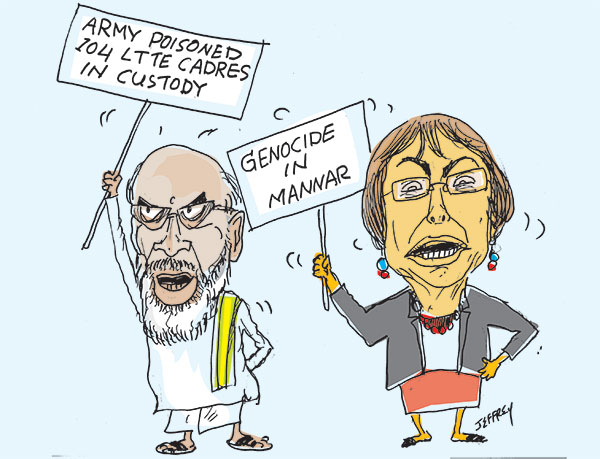
In spite of the change, the Foreign Ministry didn’t change its line. The Foreign Ministry quite unashamedly allowed Western embassies to exploit the so-called Mannar mass graves. Those responsible turned a blind eye to foreign diplomats propagating the lie that Army during the Vanni offensive killed and buried hundreds of thousands of Tamil civilians. The despicable project continued until a US lab declared the skeleton remains belonged to the colonial era. Based on unsubstantiated claims made by Colombo-based Western embassies, the Human Rights Chief Michelle Bachelet blamed the Sri Lankan military for mass graves. Even after the Geneva project went awry, the Foreign Ministry lacked the will to at least refer to the extremely unfair position taken by the former Chilean UNHRC President in her capacity as the global human rights chief.

The Foreign Ministry showed its true colours when The Island sought the government response to the disclosure made by Lord Naseby in the House of Lords in Oct 2017. The Foreign Ministry simply rejected Lord Naseby’s intervention. The disclosure unsettled the then government. The then Foreign Ministry spokesperson, an experienced career diplomat, ridiculed Lord Naseby’s statement. The official wouldn’t have done so without consulting the higher-ups. The yahapalana Foreign Ministry would have probably remained quiet if The Island didn’t raise the issue. For want of a Foreign Ministry response to Lord Naseby’s very important statement, even a week after it was made, the writer, on Oct 20, 2017, sought an explanation from the Foreign Ministry.

The Foreign Ministry response really disappointed a vast majority of people, who expected the government to use the House of Lords disclosure to counter lies that had been propagated by various interested parties. Instead of taking advantage of Lord Naseby’s statement, the Foreign Ministry spokesperson Mahishini Colonne declared: “The Government of Sri Lanka remains committed to the national processes, aimed at realizing the vision of a reconciled, stable, peaceful and prosperous nation. Engaging in arguments and debates in the international domain over the number of civilians who may have died at a particular time in the country will not help resolve any issues, in a meaningful manner, locally, except a feel good factor for a few individuals who may think that they have won a debate or scored points over someone or the other.”

Two years later, Tilak Marapana, PC, in his capacity as the Foreign Minister made reference to Lord Naseby’s disclosure when he addressed the Geneva sessions. One-time Attorney General Marapana, who succeeded disgraced Ravi Karunanayake as Foreign Minister in the wake of explosive revelations in the Presidential Treasury Bond Commission, emphasized the importance of Lord Naseby’s disclosure based on wartime Colombo based UK Defence Advisor Lt. Col. Anthony’s Gash dispatches to London. But, his government refrained from pursuing the matter. The current dispensation, too, never officially submitted British records to Geneva though during the tenure of Prof. G.L. Peiris’ predecessor, Dinesh Gunawardena, the Foreign Ministry did raise the issue with the British. The UK continues to suppress wartime dispatches from Sri Lanka. In fact, Sri Lanka never pursued the declaration made by wartime US Defence Attaché Lt. Col. Lawrence Smith in 2011. Basically, both British and American embassy officials said the same. They denied the Sri Lankan military perpetrated war crimes. Their statements/declarations should be examined against the backdrop of the US and the UK pursuing an anti-Sri Lanka agenda.

Tuesday, 28 December 2021

Mother of all challenges faced by SLPP!


SPECIAL REPORT : Part 400

Published


Yugadanavi legal wrangle:

By Shamindra Ferdinando

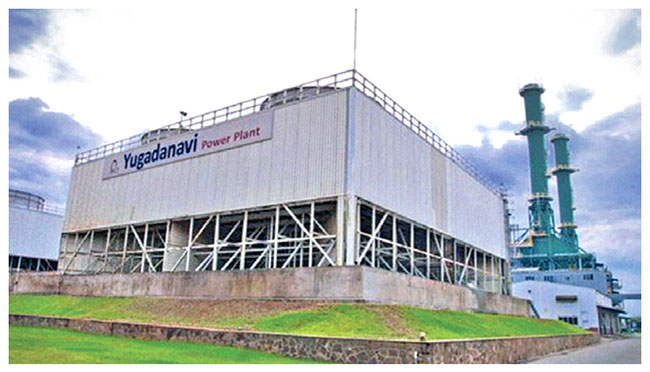
The Sri Lanka Podujana Peramuna (SLPP) government faces an overwhelming challenge from within, at the beginning of the New Year. The continuing dispute between the SLPP and a section of its constituent parties is threatening to overwhelm the ruling coalition over the backdoor offer by the New York-based US Company to purchase a 40 percent stake in Yugadanavi Power Plant, along with an almost monopoly status to supply LNG.

The SLPP appeared to have been caught off guard by three ministers, Vasudeva Nanayakkara (General Secretary, Democratic Left Front), Wimal Weerawansa (Leader, the National Freedom Front) and Attorney-at-Law Udaya Gammanpila (Leader, the Pivithuru Hela Urumaya), throwing their weight behind petitions against the deal. The three constituents have eight lawmakers in Parliament.

The Supreme Court will resume hearing the Fundamental Rights petitions challenging the Yugadanavi-related deals in the second week of January. A fuller bench of the SC heard those petitions on Dec 16 and 17, 2021. The next hearing is set for January 10, 2022, before a five-judge-bench consisting of Chief Justice Jayantha Jayasuriya, Justice Buwaneka Aluwihare, Justice Priyantha Jayawardena, Justice Vijith Malalgoda and Justice L.T.B. Dehideniya.

The Yugadanavi hearing will resume a week before Parliament meets again, following the much-debated prorogation. The President resorted to a tactical move in the wake of Janatha Vimukthi Peramuna (JVP) leader Anura Kumara Dissanayake tabling the hither to secret Yugadanavi agreement. The JVPer delivered a knockout blow a few hours before the vote on the 2022 Budget on Dec 10 evening.

President Gotabaya Rajapaksa prorogued Parliament immediately after the House approved the 2022 Budget. The Parliament is scheduled to meet again on January 18. Whatever the outcome of the Yugadanavi case, it’ll deliver a debilitating setback to the ruling coalition, struggling on several fronts. However, the relations between the two groups, in the coalition, have deteriorated so much, the SLPP and the rebellious partners may not be in a position to resolve their differences, out of Court. And if the differences are irreconcilable within the SLPP, the breakup of the coalition may become inevitable, especially with other dissenters in its own ranks, smarting from the fact they did not get any Cabinet portfolios to use the opportunity to teach the ruling clique a lesson. But they may very well end up cutting their proverbial nose to spite the face. But since the rebels took a principled and not a spiteful stand on the issue, both the President and PM will likely treat the partner rebellion as a storm in a tea cup. Premier Mahinda Rajapaksa has already stated in public that the rebel coalition partners have a right to dissent.

The declaration that Attorney General Sanjay Rajaratnam, PC, wouldn’t appear for the three ministers supporting the challenge, however, underscored the crisis within the government. They have retained private Counsel.

In addition to Prime Minister Mahinda Rajapaksa, the Cabinet of Ministers, New Fortress Energy Inc., West Coast Power (Private) Limited, the Ceylon Electricity Board, the AG is a respondent in this case.

The case is heard in terms of Article 132(3) of the Constitution. The petitioners are Samagi Jana Balavegaya General Secretary Ranjith Madduma Bandara, former JVP Parliamentarians Sunil

Hadunneththi and Wasantha Samarasinghe, Archbishop of Colombo Malcolm Cardinal Ranjith, Ven. Elle Gunawansa Thera and Viduli Sevaka Sangamaya have moved the Supreme Court against the agreements between the government and New Fortress Energy Inc., in relation to the sale of 40% of the shares of Yugadanavi Power Plant, located at Kerawalapitiya.

The petitioners said on 7th of July 2021, the framework agreement was signed between the government of Sri Lanka and New Fortress Energy Inc., for the disposal of 40% of the total shares held by West Coast Power (Private) Limited in the Yugadanavi (Pvt) Ltd for USD 250 million. Critics have repeatedly pointed out that there was nothing wrong in selling the 40 percent stake for that amount, the problem lay in the fact that New Fortress was also getting a monopoly status to supply LNG, ostensibly for five years, at the beginning, but who knows what would happen later on once they get themselves entrenched here with the corrupt bureaucracy and politicians.

Earlier both the CEB and Telecom were wrangled in so many corrupt deals, especially involving certain French multi-nationals, but many of them were undone especially during the tenure of former Prime Minister Ranil Wickremesinghe in the 1990s. Such deals were a drain on the private sector-friendly UNP government. So finally Western lenders themselves told the French enough was enough. It was a case of French selling us outdated equipment and charging us premium prices to keep them going. For example in those days after each heavy downpour many telephone lines in the country would go dead, but luckily for us all that was corrected with the privatisation of Telecom by Minister Mangala Samaraweera and clipping of the wings of the then all-powerful trade union UPTO. It was a classic case of trapping them using their greed.

The petitioners said agreements had been further entered for the execution of the Terminal Project which includes Floating Storage Regasification Unit (FSRU), Mooring system and the Pipelines, and the supply of Liquefied Natural Gas (LNG) to West Coast Power (Pvt) Ltd.

They state that to the best of their knowledge, the Share Sales and Purchase Agreement (SSPA) pertaining for the sale of 40% of the shares in West Coast Power (Pvt) Ltd., and the Gas Supply Agreements have not been placed before the Cabinet of Ministers to date.

Bundling the contracts for the Liquefied Natural Gas (LNG) terminal, construction of pipelines and Liquefied Natural Gas (LNG) supply in a single unsolicited proposal and awarding them to a foreign-based company, without following a transparent procedure, poses a serious threat to the national energy security of the country, they point out.

They said the proposal to purchase 40% of the shares in the West Coast Power (Private) Limited is contrary to the National Energy Policy and Strategies.

Manohara and Romesh on
opposing sides

Perhaps, the top SLPP leadership believed the trio wouldn’t go the whole hog though they opposed the deal. However, following consultations among the rebel group, the DLF, NFF and PHU decided to challenge the Cabinet of ministers in the Supreme Court even at the risk of losing their ministerial portfolios. Their relationship with the dominant partner has been damaged severely. In fact, irreparable damage may have been caused.
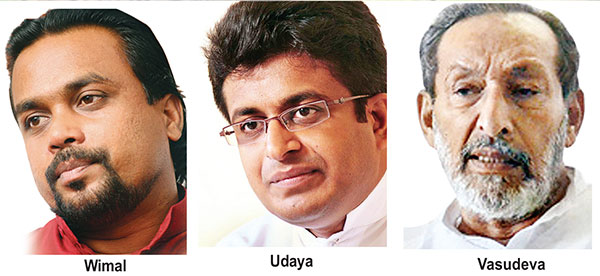
When the writer sought an explanation from Minister Gammanpila, one-time heavyweight of the Jathika Hela Urumaya (JHU), the lawmaker didn’t mince his words. “Whatever happens, we cannot remain committed to the so called collective responsibility of the Cabinet at the expense of national interest.

Dismissing the Attorney General’s stand vis-a-vis the defiant ministerial group, lawmaker Gammanpila declared that either those (three ministers) or the Attorney General had lied to the Supreme Court in respect of the Yugadanavi deal. Underscoring the fact that both represented the government, lawyer Gammanpila pointed out that in case the Supreme Court ruled one party furnished falsehood in an affidavit that party faced a three-year prison term.

The five-judge bench dismissed the Attorney General’s assertion that as the fundamental rights cases hadn’t been filed within the stipulated period, they should be dismissed. Having proposed to conduct proceedings on Dec 21 and 22 following hearings on Dec 16 and 17, judges put off the proceedings to January 10, 2022, on a request by the Attorney General. If not for the Attorney General’s plea, a lot more would have been in the public domain now.

Two of the country’s top lawyers, Manohara de Silva, PC and Romesh de Silva, PC, appeared for the opposing sides. Manohara, who openly campaigned against the yahapalana lot, appeared for petitioner Lanka Viduli Sevaka Sangamaya whereas Romesh represented respondent the Ceylon Electricity Board (CEB). The case has taken an unexpected turn with the disclosure of CEB Chairman M.C. Ferdinando’s controversial role in the whole process, particularly his endorsement of the agreement as an Advisor to the Finance Ministry. Ferdinando is the seventh among 73 respondents named in a petition filed by 12 persons represented by Manohara de Silva, PC. Interestingly, three Commissioners of the CIABOC (Commission to Investigate Allegations of Bribery or Corruption) are among the respondents.

What really made the submissions made by Manohara and Romesh interesting was their role in the new Constitution making process. The nine member expert team tasked with producing a draft constitution consists of Romesh de Silva (Chairperson), Gamini Marapana PC, Manohara de Silva PC, Sanjeewa Jayawardena PC, Prof. Naseema Kamurdeen, Dr. A. Sarveshwaran, Samantha Ratwatte PC, Prof. Wasantha Seneviratne and Prof. G.H. Peiris.

They haven’t been able to bring the process to a successful conclusion so far though the government repeatedly assured both in and out of Parliament, the draft Constitution would be presented by President Gotabaya Rajapaksa before completing two years in office. That failure cannot be blamed on the Covid-19 global epidemic. Silly efforts to blame everything on Covid-19 reached a new level when Provincial Council and Local Government State Minister Roshan Ranasinghe asserted that Local Government polls scheduled to take place before the third week of March 2022 was unlikely due to the threat posed by the new COVID variant Omicron.

Before examination of submissions made before the Supreme Court, it would be pertinent to mention that the Attorney General conceded before the five-judge bench the agreement on energy didn’t come within the laid down procurement process. The Attorney General, however, took up the stand that there is no basis for the case. Uditha Igalahewa, PC, appeared for the ministers.

Manohara issues dire warning

The Counsel for Lanka Viduli Sevaka Sangamaya has asserted in court that the Yugadanavi deal posed quite a threat to the sovereignty of the country as well as its national security. In response to Manohara’s warning, Attorney General Sanjaya Rajaratnam asked for the dismissal of cases without hearing them. The request was made on the basis the agreement being challenged outside the time allocated in terms of the Constitution. Manohara alleged that the then US Ambassador Alaina Teplitz interfered by lobbying on behalf of the US-based New Fortress Energy. Teplitiz, who recently completed her term in Colombo, had made representations on June 22, 2020, on behalf of the US Company to the Presidential Secretariat. The latter, in turn, has sent the US proposal to the Power and Energy Secretary along with a letter dated Jun 24, 2020. The letters signed by Telpitz and Dr. P.B. Jayasundera, respectively, for the US Embassy and the Presidential Secretariat have been presented to the Court. Manohara brought to the notice of the Court how the proposal made outside the laid down process undermined stability.

Accusing the US of interference in domestic affairs, Manohara explained how the US Ambassador sought to achieve their objectives with the help of corrupt Sri Lankan officials. This deal would create a US monopoly in the supply of LNG to Sri Lanka, Manohara predicted, asserting that the project created a dangerous situation. Alleging that the agreement betrayed national interests, the legal luminary painted a bleak picture of Sri Lanka’s future in case the deal materialised. Manohara questioned how the government entered into the agreement at the behest of the US even before the Chief Government Valuer provided his assessment pertaining to the Yugadanavi Power Plant. Romesh de Silva responded asserting that a proper valuation had been done before the signing of the agreement took place.


Those who were represented by Manohara in their petition stated that the Ceylon Electricity Board informed the Secretary to the Ministry of Power by letter dated 07.07.2021 that competitive open international tendering for the supply of Liquefied Natural Gas to Sri Lanka had already commenced and that to entertain an arbitrary proposal presented by an independent party who is not a party to the procurement process would adversely affect the transparency and fairness of the procurement process. In spite of that, Treasury Secretary S.R. Attygalle signed the Framework Agreement on July 07, 2021, to pave the way the sale of 40 percent shares of the power station owned by the government.

The share structure of the power station comprises; the government 50%, Employees’ Provident Fund 27%, Lanka Electricity Company 18% and LTL Holdings 5%.

SLFP takes questionable stand

In spite of backing the rebel ministers’ cause against the Sri Lanka-US deal, the Sri Lanka Freedom Party (SLFP) conveniently skipped an opportunity to join the Supreme Court action. The SLFP parliamentary group consists of 14 members. The second biggest constituent in the 145-member government Parliamentary Group, the SLFP owed an explanation why at least one of its ministers, out of the two, namely Nimal Siripala de Silva or Mahinda Amaraweera failed to join the rebellious colleagues, Vasudeva Nanayakkara, Wimal Weerawansa and Udaya Gammanpila, in their principled stand against the controversial deal. General Secretary of the SLFP Dayasiri Jayasekera, however, flayed Yugadanavi agreement at the launch of a high profile campaign, on Oct 29, at Solis Hall, Pitakotte.

In an interview with political weekly Anidda in its Dec 26, 2021 edition, lawmaker Jayasekera, having challenged the legality of the Yugadanavi deal, vowed not to allow the implementation of the energy project, under any circumstances. The SLFPer strongly rejected the stand taken by Chief Government Whip Johnston Fernando as regards the Yugadanavi agreement.

If the SLFP is sincere of its position vis-a-vis the US energy deal, former President Maithripala Sirisena, MP, should have given his party the go ahead to join the challenge in the Supreme Court. The SLFP’s participation in legal action would have certainly strengthened the case against the Cabinet of ministers. Anidda interviewer should have sought an explanation from lawmaker Jayasekera over the SLFP not being part of the real opposition to the Yugadanavi deal.

Veteran politician Vasudeva Nanayakkara recently referred to those who backed Yugadanavi, opposed it and then took a sort of neutral stand. Was he referring to the SLFP? In addition to the DLF, the NFF and the PHU that have challenged the Cabinet of ministers over the Yugadanavi deal, SLFP, Communist Party, LSSP, Yuthukama civil society and National List MP Tiran Alles have declared opposition to the same. Of the 225 lawmakers, approximately 25 elected and appointed on the SLPP National List are believed to be opposed in line with the decision taken by their respective parties. In addition to them, Ven. Athureliye Rathana, National List MP of Ape Jana Bala Pakshaya backs the campaign.

A govt. in turmoil

The Yugadanavi crisis is just one among a spate of issues gravely troubling the government. The cash-strapped regime sought to project the Yugadanavi deal as a success primarily on the basis it would please the ever antagonistic Washington and the US firm paying USD 250 mn in two installments. Those who support the project propagate the line or lie that the deal would make available electricity at a much cheaper rate. There had never been a previous agreement that ended up having a section of Cabinet ministers who represent the legislature moving Court against their colleagues. The issue should be examined taking into consideration that the President is the head of the Cabinet. Where does the President stand? Did the appearance of CEB Chairman M.C. Ferdinando at a special media briefing arranged by the Presidential Media Division (PMD) signifies the President’s stand? In case the Supreme Court ruling pertaining to Yugadanavi petitions goes against the government, what will it do? Is there a fallback position? What will become of the SLPP’s relationship with those who opposed the project?

The much-debated ‘One Country, One Law’ concept has caused controversy primarily due to the appointment of Ven. Galagodaatte Gnanasara Thera, the recipient of presidential pardon from previous President Sirisena, after his ruffian behaviour even in a court of law, as the head of the relevant Presidential Task Force. The handling of State Minister Ratwatte’s inexcusable behaviour at the Welikada and Anuradhapura prisons badly exposed the government.

The government will have to address a series of other issues with the daunting challenge in servicing foreign and local debt as well as ruination of the Maha crop as a result of the hasty ban on agro-chemicals. The sacking of Agriculture Secretary Senior Prof. Udith J. Jayasinghe has prompted the angry official to fire a broadside at the government. The government appeared to have been sort of surprised by Prof. Jasasinghe’s response. The SJB has lambasted Prof. Jayasinghe and held him and the SLPP political leadership responsible for the crisis whereas the former now portrayed himself as the one who represented the interests of the public.

The government cannot depend on its overwhelming parliamentary majority to overcome the crises. Actually, the near 2/3 majority does not mean a thing as the government continues to weaken itself by utterly misplaced strategies. The SLPP is in such a desperate situation, the situation cannot be overcome or public attention diverted by propaganda on mainstream or social media.

Tuesday, 21 December 2021

From meeting Pottu, Balraj and Soosai to being Sri Lanka’s top envoy in Canada

  SPECIAL REPORT : Part 399

Published


By Shamindra Ferdinando

Who could have imagined that the incumbent government would name wartime President Mahinda Rajapaksa’s one-time emissary for talks with the top LTTE leadership, as Sri Lanka’s High Commissioner in Ottawa?

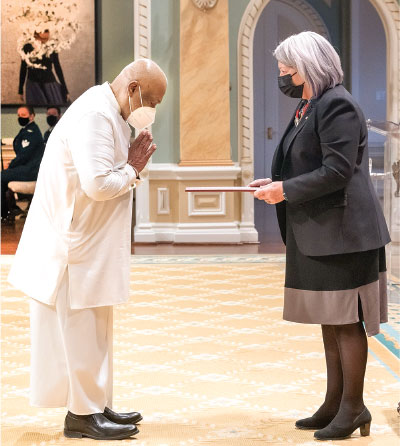
Prominent civil society activist Harsha Kumara Navaratne, on Dec 07, 2021 presented his credentials as Sri Lanka’s High Commissioner to the Governor General of Canada Mary May Simon, at a ceremony held at the Rideau Hall in Ottawa. Having rejected the nomination of retired Air Force Commander Air Marshal Sumangala Dias, Ottawa swiftly accepted the appointment of Navaratne. Founding chairperson of the Sevalanka Foundation, Navaratne succeeded career diplomat Asoka Girigagama, who was unceremoniously recalled in the wake of Gotabaya Rajapaksa’s triumph at the Nov 2019 presidential election.

Canada, a member of Sri Lanka Co-Chairs at the Geneva-based United Nations Human Rights Council (UNHRC), ignored AM Dias receiving unanimous approval of the Parliamentary High Posts Committee, Chaired by Speaker Mahinda Yapa Abeywardena, On Nov 09, 2020. Following the Nov 2019 presidential election, Navaratne received appointment as a member of the Human Rights Council of Sri Lanka (HRCSL). The HRCSL comprised former lawmaker Dr. Jagath Balasuriya, (Chairperson),– Dr. M.H. Nimal Karunasiri, Dr. Vijitha Nanayakkara, Ms. Anusuya Shanmuganathan and H.K. Navaratne Weraduwa. Under President Gotabaya Rajapaksa, the new Board of HRCSL was constituted on Dec 10, 2020. Balasuriya’s appointment drew flak from various quarters, especially from the NGO front. The former lawmaker quit on Oct 31, 2021. He was replaced by retired Supreme Court Judge Rohini Marasinghe. In place of Harsha Kumara Navaratne, the government brought in Ven. Kalupahana Piyarathana, a member of the civil society grouping, Sri Lanka Collective for Consensus (SLCC) engaged in a high profile dialogue with the Rajapaksa government.

However, the SLCC has failed to receive the much required support from other mainly Western-funded prominent civil society groups. The writer dealt with the simmering disputes among the civil society over the government-SLCC relationship in Midweek piece titled ‘Govt-civil society imbroglio’ published on the Dec 15 edition of The Island.

The decision to bring in Navaratne, in place of AM Dias, underscores the readiness on the part of the government to please the Western powers, despite the obvious snub, based on unverified allegations against the victorious Lankan security forces over “the most ruthless terrorist outfit in the world” amidst all odds arrayed against them. Canada is behaving in this arrogant and crass manner at the behest of the US-led West, despite a wealth of fresh evidence against her over committing genocide against its native population. There are instances of, for example, members of its so-called famed Royal Canadian Mounted Police being used by oil and gas companies as a private militia to harass natives and their supporters standing in their way in what is left of their own traditional lands to this day. But bleeding heart prominent liberal outfits funded by the West see nothing of it even though they are ever ready to scream bloody murder in places like Sri Lanka, at the slightest digression.

During his short tenure as a member of the HRCSL, the writer had an opportunity to discuss the accountability issues with Navaratne. By then, t Parliament had confirmed his appointment as Sri Lanka’s top envoy to Ottawa, one of the countries vigorously pursuing accountability agenda against us. Navaratne’s appointment should be examined against the backdrop of the passage of Bill 104 in the Legislative Assembly of Ontario in May 2021. The Bill designated May 18 each year as ‘Tamil Genocide Education Week.’ Sri Lanka couldn’t have sent a better person than Navaratne to convince the Canadians. The civil society activist is one of those who had been in touch with the Colombo-based diplomatic community and the Liberation Tigers of Tamil Eelam (LTTE). Navaratne had access to the LTTE leaders as senior as the much-feared LTTE Intelligence Chief Shanmugalingam Sivashankar aka ‘Pottu Amman, Balasegaram Kandiah alias Balraj and Sea Tiger leader Thillaiyampalam Sivanesan aka Soosai. Asked whether he had met Velupillai Prabhakaran, Navaratne said: “No I haven’t talked to him though I saw him at well-attended media conferences in Kilinochchi in the wake of the Feb 2002 Ceasefire Agreement (CFA).

Clandestine meet with Pottu and Balraj

The LTTE triggered a major crisis by stopping the free flow of water from the Mavil-aru anicut. The Mavil-aru crisis gripped the country in the wake of an abortive bid to assassinate the then Army Chief, Lt. Gen. Sarath Fonseka, on April 25, 2006. The country was rapidly hurtling towards Eelam War IV. In between the Mavil-aru crisis (July-August 2006) and the attempt on the life of the Army Chief (late April 2006), the LTTE mounted claymore mine attacks.

In spite of taking a bold public stand, the then President Mahinda Rajapaksa made a desperate bid to prevent the resumption of fighting. The LTTE believed it had the wherewithal to bring large scale offensive operations, both in the Northern and Eastern Provinces,to a successful conclusion, simultaneously. On the other hand, the then political leadership felt the military lacked the sufficient firepower to meet the LTTE threat.

On the instructions of President Rajapaksa, Harsha Kumara Navaratne had accompanied the then Secretary to the President Lalith Weeratunga to meet Pottu Amman and Balraj in KIlinochchi. Navaratne, at that time, appeared to have enjoyed the confidence of the LTTE as his social service organisation Sevalanka was doing a great deal of work in that violent environment both in the North and the South, and received a prompt response despite the LTTE launching a spate of claymore mine attacks in the Jaffna peninsula and Mannar as well. Navaratne told the writer how they tried to convince the LTTE to ease pressure on the military in the North. President Mahinda Rajapaksa had summoned Navaratne for a meeting at his official residence and instructed him to arrange for an urgent meeting with the LTTE. However, they had to return empty handed as Pottu and Balraj ruled out giving up their renewed violent strategy.

However, C.A. Chandraprema, in his widely led ‘Gota’s war: The Crushing of Tamil Tiger Terrorism in Sri Lanka’ published in 2012, asserted that Weeratunga met an LTTE representative named Poovannam at Arippu, Mannar. Chandraprema, one time Sunday Island political correspondent now our Permanent Representative in Geneva, Chandraprema referred to Weeratunga reaching the destination in a Sevalanka vehicle though no reference was made to Navaratne. Now both Chandrapema and Navaratne hold key diplomatic appointments in Geneva and Ottawa, respectively. They cannot absolve themselves of their responsibility to set the record straight. But that depends on the incumbent government’s strategy.

Then Defence Secretary Gotabaya Rajapaksa sought Navaratne’s help once again when the LTTE triggered the Mavil-aru crisis in the East. On the instructions of President Rajapaksa, Navaratne had taken the then Minister Jeyaraj Fernandopulle for a clandestine meeting with the LTTE leadership. Soosai had represented the LTTE and the meeting had taken place in an extremely hostile environment in KIlinochchi. Navaratne told the writer that Jeyaraj couldn’t convince Soosai to de-escalate Mavil-aru. Obviously, the LTTE believed, at that time it had the wherewithal to overwhelm the military and force a stalemate, regardless of the consequences.

However, the then Defence Secretary Gotabaya Rajapaksa thought otherwise. ‘Evaluation of Norwegian peace efforts in Sri Lanka 1997-2009’ launched in Nov 2011 revealed the then Defence Secretary’s response. Let me reproduce the relevant section verbatim. “On April 06, 2006, Hanssen-Bauer and Brattskar had a tense meeting with Defene Secretary Gotabaya Rajapaksa. In response to a question about whether the ethnic and political problems in Sri Lanka could be solved by military means Gotabaya answers ‘yes’”.

In the second week of August 2006, the LTTE mounted simultaneous offensives in the North and the East. Navaratne said that former editor of Ravaya, Victor Ivan, in a brief article following the assassination of Minister Fernandopulle quite appropriately dealt with the meetings in Kilinochchi, arranged by him on President Mahinda Rajapaksa’s request. The LTTE assassinated Fernandopulle on the morning of April 06, 2008 at Weliweriya. Victor Ivan’s article appeared in a book titled ‘Jeyaraj’ published by Cyril Ederamulla in 2011. Ivan made the revelation as regards secret talks sought by President Mahinda Rajapaksa on the thebasis of a discussion TNA leader R. Sampanthan, then lawmakers, Mavai Senathiraja and Suresh Premachandran, Harsha Kumara Navaratne and himself had at the residence of Dr. Kumar Rupesinghe several months after Fernandopulle’s assassination.

Navaratne had revealed determined efforts made by President Rajapaksa to prevent war when one of the TNA lawmakers therein accused the President of not making an attempt to solve the conflict through negotiations. Ivan conveniently refrained from naming the TNA MP but obviously the accuser had been one among Sampanthan, Mavai Senathiraja or Suresh Premachandran.

Based on what Navaratne had told the gathering, Ivan asserted that Fernandopulle’s equally aggressive response to Soosai at the Kilinochchi meet had influenced the decision to assassinate the Minister. But by the time, the LTTE carried out the Weliweriya assassination, the LTTE was retreating on the Vanni front after having lost the battles in the Eastern Province. The military brought the war to a successful conclusion in May 2009, less than one and half years after Fernandopulle’s assassination.

It would be pertinent to mention that the LTTE operative, known as Morris, who played a significant role in Fernandopulle assassination, also planned the suicide attack on Lt. Gen. Fonseka. Fonseka recently declared in Parliament that Morris should be released along with others held under the Prevention of Terrorism Act (PTA).

According to Ivan, in his presence at the Finance Ministry, Fernandopulle, in 1994 requested the then Prime Minister Chandrika Bandaranaike Kumaratunga to include him in the government delegation for talks with the LTTE. This was immediately after Kumaratunga took oaths as the Prime Minister following parliamentary polls in August 1994. In spite of Fernandopulle asserting himself a place in the delegation due to his ability to converse in three languages, in addition to his knowledge of the national issue, Kumaratunga rejected the proposal. Ivan said that Kumaratunga expressed the view that inclusion of Ministers weren’t suitable. Interestingly, Ivan revealed that following the 1995 peace negotiations and the resumption of war, Kumaratunga sent him to Jaffna to meet the LTTE, unofficially. This should be examined against the backdrop of Ivan’s claim that though he had been invited by Kumaratunga to be a member of her delegation for talks with the LTTE, he was not included.

Harsha Kumara Navaratne pictured with the Governor General of Canada, Mary May Simon at a ceremony held at the Rideau Hall in Ottawa on Dec 07, 2021, after the new HC, presented his credentials as Sri Lanka’s High Commissioner(pic courtesy Foreign Ministry)

New HC’s responsibilities

There is no harm in the government seeking a consensus with the civil society as regards the post-war reconciliation process. However, the government cannot turn a blind eye to sharp differences among civil society members over the SLCC dialogue with the incumbent dispensation. In addition, the government should pay attention to the high profile joint Global Tamil Forum (GTF) and the Tamil National Alliance campaign meant to pressure Sri Lanka on the human rights front. For some strange reason, the government continues to refrain from setting the record straight in Geneva. There is absolutely no point in only educating the public by way of presentations, articles and statements. The newly set up Strategic Communication Unit (SCU) of the Lakshman Kadirgamar Institute of International Relations and Strategic Studies has so far dealt with some issues at hand. Waruni Kumarasinghe and Dinithi Dharmapala countered lies in a well compiled article headlined ‘AI report on Sri Lanka: Far from the truth.’ Subsequently, attorney-at-law Dharshan Weerasekera, an SCU consultant, in an article titled ‘Ontario’s Bill 104: Tamil Genocide Education or Mis-education Week?’ discussed the absurdity in the Canadian action. But, would that be enough to overcome the challenge faced by Sri Lanka. Due to utterly irresponsible, sluggish and treacherous response on the part of the Foreign Ministry of Sri Lanka, the Western powers had no difficulty in including the war-winning country on the Geneva agenda ON THE BASIS OF UNSUBSTANTIATED ALLEGATIONS.

The following are the issues that needed government attention without further delay. (1) Dismissal of war crimes accusations by war time US Defence Attaché Lt. Col. Lawrence Smith in Colombo. Smith did so at the May-June 2011 first post-war defence seminar in Colombo. The State Department disputed the official’s right to represent the US at the forum though it refrained from challenging the statement. (2) Examine the US statement along with Lord Naseby’s Oct 2017 disclosure based on the then British Defence advisor here Lt. Colonel Anthony Gash’s cables to London during the war. (3) Wikileaks revelations that dealt with the Sri Lanka war. A high profile Norwegian study on its role in the Sri Lanka conflict examined some of these cables. However, the Norwegian process never strengthened Sri Lanka’s defence. Instead, Norway merely sought to disown its culpability in the events leading to the annihilation of the LTTE. One of the most important Wikileaks revelations disputed the oft-repeated narrative against Sri Lanka of deliberately targeting civilians. The cable proved that ground forces took heavy losses by taking the civilian factor into consideration. (4) Wide discrepancies in loss of civilian lives claimed by the UN and various other interested parties. The UN estimated the figure at 40,000 (March 2011) whereas Amnesty International (Sept 2011) placed the number at 10,000 and a member of the UK Parliament (Sept 2011) estimated the death toll at 100,000. (5) Disgraceful attempt made by Geneva to exploit so called Mannar mass graves during the Yahapalana administration. The Foreign Ministry remained silent as was often the case on the Mannar graves, while Western diplomats played politics only to be proved utterly wrong. Acting at the interest of those hell-bent on blaming Sri Lanka, Geneva too faulted Sri Lanka before the conclusion of the investigation. The then Northern Province Governor C.V. Wigneswaran rejected scientific findings of Beta Analytic Institute of Florida, USA, in respect of samples of skeletal remains sent from the Mannar mass grave site. Human Rights Commissioner Michelle Bachelet went to the extent of commenting on the Mannar mass grave in her report that dealt with the period from Oct 2015 to January 2019. We come to wonder whether she was actually a victim of Gen. Pinochet or a mere manufactured victim. (Now, Wigneswaran as the leader of a Northern Province political party representing the current Parliament continues to propagate war crimes accusations. Other political parties never properly challenged Wigneswaran’s lies. They should be ashamed and take remedial measures at least now.) Had the US lab issued a report to suit their strategy, would they have accepted fresh tests in case the government of Sri Lanka requested? The following is the relevant section bearing No 23 from Bachelet’s report: “On May 29, 2018, human skeletal remains were discovered at a construction site in Mannar (Northern Province), Excavations conducted in support of the Office on Missing Persons, revealed a mass grave from which more than 300 skeletons were discovered. It was the second mass grave found in Mannar following the discovery of a site in 2014. Given that other mass graves might be expected to be found in the future, systematic access to grave sites by the Office as an observer is crucial for it to fully discharge its mandate, particularly with regard to the investigation and identification of remains, it is imperative that the proposed reforms on the law relating to inquests, and relevant protocols to operationalise the law be adopted. The capacity of the forensic sector must also be strengthened, including in areas of forensic anthropology, forensic archaeology and genetics, and its coordination with the Office of Missing Persons must be ensured.”

(6) Wigneswaran, in his capacity as the then Northern Province Chief Minister in August 2016 accused the Army of killing over 100 LTTE cadres held in rehabilitation facilities. Wigneswaran claimed the detainees had been given poisonous injections resulting in deaths of 104 persons. The unprecedented accusation made by the retired Supreme Court judge had been timed to attract international attention. Wignewaran is on record as having said a US medical team visiting Jaffna at that time would examine the former rehabilitated LTTE cadres, who he alleged had fallen sick because they were injected with poisonous substances at government detention or rehabilitation centres.

Sri Lanka paid a very heavy price for its pathetic failure to counter a web of lies fashioned by interested parties, both local and foreign and well-funded by the West to coerce the country to adopt a new Constitution to the liking of its long time agenda here. The previous government played a key part in this strategy. Their strategy remained simple. A new Constitution meant to do away with Sri Lanka’s unitary status to address STILL unsubstantiated war crimes allegations. The previous government reached agreement with Geneva regarding a new Constitution as part of the overall deal that could have been executed successfully if not for the UNP causing a massive crisis by way of Feb 27, 2015 Treasury bond scam at the onset of the yahapalana administration.

Over two years after the last presidential election, the government is yet to take tangible measures to counter specific lies. That should be a key part of overall strategy to convince the world and the Tamil speaking people here that eradication of the LTTE was certainly not a war waged against them though the group, almost 100 percent comprised Tamils.