Wednesday, 16 February 2022

BR’s NK weapons claim, displaying of LTTE image at Ind. Day galvanize media et al

 SPECIAL REPORT : Part 407
Published

  
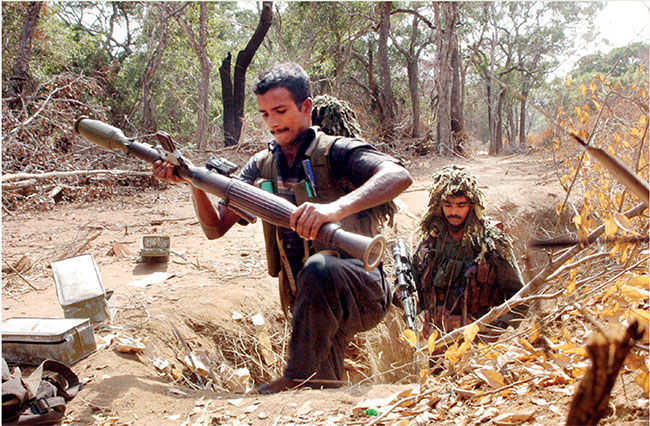
The controversial photograph that adorned a military float. Did they die in action on the battlefield or end up in the West as so many other combatants during and after the conflict?

By Shamindra Ferdinando

A section of the international media pounced on Finance Minister Basil Rajapaksa’s declaration that Sri Lanka procured weapons from North Korea during the Eelam War IV (2006-2009). Sri Lanka’s ‘Independence Day’ parade, too, drew public attention after The Tamil Guardian, UK reported how a military float, carrying the war wounded, was decorated with a photograph of LTTE cadres. The Tamil Guardian revelation caused quite a controversy. The inclusion of that particular picture is nothing but a slip-up.

The war-winning Army shouldn’t be overly concerned over some sections of the media, both here and abroad, and other interested parties seeking to exploit a simple mistake.

Let us not give an opportunity to those who cannot stomach Sri Lanka’s triumph over the Liberation Tigers of Tamil Eelam (LTTE) to gloat over a blunder.

The image in question is among a set of photographs released by the LTTE in early Sept. 2008 to the media. The pictures captured by an LTTE photographer on Sept 2, 2008 were of fighting at Vannearikku’lam, west of Kilinochchi. The Army suffered heavy losses in the Vannearikku’lam battle but the LTTE couldn’t prevent the fall of the village and the subsequent collapse of their much larger Nachchikudah defences.

The Tamil Guardian

, in Feb 05, 2022 revealed the mistake made by the Army in a report headlined ‘Saluting the LTTE? Sri Lankan military features LTTE commandos in Independence Day parade.’

Whoever had been tasked to choose the required photographs has been quite clearly careless as the combatant, carrying a Rocket Propelled Grenade (RPG) launcher, wore a short sleeved shirt.

What really astonished the writer is in spite of the military float being there for several days, in the run-up to the Independence Day parade, no one recognised the pic of two LTTE’ers – the lead person wearing slippers carrying a RPG launcher, probably of Chinese origin, and the other person armed with a sniper weapon.

The Tamil Guardian

headline described the two men as LTTE commandos though the TamilNet report, headlined ‘Tigers locate 29 SLA bodies, 75 SLA killed, 100 wounded in Vanni’, posted online on Sept. 2, 2008, did not make any reference to LTTE commandos. There had been three other TamilNet reports, headlined ‘Fighting intensifies at Vannearikku’lam (Sept. 2, 2008), ‘LTTE confronts, recovers seven bodies (Sept. 2, 2008) and ‘Tigers seize a large number of SLA in Vanni clashes’ (Sept. 3, 2008). Those reports, too, didn’t make any reference to LTTE commandos. The reportage of the action along Nachchikudah-Vannearikku’lam-Akkarayan kulam line indicated that the LTTE believed the Army could have been overwhelmed.
In spite of fierce resistance, the LTTE couldn’t hold Vannearikku’lam. The collapse of LTTE defences at Vannearikku’lam and then Nachchikudah escalated overall deterioration of their conventional fighting capability on the Vanni west region. Now that The Tamil Guardian staff had earned the appreciation of the like-minded persons for highlighting the LTTE’s success at some of the confrontations at Vannearikku’lam, it would be pertinent to discuss the operations undertaken by the 58.2 Brigade to capture the village on Oct 20th, 2008. The 58.1 Brigade brought Nachchikudah under its control on Oct. 29, 2008. The two Brigades were assigned to the 58 Division.

Present Army Commander General Shavendra Silva, commanded the 58 Division (initially known as Task Force 1). The celebrated Division, having launched operations in Sept. 2007 under the command of the then Brigadier Chagi Gallage, played a significant role in the overall campaign, both west and east of the Jaffna-Kandy A9 road until the war was brought to a successful end. The Division engaged in some of the fiercest fighting for Vannearikku’lam and Nachchikudah. (Gallage was replaced by Shavendra Silva soon after the capturing of Silavathurai. The change took place after Gallage suffered a heart attack)

Battle for Vannearikku’lam

The LTTE had strong defences that included an earth bund that extended from Nachchikudah on the north-west coast to Akkarayan kulam via Vannearikku’lam. The LTTE defences comprised dense minefields and booby traps. Constructed in a zig zag line, the earth bund posed a huge challenge as those attacking the enemy positions were constant target of the artillery and mortars. The 58.2 troops fought several hundred defenders for several weeks. In spite of the 58.2 assigned the task, the 58.1 and 58.2 Brigades, too, were brought in to neutralise enemy positions. Still, the three Brigades couldn’t evict the defenders, who fought back, fiercely. In fact, they made several unsuccessful attempts to overrun the LTTE line.

Finally, the 9th battalion of the Gemunu Watch (9GW) made the breakthrough. After fierce confrontations, the 9 GW captured about 300 meters, west of Vannearikku’lam. During a period of five days, the LTTE made 18 abortive attempts, backed by heavy artillery and mortar fire, to overrun the positions held by 9 GW. Then, the troops of the 10 battalion of the Gajaba Regiment (10 GR) fought their way into the area west of the 300 meters seized by 9 GW and stabilised the newly captured area. The 10 GR achieved success five days after the breakthrough made by the 9 GW.

Demoralised defenders pulled back as troops of 11 SLLI (11 battalion of Sri Lanka Light Infantry), 6 GW and 12 GW overran the earth bund east of the Vannearikku’lam. For the first time during the Vanni offensive, the LTTE carried out gas attacks on 12 GW troops though it could not prevent the fall of Vannearikku’lam. Troops of 6 GW, 9 GW and 12 GW finally brought Vannearikku’lam under government control.

Why on earth did the Army peruse the social media for pictures from the conflict zone? Had the Army checked their own albums and video footage, they could have found plenty of action pictures from different theatres and major operations conducted over the years. Pictures of ‘Operation Liberation,’ ‘Riviresa’ Jayasikurui, ‘Balavegaya’et al could have been included. Instead, pictures were selected from the internet, obviously. There is no doubt in previous years, too, pictures were selected that way. Perhaps, one or two pictures of LTTE cadres had been displayed in previous years, too.

It would be pertinent, at least, to briefly discuss the battle for Nachchikudah that brought offensive action, directed at the earth bund, extending from the northwest coastal town to Akkarayan kulam via Vannearikku’lam, to a successful conclusion. Actually, the collapse of the LTTE defence line by the last week of Oct 2008 opened the remaining Vanni west region to the advancing Army. The 58.1 Brigade had been engaged in action for over two months against LTTE positions at Nachchikudah before entering the village on Oct 29, 2008. The 11 SLLI (11battalion, SLLI) played a crucial role in the operation. The 11 SLLI successfully attacked the earth bund from the direction of Mulankavil, in spite of heavy artillery, mortar, 12.7 mm and General Purpose Machine Gun (GPMG).

LTTE loses Vanni west

The Vanni campaign reached a crucial point on June 30, 2008 (four months before the total collapsing of the Nachchikudah-Akkarayan kulam defence line via Vannearikku’lam) when the 58 Division linked up with the 57 Division southwest of Periyamadu. That created the largest ever battlefront on the western flank in the entire Eelam war. Lt. Gen. Sarath Fonseka tasked Maj. Gen. Jagath Dias’s 57 Division to liberate Kilinochchi whereas the 58 Division was to sweep the Vanni west. Having linked up, the 57 Division pursued its objective. The 58 Division advanced towards the northwestern coast. After a series of fierce confrontations, troops captured the strategically located Sea Tiger base at Vidathalthivu on July 16.

The fall of Vidathalthivu and Nachchikudah in mid-July and late Oct, 2008, respectively set the stage for the 58 Division to rapidly advance towards the Jaffna lagoon. The 57 and 58 Divisions launched in early March 2007 and early Sept 2007, respectively began making territorial gains in April 2008.

Task Force I (58 Division)

*  Adampan on May 9

*  Mullikkandal, Minnaniranchan and Marattikannaddi situated north of Adampan on June 24.

*  Mannar ‘Rice Bowl’, an area extending over 120 square kilometres on June 29 thereby bringing Alankulama, Andankulama, Alakaddiveli, Parappakandal, Parappukadatan, Papamoddai, Odupallam, Neduvarampu, Kannaputtukulama and Vannakulama.

*  On June 30 TF I links up with 57 Division southwest of Periyamadu creating the largest ever battlefront on the western flank in the entire Eelam war.

*  Vidathalthivu on the northwestern coast on July 16

*  Illuppaikkadavai on July 20.

*  Vellankulam on August 2.

*  Mulankavil and Pallavarayankaddu on August 12.

*  Maniyankulama on October 16.

*  Vannerikkulam on October 20.

*  Nochchimodai on October 28

*  Jeyapuram on October 29.

*  Nachchikuda on October 29

*  Kiranchi on November 10

*  Devil’s Point and Vallaipadu on November 13

*  Pooneryn regained on November 15

*  Paranthan regained on January 1 and 2, 2009 (almost simultaneously Elephant Pass and Kilinochchi north, too, were brought under control)

57 Division

*  Madhu church complex on April 24

*  Palampiddi on May 16

*  Mundumurippu on May 23

*  Periyamadhu on June 15

*  Naddankandal on July 11

*  Kalvilan on August 13

*  Thunukkai and Uilankulam on August 22

*  Mallavi on September 2

*  29 October troops dominate Akkarayankulam tank bund

*  Overrun Akkarayankulam built-up in Kilinochchi on November 5

*  Kokavil on December 1

*  Terumurikandy junction regained on Dec 10

*  Iranamadu junction liberated on January 01, 2009

*  Kilinochchi on January 2

North Korean weapons

Some sections of the international media exploited Basil Rajapaksa’s declaration of Sri Lanka acquiring North Korean weapons. Foreign Minister Prof. G.L. Peiris was compelled to deny media reports based on an interview given by the Finance Minister to Shyam Nuwan Ganewatte of Divaina. Perhaps, the SLPP founder and political strategist felt such a claim would have helped to justify the existence of unauthorised foreign exchange setups. There hadn’t been any issue with Ganewatte’s reporting, certainly an expert in financial matters. Those who had been waiting for an opportunity to discredit Sri Lanka, particularly ahead of the 49th sessions of Geneva-based United Nations Human Rights Council (UNHRC), seized the opportunity.

Sri Lanka never bought weapons from North Korea during any phase of the war against Tamil terrorist groups (1983-2009) though several Fast Attack Craft (FACs) were brought from South Korea. There was no requirement to do so as major military powers, including China, the US, Russia, Pakistan and Israel, provided a range of arms, ammunition and equipment required by the Sri Lankan military. Other suppliers included Czechoslovakia and India. At the onset of the war, India strongly opposed weapons supply to Sri Lanka. However, India quietly gave up its opposition after its disastrous military mission in Sri Lanka (1987-1990) and the assassination of former Indian Prime Minister Rajiv Gandhi at Sriperumbudur in May 1991.

The LTTE used funds raised in the West to procure weapons from various sources after India stopped supplying weapons. The LTTE even targeted the US. The US revealed attempts made by the LTTE to procure a range of weapons, including shoulder fired anti-aircraft missiles, night vision devices and machine guns. Among those who had been arrested for the abortive bid to procure US weapons were several foreigners, including a retired Indonesian Marine Corps General. However, the LTTE succeeded in procuring Chinese weapons over a period of time. The weapons, the LTTE had acquired from China, were routed through North Korea over a period of time quiet successfully. The procurement of Chinese weapons, moved via North Korea, came to light after the Navy acting on information provided by the Directorate of Military Intelligence (DMI), intercepted LTTE floating arsenals on the high seas.

Western powers conveniently turned a blind eye to uninterrupted sea supply route though they knew that funds raised in their countries were used to procure weapons. The LTTE arsenal included a range of artillery and mortars of Chinese origin. They also had ZPU type dedicated anti-aircraft guns as well as heat seeking missiles. But, it would be necessary to stresses that China hadn’t been the only source and absolutely no official involvement. China acted swiftly and decisively after Sri Lanka brought the clandestine weapons route to their notice. China detained a shipload of weapons bound for the LTTE. The LTTE had used North Korea to transfer weapons on the basis of false end-user certificates. Acting on specific information provided by the DMI and satellite images provided by the US, subsequently, the Navy hunted down LTTE floating arsenals. The LTTE suffered a debilitating setback due to the disruption of the sea supply route. Interested parties have sought to exploit Minister Rajapaksa’s unsubstantiated claim to cause further trouble for Sri Lanka.

Tuesday, 8 February 2022

Current political crisis through the eyes of ex-Ambassador to Myanmar

 SPECIAL REPORT : Part 406

Published

  
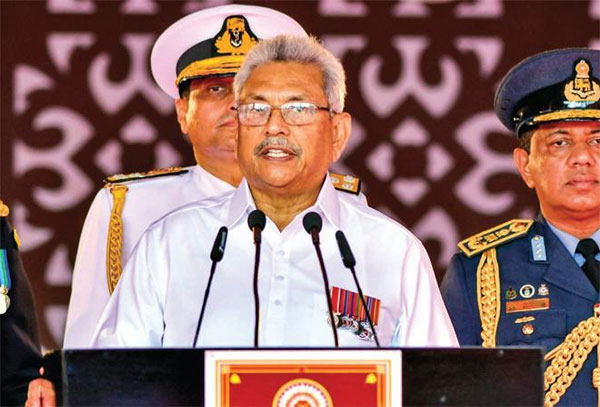
President addressing the nation on Feb.4, 2022

By Shamindra Ferdinando

Prof. Nalin de Silva has questioned the absence of a ‘mechanism’ to implement President Gotabaya Rajapaksa’s strategies. The academic, in his regular piece in Sinhala posted online on Feb 5 discussed the limitations against the backdrop of President Rajapaksa’s address to the nation on Independence Day.

In another commentary, posted online the following day, Prof. de Silva explained that the Feb 5 article should be also examined along with views expressed on January 31 and Feb 2. Essentially, Prof. de Silva compared the system now in place with that of President Ranasinghe Premadasa (1989-1993). Prof. de Silva argued that Premadasa, in spite of securing the presidency without the backing of political elites, was able to take control of the mechanism required to implement his strategies whereas Rajapaksa so far couldn’t. Prof. de Silva declared that President Rajapaksa’s failure to have a system of his own is nothing but a tragedy.

It would be pertinent to mention that Prof. de Silva, in mid-September 2021, quit the ambassadorial position that he received, courtesy the Sri Lanka Podujana Peramuna (SLPP) administration. Having presented the Letter of Credence to Myanmar President Win Myint on 01 Sept. 2020 at the Presidential palace in Nay Pyi Taw, Prof. de Silva served for a year. The outspoken academic returned home after having received treatment for Covid-19 infection.
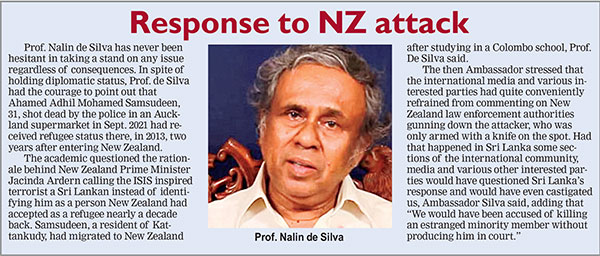
Declaring that he gave up the diplomatic posting as he found it difficult to continue there especially after being treated for Covid-19, Prof. de Silva emphasised that his resignation was not in any way connected with a wave of resignations at the time.

Since Prof. de Silva quit his Myanmar assignment, there had been so many resignations. Perhaps the most serious of them all is Dr. P.B. Jayasundera’s exit in mid-January 2022. Punchi Banda Wijesundera, or PBJ, resigned as Secretary to the President under controversial circumstances. The writer dealt with the issue and the troubles experienced by the Rajapaksa administration in ‘Can Dr. PBJ alone be blamed for the current crises?’ in last week’s Midweek column.

It would be pertinent to mention that Prof. de Silva, in March 2021, indicated his desire to resign in the wake of prolonged detention of a group of Sri Lankan fishers detained in Myanmar. Unfortunately, a section of the media quite pathetically failed to comprehend de Silva’s message.

By the time Prof. de Silva quit his ambassadorial post in Sept 2021, President Gotabaya Rajapaksa had brought in Prof. G.L. Peiris, who is also the Chairman of the SLPP, as his Foreign Minister in place of Dinesh Gunawardena, leader of the Mahajana Eksath Peramuna (MEP).

There had never been so many resignations during a two-year period of any previous administration. Prof. de Silva’s resignation should be examined against the backdrop of his role in promoting wartime Defence Secretary as the SLPP candidate at the 2019 presidential election. The academic had been one of the few who vigorously campaigned for Gotabaya Rajapaksa at a time the vast majority of those now holding positions weren’t so certain, whereas some objected to the Gajaba Regiment combat veteran’s entry into politics.

Another good speech

Prof. de Silva’s assessment of President Gotabaya Rajapaksa’s Independence Day address to the nation deliberated on an issue that had considerably weakened the government. Declaring that the President had delivered another good speech that dealt with the rights as well as the responsibilities of individuals and the responsibility on the part of the members of Parliament to behave, Prof. de Silva questioned the absence of an efficient mechanism to ensure the implementation of the President’s objectives.

Assuring his readiness to give proper leadership, the President requested ministers, parliamentarians and other politicians to act in an exemplary manner at all times. “If you set this example to the people, then the majority of the people will follow you,” the President’s Media Division quoted Gotabaya Rajapaksa as having said.

Prof.de Silva said in the absence of a much required mechanism to implement the President’s vision, such good views expressed by the leader has been restricted to just speeches. The controversial academic, known to fight tooth and nail for what he believes in, emphasised that his stance shouldn’t be considered in any way as the President is not honest against the backdrop of a lack of proper strategy implementing mechanism.

While speculating whether the President had been deprived of a mechanism as someone else controlled it or perhaps no one was in control, Prof. de Silva said that he tended to accept the second reason though some believed otherwise.

Reiterating that today no one exercised the exclusive control over the existing mechanism, Prof. de Silva asserted that though Gotabaya Rajapaksa served as the executive President, he didn’t have the power in Parliament. Did the academic express the belief, that the 145-member strong SLPP parliamentary group operated totally outside the President’s purview? Obviously, the academic made this assessment taking into consideration as he pointed out that the President was not the leader of any political party. Prof. de Silva expressed the view that though the people elected Gotabaya Rajapaksa as the President, he lacked political support due to him not being engaged in politics among the public. The former university mathematics don asserted that much touted political programme ‘Gama Samaga Pilisandarak’ could not be a substitute for grassroots level campaign involving the President.

Prof. de Silva did not mince his words when he declared the country was in deepening turmoil due to those in authority pulling in different directions. Making reference to public servants operating outside the purview of political leadership, the academic pointed out the absence of a consensus between Finance Minister Basil Rajapaksa and Central Bank Governor Ajith Nivard Cabraal, Agriculture Minister Mahindananda Aluthgamage not having control over ministry officials , Premier Mahinda Rajapaksa’s inability to rein in the Buddha Sasana ministry and the latter promoting the Netherlands’ interests. The former Ambassador declared that turmoil was endemic and certainly not restricted to the ministries and institutions mentioned above.

Prof. de Silva asked whether the President should accept responsibility for the current situation. The academic wondered whether the President no longer enjoyed the powers he had as the Defence Secretary during the war.

Prof. de Silva’s incisive comments in the wake of the President’s Independence Day address to the nation are a must read. The academic dealt with past Presidents, leaving out Dingiri Banda Wijetunga, who served assassinated leader Ranasinghe Premadasa’s remaining term. Let me translate really a thought provoking paragraph exactly the way Prof. de Silva commented on the incumbent President and his predecessors sans Wijetunga, who served as the President from May 1993 to Nov 1994. Chandrika Bandaranaike Kumaratunga succeeded him. Prof. de Silva said: “Is the President responsible for the current situation? The President seems to have been deprived of the powers he enjoyed as the Secretary, Ministry of Defence. Of all executive Presidents, JRJ abused powers badly. He postponed elections. He entered into the Indo-Lanka accord in spite of countrywide opposition. He obtained undated resignation letters from lawmakers. Only Premadasa hadn’t been scared of JRJ. Perhaps Gamini Dissanayake, too, hadn’t been intimidated by JRJ as GD felt he could be the President with Indian backing. Premadasa had the power to threaten JRJ at the latter’s Ward Place residence though he lacked the backing of political elites. How did Premadasa acquire such power?”

Prof. de Silva asserted that there hadn’t been a proper assessment or study of Premadasa. The academic propagated the hypothesis that both CBK and Ranil Wickremesinghe hadn’t been able to achieve what Premadasa did though both enjoyed Western backing in addition to their family support. Mahinda Rajapaksa accomplished some success though he couldn’t even come closer to Premadasa whereas Maithripala Sirisena failed to make any impression.

Prof. de Silva also dealt with the breaking up of the UNP, abortive bid to impeach Premadasa, formation of the Democratic United National Front (DUNF) by a dissident group led by ex-UNP powerful ministers Gamini Dissanayake and Lalith Athulathmudali and their subsequent assassinations, in separate incidents blamed on the LTTE and the failure on the part of Sajith Premadasa, in his capacity as the leader of the Samagi Jana Balavegaya (SJB), to follow in the footsteps of his illustrious father.

Comment on 13A

Even during his one year tenure as Sri Lanka’s top envoy in Myanmar, Prof. de Silva took a public stand on controversial issues. In January last year, just five months after taking over the Myanmar mission, Prof. Silva flayed India for its interference in Sri Lanka’s domestic affairs. In an open letter in Sinhala, also sent to The Island, Prof. de Silva questioned what he called Indian interventions in post-war Sri Lanka and a bid to exploit the Covid-19 pandemic.
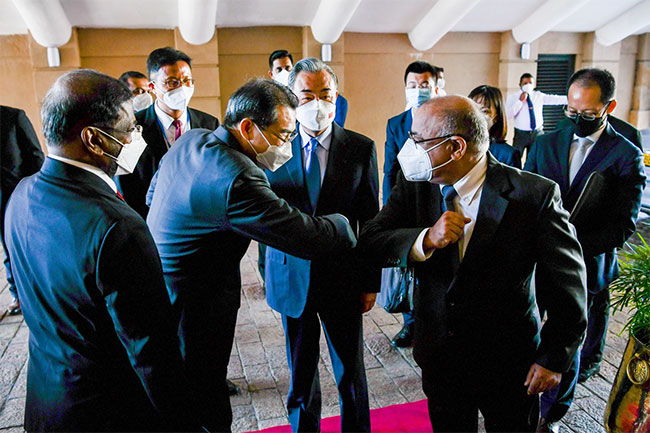
The then Ambassador asked whether India offered Sri Lanka Covid-19 vaccine in return for the full implementation of the 13th Amendment to the Constitution enacted in the late 80s at the behest of New Delhi though that piece of legislation is irrelevant today.

Referring to Indian External Affairs Minister Dr. S. Jaishankar’s visit to Colombo where he met President Gotabaya Rajapaksa, Opposition Leader Sajith Premadasa, TNA delegation and UNP leader Ranil Wickremesinghe, the academic questioned the Indian strategy. At the conclusion of the meetings, Dr. Jaishankar declared: “It is in Sri Lanka’s own interest that the expectations of the Tamil people for equality, justice, peace and dignity within a united Sri Lanka are fulfilled. That applies equally to the commitments made by the Sri Lankan government on meaningful devolution, including the 13th Amendment to the Constitution.”

Commenting on Sri Lanka’s efforts to procure Covid-19 vaccine, Jaishankar said, “We are now looking at post-Covid cooperation and I carry back with me Sri Lanka’s interest in accessing vaccines from India and I shared with the Foreign Minister, as Prime Minister Modi has said, India sees international cooperation in this area as its duty.”

Expressing serious concern over strong Indian presence in Colombo, ex-Ambassador de Silva queried whether the Indian External Affairs Ministry was situated in Colombo. The non-career diplomat also compared the effectiveness of the vaccine that could be obtained from India and serum available for those countries having the wherewithal to secure, store and implement the large scale vaccination campaign.

Ambassador de Silva, a vociferous supporter of ongoing local efforts to develop Sri Lankan remedy for Covid-19 epidemic, pointed out the failure on the part of the country as a whole to support domestic bids.

The strong patriot asked whether Dr. Jaishankar visited Colombo to inform the government of its readiness to provide vaccines and give priority to Sri Lanka. Pointing out that Sri Lanka would get some vaccines, though it lacked understanding of India’s requirement as it struggled to overcome Covid-19, Ambassador de Silva said that Sri Lanka should have sought an explanation from Dr. Jaishankar whether India didn’t have a local remedy.

Prof. de Silva launched a scathing attack over India’s call to further strengthen the Provincial Council system. The senior academic said: “Indian External Affairs Minister wants Sri Lanka to strengthen the Provincial Council system further. Why should we do that? The so-called Tamil problem had been solved. Even if the issue hadn’t been resolved, what right did India have to intervene in domestic issues? We have no issue in TNA leader R. Sampanthan, MP, and lawmaker M.A. Sumanthiran taking up residence at India House, situated opposite the University of Colombo. India cannot be allowed to meddle here to appease the likes of Sampanthan and Sumanthiran.”

Asserting the irrelevance of the so-called Tamil problem in the wake of the eradication of the LTTE military capability in May 2009 on the banks of the Nanthikadal lagoon, Ambassador de Silva said that the terrorist challenge could only have been neutralized through military means. In spite of those who had spearheaded the Jathika Hela Urumaya at its inception campaigning against the war effort, the military succeeded in eradicating the enemy’s conventional military capability for once and for all, the nationalist said.

Pointing out how Canada and the UK still facilitated those bent on dividing the country on ethnic lines by propagating a totally fabricated genocide that never happened; Ambassador de Silva alleged that the government hadn’t taken tangible measures to counter the enemy strategy.

Prof de Silva questioned how India expected Sri Lanka to fulfil what then President JR Jayewardene promised against the backdrop of New Delhi’s failure to disarm the LTTE in terms of the Indo-Lanka accord. Sri Lanka shouldn’t under any circumstances give into Indian demands as regards the 13th Amendment in return for a stock of Covid-19 vaccines, Ambassador de Silva said.

The former Mathematics don also discussed the continuing controversy over the alleged Memorandum of Cooperation (MoC) among Sri Lanka, India and Japan in respect of the East Container Terminal (ECT) at the Colombo harbour entered into by the yahapalana regime. The then Sri Lanka envoy in Myanmar urged the government to take the parliament and the public into confidence if it intended to finalise agreement on ECT

Following strong protests by port unions against giving ECT to India it was handed back to SLPA. Since then India’s Adani Group has secured the right to develop the West Container Terminal (WCT) of the Colombo Port. Adani has signed an agreement with the Sri Lanka Ports Authority (SLPA) and John Keells Holdings to develop the WCT. Valued at more than $700m, this build-operate-transfer (BOT) agreement is said to be the ‘largest’ foreign investment ever in Sri Lanka’s port sector. The agreement will remain valid for 35 years.

Sri Lanka finalised a dubious Yugadanavi deal soon after Prof. de Silva returned from Rangoon. The Yugadanavi deal has been challenged in the Supreme Court with three ministers taking the side of those who petitioned the SC against the Sept 17 agreement. The government has caused further controversy by entering into a fresh agreement with New Delhi in respect of the Trincomalee oil tank farm.

Academic de Silva, during his tenure in Rangoon also called for the abolition of the Provincial Councils. The declaration was made in the wake of some interested parties, including a section of the government pushing for PC polls. New Delhi has even raised the 13th Amendment at the UNHRC thereby underscored the pivotal importance of the high profile Gandhi era project from the 80s.

If the government is genuinely interested in achieving success at least during the remaining period as repeatedly assured by the SLPP as well as the President, let there be a reappraisal of the situation, proper assessment and tangible measures to address the issues at hand. The SLPP can begin by perusing Prof. de Silva’s analysis of the current political situation.

Wednesday, 2 February 2022

Can Dr. PBJ alone be blamed for current crises?

 SPECIAL REPORT : Part 405

Published

  
Dr. PBJ greets Chinese Assistant Foreign Minister, Wu Jianghao, a former Chinese Ambassador in Colombo, at the Presidential Secretariat over a week before he quit the top job. Chinese Foreign Minister Wang Yi looks on (Pics courtesy PMD)

By Shamindra Ferdinando

Declaring that every sector depended on the public service, the country’s Commander in Chief President Gotabaya Rajapaksa emphasised the responsibility on the part of the Secretaries to the Ministries to achieve given tasks. The President said so at the Presidential Secretariat on the morning of January 19 when Secretary to the Prime Minister Gamini Senarath, succeeded Dr. P.B. Jayasundera as Secretary to the President.

Among those present on the occasion were Dr. Jayasundera and Lalith Weeratunga, Senior Advisor to President Gotabaya Rajapaksa.

At the same time D.M. Anura Dissanayake, who had been the Secretary to the Irrigation Ministry, was brought in as Secretary to the Prime Minister. Both Senarath and Dissanayake are senior officers of the Sri Lanka Administrative Service (SLAS).

Once a longtime Treasury Secretary, Dr. Jayasundera tendered his resignation as the Presidential Secretary in the wake of criticism by some ministers of the government that he hadn’t been accessible, arrogant and was largely responsible for the current economic crisis. After Jayasundera’s resignation, President Gotabaya Rajapakasa during a luncheon meeting with a selected group of editors of national newspapers asserted that it was not fair to single out a person for criticism.

In spite of Dr. Jayasundera, in his resignation letter to the President stating that he would be leaving the Office on January 01, 2022, Senarath moved in much earlier as desired by the President. Some members of the Cabinet as well as those who backed the Sri Lanka Podujana Peramuna (SLPP) at the 2019 presidential and 2020 parliamentary polls resented Dr. Jayasundera’s role. Some alleged that Dr. Jayasundera wielded far greater power than members of the Cabinet. But, the issue at hand is whether it would be fair to blame the difficulties experienced by the government on one person?

At the height of the crisis caused by the global epidemic Covid-19, Dr. Jayasundera caused controversy in May 2020 when he requested public servants to contribute half, a week or a day’s pay from their May salaries.

Dr. Jayasundera made the request in his capacity as the Secretary to the President and the head of the public service. Dr. Jayasundera declared that the Budget deficit could be reduced if the public sector agreed to the pay cut.

In his letter to the President, informing him of the decision to forgo his May 2020 salary and allowances, Dr. Jayasundara pointed out that the monthly wage bill of the Government was about Rs.80 bn and if the government corporations, Banks and Universities are added, it’s closer to Rs. 90 to Rs.100 bn.

The Opposition attacked as usual for the sake of opposing both Dr. Jayasundera and the government over the former’s call for a salary cut. Both the Samagi Jana Balavegaya (SJB) and the Janatha Vimukthi Peramuna (JVP) strongly criticised Dr. Jayasundera’s move whereas the government defended it.

Dr. Jayasundera’s proposal meant to reduce the Budget deficit that hadn’t been implemented should be re-examined against the backdrop of the government announcement of the Rs 229 bn relief package for the public sector. Didn’t such a costly political decision further undermine the cash-strapped government? Did the government consult Dr. Jayasundera regarding the relief package offered at a time the government was struggling to cope up with an extremely messy financial situation?

Fertiliser controversies

Dr. P.B.J. strongly opposed the government seeking the IMF’s intervention. Throughout the crisis, the then Secretary to the President asserted firmly that there is no requirement for the government to involve the IMF. The former Treasury Chief remained convinced of their strength to meet the challenge even after the Governor of the Central Bank W.D. Lakshman was asked to go.

In the run-up to his resignation Dr. Jayasundera was embroiled in the simmering controversy over the opening of an account at the Town Hall branch of the People’s Bank to facilitate the import of nano-fertiliser from India. The accusations pertaining to the deal were made in Parliament on Oct 22, 2021 by JVP lawmaker Vijitha Herath. The scandal revolved around approximately US$ 1.2 mn being transferred to the private bank account of Mohan Perera and G. M. Weerasinghe of ‘United Farmers Trust Limited’ as payment for nano-fertiliser from India.

The JVPer alleged that Dr. Jayasundera ordered the People’s Bank to open a separate private account at its Town Hall Branch under the name ‘United Farmers Trust Limited’. The then Secretary to the President not only strongly denied the accusations, he requested an inquiry by the Criminal Investigation Department (CID). Although both print and electronic media prominently reported MP Herath’s accusations, the investigation targeted Mahinda Illeperuma, the editor of Aruna. The CID summoned him for questioning.

The role of Gamini Senarath, too, has been questioned also by the JVP over his alleged involvement in the import of carbonic fertiliser from China. The JVP raised the issue as the top person managing Chelina Capital Corporation, the local agent of Qingdao Seawin Biotech Chinese Company, happened to be a close relative of Senarath, who promptly denied accusations while offering to assist authorities in case of an investigation. Senarath emphasised that in spite of a relative of his being involved in the transaction he hadn’t been part of it.

Agriculture Minister Mahindananda Aluthgamage is on record as having assured Parliament that both transactions were above board. It would be pertinent to mention that the government paid dearly for its hasty and inconceivable decision to ban fertiliser and agro-chemicals. The move triggered protests in many districts. Emergency import of carbonic fertiliser ended up in controversy finally with the government having to pay USD 6.7 mn to Qingdao Seawin Biotech under controversial circumstances. China compelled Sri Lanka to pay in spite of the carbonic fertilizer load being rejected on the grounds it allegedly contained harmful bacteria, a charge strongly denied by China. Did Dr. Jayasundera play any role in introducing carbonic fertiliser and the subsequent decision to procure carbonic fertiliser from China and then place an order for Indian nano-fertiliser?

The government suffered a debilitating setback due to its controversial decision to introduce carbonic farming in such a hasty fashion forced obviously by the then imminent foreign exchange crisis caused by the collapse of the vital tourism sector and expatriate worker remittances on top of having to meet so many exigencies caused by the pandemic, at the expense of commercial agriculture.

National Freedom Front (NFF) leader Wimal Weerawansa over the last weekend issued a dire warning over food security. Weerawansa, in no uncertain terms, urged the government to reverse its decision on fertiliser and agro-chemicals. Interestingly, Weerawansa, who had teamed up with colleagues, Vasudeva Nanayakkara and Udaya Gammanpila against the highly controversial Yugadanavi deal, is the first cabinet minister to publicly warn the government of an impending food shortage.

Can the government ignore Weewawansa’s warning against the backdrop of the sacking of Agriculture Secretary Prof. Udith K. Jayasinghe in late December, 2021 and stripping Susil Premjayantha of his ministerial portfolio less than two weeks later?

Resignations, sackings galore

Gamini Senarath (seated) on his desk on the first day as Secretary to the President. Senior Advisor Lalith Weeratunga and Dr, PBJ with Senarath

There had been so many resignations, sackings, appointments at different levels since Agriculture Secretary retired Maj. Gen. Sumedha Perera was unceremoniously removed from his position in Feb 2021. News First on Feb 23 quoted the war veteran as having said: “I have informed the Secretary to the President, on Monday 15th February that I am relieved from duties due to unforeseen circumstances. However I have not tendered my resignation as yet nor have I been in communication with H.E the President regarding the matter as published by certain media outlets.”

Maj. Gen. Perera told The Island that he resigned from the post. Perera was later offered the post of Secretary Wildlife which he declined. Since then three others, who had held the post of Agriculture Secretary were replaced under controversial circumstances. The government replaced Maj. Gen. Perera with Rohana Pushpakumara. Several months later, one-time Chairman of the Paddy Marketing Board Dr. Jatal Mannamperuma was brought in as the Agriculture Secretary following Pushpakumara’s resignation. Mannaperuma declined to specify why he quit suddenly. Mannamperuma’s departure brought in Prof. Jayasinghe. Following the academic’s sacking over the issuing of a dire warning of an impending food shortage, the government named D.M.L.D. Bandaranayake as the Agriculture Secretary.

Before the President sacked Prof. Jayasinghe, the latter on the instructions of Agriculture Minister Mahindananda Aluthgamage removed former Ministry of Agriculture Advisor Prof. Buddhi Marambe. The government found fault with Prof. Marambe, who had been the Chairman of the Policy Planning Committee of the Ministry of Agriculture for being critical of the carbonic policy. Aluthgamage also removed the former Registrar of Pesticides Dr. J.A. Sumith.

The crisis in the Agriculture Ministry undermined the government. Unfortunately, the government never really understood the problem or at least tried to discuss the issues at hand earnestly. Minister Weerawansa’s warning over the collapse of commercial agriculture and food security being at risk shouldn’t be ignored. The overall failure of the government project that finally compelled the government to allocate as much as Rs 40 bn to pay compensation cannot be discussed without taking into consideration how Shashendra Rajapaksa, State Minister of Promoting the Production, Regulating the Supply of Organic Fertiliser, and Paddy and Grains, Organic Foods, Vegetables, Fruits, Chilies, Onion and Potato Cultivation; Promoting, Seed Production and Advanced Technology Agriculture handled the challenging task. Did Shashendra Rajapaksa fail to achieve government objectives? What would the future of that particular ministry be against the backdrop of Weerawansa’s call to review the overall agriculture policy?

Urgent policy review is required if the government sincerely expects to make a difference on the ground. Accusations that Maha season suffered due to the farming community being deprived of both fertiliser and agro-chemicals should be examined taking into consideration the failure on the part of the government to import carbonic fertiliser and sufficient stocks of nano fertilizer from India. In spite of the government rescinding the ban on agro-chemical imports, required stocks weren’t brought in much to the dismay of the farming community.

Perhaps, the balance of payments crisis hindered the government attempts to make emergency purchases of agro-chemicals. With the commencement of Yala season just weeks away, the government must move quickly on the contentious issue of flawed agriculture policy.

Importance of consistency

Many eyebrows were raised when the government removed former Army Chief General Daya Ratnayake from the post of Chairman SLPA in late June 2021. Ratnayake must have antagonised the powers that be for him to be removed and moved to the Industries Ministry as its Secretary. Ratnayake, who served as the Commander of the Army after the conclusion of the war never, went public as to why he was removed, unceremoniously.

Another move that quite surprised many was Maj. Gen. M.D.S.P. Niwunhella’s appointment as the Commissioner General of Essential Services (CGES) on August 31, 2021 and then doing away with price control leaving medicine as the only item under supervision. At the time Maj. Gen. Niwunhella received the appointment, he served as the senior officer in charge of President Gotabaya Rajapaksa’s security. The Gajaba Regiment officer continues to do so whereas his appointment as CGES was allowed to lapse.

Sri Lanka’s primary liquid gas supplier Litro has been embroiled in controversy not only due to gas–related explosions but the change of its Chairman and Chief Executive Officer Anil Koswatte last July. Koswatte’s removal took place amidst accusations of him blocking the Auditor General from performing his legitimate responsibilities. The Litro controversy received much public attention in the wake of Viyathmaga activist Theshara Jayasinghe, who replaced Koswatte was himself removed last month to pave the way for Renuka Perera, the Administrative Secretary of the SLPP to take over the well paid job.

President Gotabaya Rajapaksa however thwarted that move because of obvious internal and external intrigues there. That resulted in Renuka Perera being appointed Milco Chairman, at the expense of civil society group Yuthukama activist Lasantha Wickremasinghe.

Yuthukama played a significant role in SLPP presidential election candidate Gotabaya Rajapaksa’s campaign. The government compensated Lasantha Wickremasinghe by appointing him as Chairman, Ceylon Fertiliser. Wickremasinghe declined the appointment. The Yuthukama activist was to replace Janath Sri Vidanage.

Some of the other interesting developments were Justice Minister Ali Sabry’s offering to quit his portfolio over the appointment of Ven. Galagodaatte Gnanasara, a convict who had received a presidential pardon during the Yahapalana administration, as the head of ‘One Country, One Law’ Task Force. The President settled the issue by amending the relevant gazette, thereby diluting the scope of the Task Force.

The developments in the run up to the Yugadanavi deal finalised on the night of Sept 17, 2021, too, attracted public attention. Basil Rajapaksa entered Parliament on the SLPP National List to take over the finance portfolio, replace CEB Chairman Vijitha Herath with onetime Power Ministry Secretary M.C. Ferdinando from retirement, and shift Dullus Ahahapperuma from Power Ministry to Media. One-time UNP Minister Gamini Lokuge with a tarnished past having headed its once notorious union Jathika Sewaka Sangamaya (JSS), was brought in as the Power Minister.

Now, Ferdinando has resigned following the appointment of Additional General Manager (Corporate Strategy), Eng. (Dr.) D.C.R. Abeysekera of the Corporate Strategy Division as the new Ceylon Electricity Board (CEB) General Manager. Abeysekera succeeded another resurrected retiree Dr. Susantha Perera.

President Gotabaya Rajapaksa intervened in the wake of the Ceylon Electricity Board Engineers Union (CEBEU) protest campaign against Dr. Perera’s controversial appointment ignoring the designated successor as per CEB’s established rules. The government cannot ignore the fact that Yugadanavi deal has been challenged in the Supreme Court with a section of the cabinet of ministers too supporting the challenge.

Chaos

The government should have been mindful of diplomatic appointments it made during the past two years. Canada and Italy refusing to accept retired Air Marshal Sumangala Dias as Sri Lanka’s top envoy therein over unsubstantiated accountability issues underscored the responsibility on the part of the government as well as the Parliamentary High Posts Committee to be cautious, especially in the face of undercurrents created by the West led by the US against our security forces for crushing the world’s most ruthless terrorist outfit against their sinister wishes.

The government is in chaos. The recent shocking revelation that Prime Minister Mahinda Rajapaksa’s Parliamentary Affairs Secretary former UPFA lawmaker Udith Lokubandara stole over Rs 40 mn from the Premier’s account highlighted the pathetic situation. Lokubandara, who had served as the private secretary to Mahinda Rajapaksa (2015-2020) received the appointment as his Parliamentary Affairs Secretary after the last parliamentary election. The former MP’s act underlines the need to be extremely cautious in accommodating people regardless of their status or connections.